How to Choose a Rehab in Palm Beach County in 2026
If you are reading this at night, worried about detox, insurance, or being judged, take a breath. That knot in your stomach makes sense. Choosing a rehab can feel like choosing trust under pressure, and most people only get one chance to get it right. In Delray Beach and across Palm Beach County, the best […]

If you are reading this at night, worried about detox, insurance, or being judged, take a breath. That knot in your stomach makes sense. Choosing a rehab can feel like choosing trust under pressure, and most people only get one chance to get it right. In Delray Beach and across Palm Beach County, the best choice is rarely the cheapest quote or the loudest ad.
What people miss when they compare Palm Beach County rehabs by price alone
Why the cheapest quote can hide the real cost of poor fit
Price matters, but fit matters more. A lower number can hide weak structure, thin aftercare, or a program that does not match your needs. If you need help choosing a rehab in Palm Beach County, start by asking what the fee actually covers. Does it include medical oversight, therapy frequency, and discharge planning? Or are those extras waiting to surprise you later?
Here is the part most families miss. A program can look affordable and still cost more in the long run if it leaves you unstable. The biggest mistake we have seen this year is not comparing the daily schedule, staff contact, and step-down plan. In a beach town like Delray Beach, a calm setting helps, but structure still does the heavy lifting. Without it, even a pretty campus can feel empty.
One client in the Lake Worth area chose the lowest quote he found. He later learned the program had limited therapy hours and no clear aftercare plan. His family ended up paying for a second admission elsewhere. That is a painful lesson, and it happens more often than people admit.
The signs a program is treating the symptom and not the pattern
Addiction rarely shows up alone. You may also be dealing with depression and addiction, anxiety treatment needs, bipolar disorder therapy, or PTSD treatment. If a center only talks about stopping substance use and ignores the reasons behind it, that is a warning sign. Good care looks at the pattern, not just the symptom.
Ask how the program handles dual diagnosis, co-occurring disorders, and relapse prevention. Ask what therapies they use for trauma, cravings, and mood swings. A strong Florida addiction treatment program in South Florida should be able to explain why cognitive behavioral therapy, dialectical behavior therapy, and EMDR trauma therapy may each help in different ways. If the answers sound vague, keep looking.
The question we hear most from first-time callers is simple: “Will they really understand me?” That question matters. A true alcoholism treatment center or drug rehab near me search result should lead to a place that treats the whole person. If they only offer a quick detox and send you on your way, they are treating the symptom.
How coastal settings, privacy, and day-to-day structure change the recovery experience
A coastal healing environment can help settle a nervous system that feels stuck in overdrive. That does not mean the beach fixes anything by itself. It means the setting can reduce noise, help you sleep, and make room for reflection. In South Florida recovery, small details matter more than people expect.
Privacy matters too. Some people need a private rehab because they work in a public-facing role or live locally. Others simply need space away from old triggers, social pressure, or familiar routines that keep pulling them back. A residential treatment facility in Palm Beach County should feel steady, discreet, and organized.
RECO Immersive sits at 140 NE 4th Avenue Delray Beach FL 33483, close to the Delray Beach recovery community and the energy of Atlantic Avenue, yet still calm enough for focused work. That balance can matter. A strong Palm Beach County treatment center near Delray Beach should offer both comfort and accountability. That combination is what helps people stay engaged when early recovery feels raw.
The intake details that tell you whether a center is built for real life or just good marketing
What a strong admissions process should ask before anyone talks bed dates
A thoughtful intake process should start with your history, not with a sales pitch. A good team asks about substances, mental health, medications, recent hospital visits, trauma, and safety concerns. They should also ask about work, family, transportation, and whether you can safely step away from daily life. That is how a program learns whether you need residential treatment, PHP, or an intensive outpatient schedule.
Good admissions teams also ask about signs of addiction in plain language. They listen for withdrawal risk, blackouts, missed work, panic, and inability to cut down. They should explain the next steps clearly, including South Florida detox and admission process. If the conversation jumps too fast to bed dates, pause.
A woman from Boca Raton once called after two failed attempts to get help for her son. The first two centers asked about payment before asking about his benzodiazepine use or panic symptoms. The third center slowed down, asked better questions, and matched him to a safer level of care. That difference changed everything.
How insurance verification should work with Aetna, Cigna, Blue Cross Blue Shield, and out-of-network benefits
Insurance verification should feel clear, not confusing. The center should verify benefits, explain deductibles, and tell you what is likely covered before you commit. That includes Aetna, Cigna, Blue Cross Blue Shield, and out-of-network benefits. If they cannot explain the basics in plain words, that is a problem.
Ask what they check during verification. Do they look at days covered, prior authorization, copays, and any medical necessity rules? Do they explain the difference between in-network and out-of-network care? A serious team will walk you through insurance verification for Aetna, Cigna, and Blue Cross Blue Shield without pressure.
A table helps here:
QuestionWhat a strong answer sounds likeWhat does my plan cover?Clear benefits, limits, and approvalsAre there surprise charges?Up-front explanation of possible costsWhat if I am out of network?Plain details on out-of-network benefitsCan you help today?A direct, respectful next stepIf the answers stay vague, keep asking. Good insurance support should reduce stress, not add to it.
When self-pay options matter and what you should ask before you sign anything
Self-pay options can make sense when your plan is limited or out of network. They also matter when privacy or speed is important. Still, do not sign anything until you understand exactly what is included. Ask about assessments, therapies, medication management, labs, and aftercare support.
You should also ask how long the quoted rate lasts. Does it cover the full stay, or only part of it? Does it include family therapy, case management, or discharge planning? A fair financial conversation should feel calm and specific, never rushed.
If you are comparing Palm Beach County treatment centers, write down three questions before each call:
- What does this price include?
- What costs could change later?
- What support comes after discharge?
That short list can save you from confusion later. It can also help you compare programs more honestly.
Why DCF licensing, Joint Commission accreditation, and licensed clinicians deserve a closer look
Credentials matter because they reflect oversight. DCF licensed care and Joint Commission accreditation can signal that a center follows recognized standards. Licensed clinicians also matter, because treatment works best when trained professionals guide it. You deserve care from people who know what they are doing.
Still, do not stop at the badge on the website. Ask who provides therapy, who handles medication, and who supervises the care plan. Ask whether the program uses evidence-based treatment and how often plans are reviewed. A Joint Commission accredited rehab with licensed clinicians should welcome those questions.
If you are reading RECO Intensive reviews, look for patterns instead of star counts alone. One 5-star review said, “The serene environment, nestled in nature, provides a calming backdrop for healing. What truly stands out is the dedication of the staff.” – Bryanna Y., 5-star review from RECO Immersive on Google Business Reviews. That kind of feedback does not replace your own due diligence, but it can tell you something useful about culture and care.
Detox is not one size fits all, especially when alcohol, opioids, or benzos are involved
How long detox may last and what changes the timeline from person to person
People ask, “How long is detox?” That is a fair question, and the honest answer is: it depends. Alcohol, opioids, benzodiazepines, age, health history, and recent use all change the timeline. Detox can last a few days or longer, depending on the substance and severity.
You should expect a real medical assessment before detox starts. A safe cocaine detox in Florida or alcohol detox plan should include monitoring, comfort care, and a clear transfer path into treatment. No two bodies respond the same way. That is why a single fixed promise should make you suspicious.
The mistake we see most often is treating detox like the whole solution. It is not. Detox clears the body. Treatment helps you build a life that does not keep pulling you back.
When South Florida detox should include medication-assisted treatment like Suboxone or Vivitrol
For opioid use, medication-assisted treatment can be a stabilizing tool. FDA-approved options like Suboxone maintenance and Vivitrol injections can reduce cravings and support recovery when used appropriately. This is especially important for fentanyl treatment, heroin recovery, and prescription pill addiction. A good team explains the benefits and limits of each option.
Not every person needs the same medication plan. Some people do better with Suboxone. Others may do better with Vivitrol after detox. The right choice depends on your history, cravings, and medical picture. This is one reason South Florida detox should be connected to ongoing care, not isolated from it.
If you need fentanyl treatment in Palm Beach County, ask how the center monitors withdrawal and what happens after stabilization. Ask the same for opioid rehab Delray and alcoholism treatment center placement. Clear answers matter more than polished marketing.
What to expect with cocaine detox Florida, fentanyl treatment, and benzodiazepine withdrawal
Cocaine withdrawal often looks different from alcohol or opioid withdrawal. It can involve fatigue, low mood, sleep changes, and strong cravings. Fentanyl withdrawal can be intense and medically complicated. Benzodiazepine withdrawal can be dangerous if it is not managed carefully and slowly.
That is why experienced centers do not treat every substance the same way. A team should know when to watch for seizure risk, when to adjust monitoring, and when to bring in psychiatric support. If you are worried about benzodiazepine withdrawal care in Florida, ask for a plain explanation of the taper plan and safety checks. You deserve clarity, not guesswork.
If someone has used opioids and alcohol together, the risks rise fast. So do the emotional swings. That is where a steady South Florida detox setting can make the difference between panic and a workable plan.
Why trauma therapy South Florida matters even before withdrawal feels over
Many people arrive with trauma already under the surface. Some have PTSD, some carry childhood pain, and some have lived through repeated loss or violence. Trauma often fuels substance use, even when the person never meant to self-medicate. If that piece is ignored, recovery can feel thin.
Trauma therapy in South Florida should be available early, even during early stabilization. That may include grounding skills, EMDR trauma therapy, or simple coping work before deeper processing starts. For many people, learning safety skills first is the right move. A trauma therapy in South Florida track should never rush that process.
Here is what almost no online guide mentions: early trauma work is not always about reliving the past. Sometimes it is about learning to sleep, eat, and think clearly enough to stay in treatment. That is real progress.
PHP, IOP, or residential treatment: which level of care actually matches the problem in front of you?
The real difference between a residential treatment facility and a partial hospitalization program
Residential treatment means you live on site and receive structured care throughout the day. PHP, or partial hospitalization program, usually means you attend treatment for several hours and return home or to supportive housing. The right level depends on safety, stability, and how much structure you need. That is the clearest answer to what is PHP vs IOP.
If your home environment is chaotic, residential treatment may fit better. If you need strong care but can safely sleep at home, PHP may be enough. A program should explain this in plain language. A what is PHP versus IOP in Palm Beach County conversation should never feel like a quiz.
A residential treatment facility can help when cravings, triggers, or mood swings are too strong for daily life. PHP often works as a bridge. Neither is “better” in a universal sense. The right match is the one that gives you enough support without over- or under-treating the problem.
When an outpatient program Delray Beach makes sense for work, family, or school
An outpatient program in Delray Beach can be a smart fit when you have enough stability to sleep at home and attend sessions consistently. It helps people who need treatment while keeping a job, caring for children, or finishing school. That said, outpatient care only works when the person can stay safe and engaged.
A good outpatient plan should include predictable therapy hours, group therapy activities, and relapse prevention support. It should also allow room for life obligations without letting them take over treatment. If you are comparing a outpatient program in Delray Beach, ask how the schedule fits real life. That question matters more than people think.
Delray Beach has a strong recovery community, but it also has distractions. Coastal recovery can help, yet structure still protects progress. If the schedule feels too loose, be cautious.
How a mental health IOP fits dual diagnosis treatment and co-occurring disorders
A mental health IOP can be a strong fit when mental health symptoms and substance use happen together. This is the dual diagnosis treatment model, also called co-occurring disorders care. Dual diagnosis care works best when both conditions are treated at once, because one often drives the other. If you only treat one, the other can pull everything off track. 
Mental health IOP often includes therapy, skills work, and medication support when needed. It can help with depression and addiction, anxiety treatment, bipolar disorder therapy, and trauma symptoms. If you are considering mental health IOP for dual diagnosis treatment, ask how the program coordinates psychiatric and substance use care. That coordination is not optional. It is the core of good treatment.
The best programs do not make you choose between “mental health” and “addiction.” They treat both with equal seriousness. That is how real change starts to hold.
Why evidence-based care can include CBT, DBT, EMDR, family therapy, and holistic recovery tools
Evidence-based care means the treatment has research support. CBT helps people notice and change unhelpful thoughts. DBT helps with emotion regulation, distress tolerance, and impulsive behaviors. EMDR can help process trauma memories in a structured way. These are not trendy add-ons. They are well-known clinical tools.
Family therapy also matters. Recovery happens in relationships, not in isolation. Holistic recovery tools can support the work, especially when they are paired with clinical care. Yoga therapy, art therapy, and mindfulness meditation can calm the body and give people safer ways to manage stress. A CBT, DBT, and EMDR for co-occurring disorders program should explain how each method fits your needs.
A useful way to compare care looks like this:
Level of careBest forCommon supportsResidentialHigh instability24-hour structure, therapy, monitoringPHPStrong support neededDaily treatment, step-down planningIOPMore independenceGroups, skills work, relapse preventionThe right choice is the one that matches your current reality, not your wishful thinking.
The rehab choice that still holds up after discharge and keeps daily life from unraveling
What strong aftercare planning should include from sober living resources to case management
Discharge should never mean “good luck.” Strong aftercare planning starts before you leave the program. It should include sober living resources, referrals, medication follow-up, and case management. It should also include a plan for work, family, and transportation.
Ask how the center handles relapse prevention after discharge. Ask what support continues for the first few months. Ask whether they help with appointments, housing, and local recovery resources. Family therapy and aftercare planning for long-term recovery should feel like a real bridge, not a loose handoff.
The best plans also include coping skills practice, nutrition support, and simple daily routines. Learning new habits takes time. A good center respects that.
How alumni program support, SMART Recovery, and 12-step alternatives can work together
People do not all recover the same way. Some find strength in 12-step alternatives. Others connect with SMART Recovery, which uses practical skills and self-management tools. Many do both. Good aftercare support makes room for that.
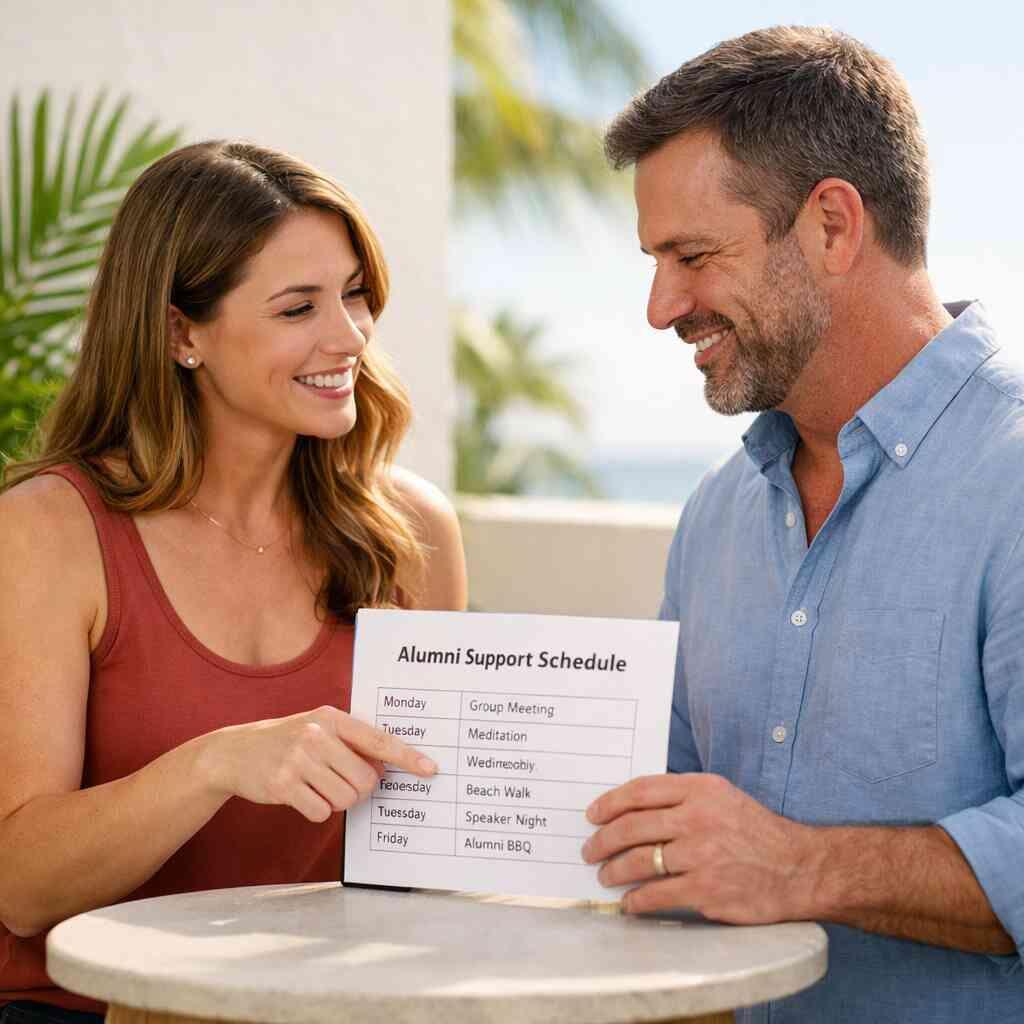
An alumni program can help you stay connected after treatment ends. It can offer check-ins, events, and reminders that recovery needs contact, not just good intentions. If you want sober living resources and alumni support, ask whether the program keeps supporting people after discharge. That detail matters. A strong alumni network can reduce isolation, especially in early recovery.
In the Delray Beach recovery community, that ongoing connection can be powerful. It gives you a reason to keep showing up. It also reminds you that progress can continue after treatment.
What family weekend, life skills training, vocational support, and nutritional counseling should look like
Family weekend should be structured, not performative. It should teach communication, boundaries, and how to support recovery without enabling. Life skills training should cover sleep, meals, scheduling, stress, and problem-solving. Vocational support should help with work plans, references, and realistic goals.
Nutritional counseling matters too. Recovery can strain the body, and food often gets ignored. A solid program may address meal planning, hydration, and basic health habits. If a center offers family therapy and aftercare planning for long-term recovery, ask how family weekend fits into that plan. The answer should be practical, not sentimental.
You should also ask whether the program supports young adult rehab needs, professional’s program demands, LGBTQ+ affirmative treatment, veterans addiction help, and gender-specific treatment. Those details show whether the center sees the person in front of them. They also show whether the program can adapt when life gets complicated.
Why the best next move is a center that can coordinate the full path from intake to long-term recovery
The strongest centers do not think in isolated stages. They think in a full path. Intake, detox, PHP, IOP, aftercare, and alumni support should connect cleanly. That is how people keep momentum after the hardest days pass. It is also how a center earns trust.
If you are comparing Florida rehabs that take insurance, ask how the same team will guide you from the first call through discharge. Ask whether they coordinate family therapy, case management, and local referrals. Ask whether they understand South Florida recovery realities, from Broward County rehab access to West Palm Beach mental health needs and Boca Raton outpatient scheduling. A center that handles the whole arc usually helps you avoid gaps.
If you want a quieter, more coordinated option in Delray Beach, RECO Immersive is designed around personalized care and guided treatment. The right rehab should make the next few steps clearer, not heavier. Start with one call, ask the direct questions, and compare the answers side by side. You do not have to solve everything today, but you can choose the place that treats the whole picture.
Frequently Asked Questions
How long does detox last at a Delray Beach rehab?
Detox length depends on the substance, amount used, medical history, and mental health needs. Alcohol and benzodiazepine withdrawal can last longer and may need closer monitoring. Opioid detox may be shorter, but cravings can continue. A good center will assess you first, then give a realistic timeline. If anyone gives a one-size-fits-all answer, keep asking questions.
What is the difference between PHP and IOP?
PHP, or partial hospitalization, offers more treatment hours and more structure. IOP, or intensive outpatient, usually gives you more freedom while still providing regular therapy and support. PHP often fits people who need close daily care. IOP often fits people who are more stable but still need strong support. The right choice depends on safety, symptoms, and home stability.
Does RECO Immersive take my insurance?
The best way to know is to complete insurance verification. Coverage can vary by plan, network status, and level of care. RECO Immersive can help review Aetna, Cigna, Blue Cross Blue Shield, and out-of-network benefits, but your exact coverage depends on your policy. A verification call should explain your options in plain terms.
Can I bring my phone to treatment?
That depends on the level of care and program rules. Some programs limit phone use early on to reduce distractions and help you settle in. Others allow limited use during set times. Ask about phone policy during intake so there are no surprises. Clear rules usually help people adjust faster.
Is family involved in the program?
Many good programs include family therapy, education, or family weekend sessions. Family involvement can help repair communication, set healthy boundaries, and support aftercare. The exact structure varies by program and level of care. Ask how family support is handled and how often it happens. Family work should be practical, not just emotional.
What if I need help for depression but not addiction?
You may still benefit from a mental health program, especially if depression affects work, sleep, or safety. If substance use is also present, dual diagnosis care may fit better. A center should assess both mental health and substance use together. If you are unsure, a clinical intake can help sort out the best level of care.
How do I know if a rehab is right for my situation?
Look at safety, structure, therapy quality, licensing, insurance help, and aftercare. Ask how the program handles trauma, family needs, and relapse prevention. You should also see whether the staff listens carefully and answers clearly. A good fit often feels calm, specific, and respectful from the first call.