How Partial Hospitalization Programs Help South Florida Adults
If you are reading this because home feels shaky after detox or a recent crisis, that fear makes sense. Many South Florida adults feel torn between needing support and needing life to keep moving. A partial hospitalization program can bridge that gap with structure, clinical care, and room to breathe. It is often the level […]

If you are reading this because home feels shaky after detox or a recent crisis, that fear makes sense. Many South Florida adults feel torn between needing support and needing life to keep moving. A partial hospitalization program can bridge that gap with structure, clinical care, and room to breathe. It is often the level of care that finally makes treatment feel possible again.
When treatment feels impossible, why PHP is often the part that finally makes sense
The hidden gap between detox and real daily stability for South Florida adults
Detox clears the body, but it does not rebuild routines, coping skills, or trust in yourself. That gap is where many people struggle, especially after South Florida detox for alcohol, opioids, or benzodiazepines. The mornings can feel too quiet. The evenings can feel too long. In that space, cravings, panic, and low mood can rush in fast.
A PHP for adults gives you more support than standard outpatient care. It also avoids the full separation from daily life that comes with inpatient rehab Palm Beach County programs. For many people, that balance matters. You get intensive daytime treatment, then return home or to sober housing with guidance. If you want a clear overview of partial hospitalization program for adults in South Florida, that level sits right between residential treatment and outpatient care.
Here is the part most families miss: the post-detox window is often when relapse risk feels highest. One client from near Lake Worth described feeling fine in the morning, then unsteady by dinner. The structure of PHP gave him a plan for those hours. He learned how to name triggers before they turned into action. That kind of stability can matter more than motivation alone.
Why a partial hospitalization program can feel safer than going straight home after crisis
Going straight home after a crisis can feel like being dropped into deep water without a float. Even if your home is loving, it may still hold old cues: the couch, the phone, the roommate, the empty fridge, the route past the liquor store. PHP adds support before those triggers start pulling hard.
This level of care also helps if you are dealing with dual diagnosis treatment needs. Depression and addiction often fuel each other. Anxiety and substance use do the same. A PHP can address both at once, which matters because treating only one part usually leaves the other untouched. That is the clinical value of dual diagnosis treatment for co-occurring disorders in Delray Beach.
What people often feel in PHP is relief mixed with resistance. Relief, because the day has shape. Resistance, because structure can feel uncomfortable at first. That is normal. The goal is not to police your life. The goal is to make your life feel manageable again, one block of time at a time.
What makes Delray Beach outpatient care different when the beachside world keeps moving around you
Delray Beach has a pace that can help healing, but it can also distract from it. The coastal setting, Atlantic Avenue energy, and social scene can feel bright when you are doing well. They can feel overwhelming when you are raw. That is why Delray Beach outpatient care works best when it is grounded in clinical structure, not just a pretty location.
RECO Immersive sits at 140 NE 4th Avenue, Delray Beach, FL 33483, close enough to the recovery community to feel connected, but focused enough to stay therapeutic. If you are comparing options, it helps to look at structured daytime therapy program in Delray Beach and ask how each hour is used. A good program should explain the rhythm clearly. It should not feel vague or improvised.
What we have seen in 2026 is that people do better when treatment respects real-life demands. Jobs, parenting, and transportation all matter. So does privacy. So does the ability to step down later into an intensive outpatient or mental health IOP without starting over. That continuity is what makes South Florida mental health treatment feel less fragmented.
“A Life-Changing Experience — RECO Truly Cares
First and foremost, I’m proud to say that I’ve been sober for 485 consecutive days — and I owe so much of that to RECO.
I attended two facilities during my treatment journey. The first helped me in early recovery, but it was RECO that truly bridged the gap between treatment and independent living. At RECO, I lived in a real home within a residential neighborhood — a safe, supportive environment that allowed me freedom and accountability. I could come and go as I pleased, within reason, but was held responsible through random UAs and the trust of the staff. It was the perfect balance between structure and independence.
What made RECO so impactful was how it prepared me for real life. I learned how to navigate everyday situations while maintaining sobriety, all with the continued support of incredible facilitators and meaningful education about my disease. When it came time to go home, I felt nervous, but I left with a strong foundation — an understanding of my addiction, the tools to manage it, and a renewed connection to fellowship and community.
My therapist, Dvora, was nothing short of a godsend. Her compassion, insight, and genuine investment in my recovery made all the difference. She didn’t just “do her job” — this is truly her calling — and the fact that we still stay in touch today speaks volumes about her dedication. RECO is lucky to have her and others like her who bring such heart to their work.
Beyond the therapy and structure, I also built lifelong friendships — both with peers and staff. Even months after completing the program, I was invited to join RECO’s annual camping trip, which reminded me that I’ll always have a place there. That sense of ongoing community is something truly special.
And I have to mention Brock, who has checked in on me several times just to see how I’m doing. That kind of follow-up is rare. My first treatment center, for example, hasn’t reached out once in the 14 months since I left. RECO genuinely cares about its alumni — not just while you’re there, but long after you leave.
You often hear stories about treatment centers in Florida that are just out to take your money — RECO is absolutely not one of them. They don’t just help you get sober; they give you the tools, support, and confidence to stay sober.
I am eternally grateful for RECO — for their guidance, their compassion, and their unwavering belief in me. They didn’t just change my life — they helped me reclaim it.”- Meghan M., a 5 star review from RECO Immersive on Google Business Reviews
What actually happens inside a PHP day and why structure can calm a scattered mind
A realistic look at the day-by-day rhythm of intensive daytime treatment
A PHP day usually starts with check-in and a clinical review. Staff look at sleep, cravings, mood, medications, and safety concerns. Then the day moves into therapy blocks, skills work, and support planning. It is intensive, but it should still feel organized, not chaotic.
This kind of structured therapy program helps when your mind keeps jumping from one worry to the next. People in early recovery often say the hardest part is not one crisis. It is the constant switching between shame, fear, and practical problems. PHP creates rails. That can lower emotional noise and make it easier to think clearly.
If you want to understand the flow better, look at our day in treatment as a model. A strong PHP usually includes:
- Individual therapy
- Psychiatric check-ins
- Skills groups
- Relapse prevention planning
- Case management support
- Family communication work
That mix is not random. It is designed to treat symptoms, habits, and life stress at the same time.
How CBT, DBT, and EMDR fit into a structured therapy program without overwhelming the patient
Evidence-based treatment works best when it matches what your nervous system can handle. Cognitive behavioral therapy helps you notice thought patterns that push you toward use or shutdown. Dialectical behavior therapy teaches distress tolerance, emotion regulation, and interpersonal skills. EMDR trauma therapy can help process traumatic memories without forcing you to relive every detail in an unstructured way.
The key is pacing. Good clinicians do not throw every method at you at once. They start by stabilizing sleep, safety, and cravings. Then they layer in deeper work. If you want a closer look at evidence-based CBT, DBT, and EMDR therapy in South Florida, the best programs explain why each approach fits your goals.
A woman from Boynton Beach once said therapy finally felt usable when it stopped sounding abstract. She had been in and out of treatment for years. In PHP, her therapist tied one CBT exercise to her morning panic and one DBT skill to her evenings alone. That was the difference. Not theory. Application.
Where group therapy activities, family therapy, and case management support usually fit in
Group work is often where people realize their struggle is not a personal flaw. It is a human pattern. Group therapy activities give you practice speaking honestly, listening without fixing, and tolerating discomfort. That matters in addiction recovery in South Florida, where isolation often feeds relapse. Families also need a place to learn new language and new boundaries.
Family sessions can help repair trust, but they should not become blame sessions. If a program offers group therapy and family support in Palm Beach County, ask how it handles communication, relapse concerns, and privacy. Family therapy is most useful when it teaches concrete skills. Those skills might include crisis plans, better listening, or how to respond to warning signs without escalating conflict.
Case management keeps the practical parts from falling through the cracks. That can include work notes, referrals, transportation planning, or sober living options. It can also include life skills training, vocational support, and nutritional counseling. Those supports sound simple, but they matter when recovery has to fit inside real life.
When PHP is the right level of care and when something higher or lower makes more sense
How to tell the difference between residential treatment facility care, PHP, and intensive outpatient step-down
A residential treatment facility gives round-the-clock support. PHP gives full daytime treatment but usually returns you home at night. Intensive outpatient step-down is less intensive and often works after you are steadier. The right level depends on safety, cravings, housing, and mental health stability.
Level of careWhat it usually offersBest fit forResidential treatment24/7 structure and supervisionPeople needing higher containment or unsafe home settingsPHPFull daytime therapy with return home laterPeople needing strong support after detox or crisisIOPFewer weekly hours and more independencePeople ready for step-down care and routine practiceIf you are comparing what is PHP vs IOP, the biggest difference is intensity and supervision. PHP is usually the middle ground when you still need daily support. IOP is often the next move when the skills are starting to hold. You can also read more about how to compare PHP and IOP in Palm Beach County if you are deciding between the two.
Sometimes residential is still the safer choice. That is especially true if withdrawal risk, suicidality, or unsafe housing is present. The decision should be clinical, not emotional pressure. The right fit protects your progress.
Why dual diagnosis treatment matters when depression and addiction or anxiety and substance use travel together
The co-occurring disorder model is simple: mental health symptoms and substance use affect each other. That means depression and addiction support cannot live in separate silos. NIDA and SAMHSA both support integrated care for this reason. Treating only one issue often leaves the other active.
This is where dual diagnosis care becomes essential. If you live with anxiety treatment program needs, bipolar disorder therapy, or persistent depression, substance use may be a way of trying to manage symptoms. Then the substance use worsens the symptoms. It becomes a loop. PHP can interrupt that loop by combining therapy, medication support, and daily monitoring.
If you need a fuller explanation, review dual diagnosis care for depression and addiction recovery. The strongest programs do not treat diagnosis as a label. They treat it as a map. That map guides care for both the mind and the body.
The decision points that often come up for people needing trauma therapy South Florida support or medication management
Trauma often hides behind substance use. So do panic, shame, and emotional numbness. If you are seeking trauma therapy South Florida support, the question is not only whether you have trauma. It is whether you have enough stability to work on it safely. EMDR and other trauma methods can help, but timing matters. 
Medication can also be part of the plan. Some people need medication-assisted treatment, such as Suboxone maintenance or Vivitrol injections, especially for opioid or alcohol use disorders. Others need monitoring for sleep, mood, or anxiety. That is why medication management and psychiatric support in Delray Beach is often woven into PHP. It is not about replacing therapy. It is about helping therapy work.
One man with fentanyl and panic symptoms told us he could not tell where withdrawal ended and anxiety began. That confusion is common. The clinical answer was to stabilize both. He needed medication review, therapy, and predictable check-ins. Once those pieces aligned, he could finally focus on skills instead of crisis.
What South Florida families should know about insurance access and the real cost question
How insurance verification works for Florida rehabs that take insurance, including Aetna, Cigna, and Blue Cross Blue Shield
Insurance is one of the first questions families ask, and for good reason. Costs can feel impossible to predict when emotions are already high. Florida rehabs that take insurance often start with verification. That process checks benefits, deductibles, out-of-pocket costs, and plan limitations.
At RECO Immersive, insurance verification for Florida rehab programs helps people understand Aetna, Cigna, and Blue Cross Blue Shield coverage before admission. That clarity matters. It can reduce surprise bills and help you plan for the right level of care. It also helps identify whether out-of-network benefits may apply.
Insurance does not tell the whole story, though. A plan may cover PHP but limit visits or require authorization. Another may support more days if clinical need is documented. Good admissions teams explain the rules plainly. They should not rush you.
What to ask about out-of-network benefits, self-pay options, and admissions process details before choosing a rehab
Before you choose a private rehab, ask direct questions. Ask what is included. Ask what is billed separately. Ask whether labs, psychiatric visits, and family therapy are part of the estimate. Those details matter more than a headline number.
Use this short checklist:
- Does my plan require prior authorization?
- Are there in-network or out-of-network options?
- What are the self-pay options?
- What does intake include?
- Is there support for insurance verification and appeals?
These questions are practical, not picky. They protect you. They also help you compare how to choose a rehab without getting lost in sales language. If you want to understand admissions more deeply, ask about the assessment, medical review, and placement criteria before you commit.
It also helps to know that good programs welcome questions about how long detox lasts and what happens after. That is not a sign of doubt. It is a sign that you are paying attention. Families in crisis deserve clear information.
Why location matters for people seeking Palm Beach County treatment centers, Broward County rehab, or Boca Raton outpatient care
Location affects follow-through. If driving across Broward County makes attendance unrealistic, care will be harder to sustain. If Boca Raton outpatient options are closer to work or home, that can improve consistency. Recovery rarely needs more drama. It usually needs fewer barriers.
People often search for Palm Beach County treatment centers, Broward County rehab, Miami addiction help, Fort Lauderdale detox, or West Palm Beach mental health because proximity changes what they can actually use. Delray Beach has an advantage here. It sits within reach of several communities while still feeling calmer than larger urban corridors. That balance can support healing.
The local recovery community also matters. Sober things to do in Delray are not a gimmick when you are rebuilding a life. Coffee after a meeting, a walk near the beach, or a quiet hour away from old triggers can become part of relapse prevention. Small routines carry more weight than people expect.
The next move after PHP and how long-term recovery holds when treatment ends
How aftercare planning, sober living resources, and alumni program support reduce the drop-off after discharge
Treatment should not end with a handoff and a goodbye. It should end with a plan. Aftercare planning usually includes therapy appointments, medication follow-up, peer support, and clear warning signs. That plan helps reduce the drop-off that can happen after discharge.
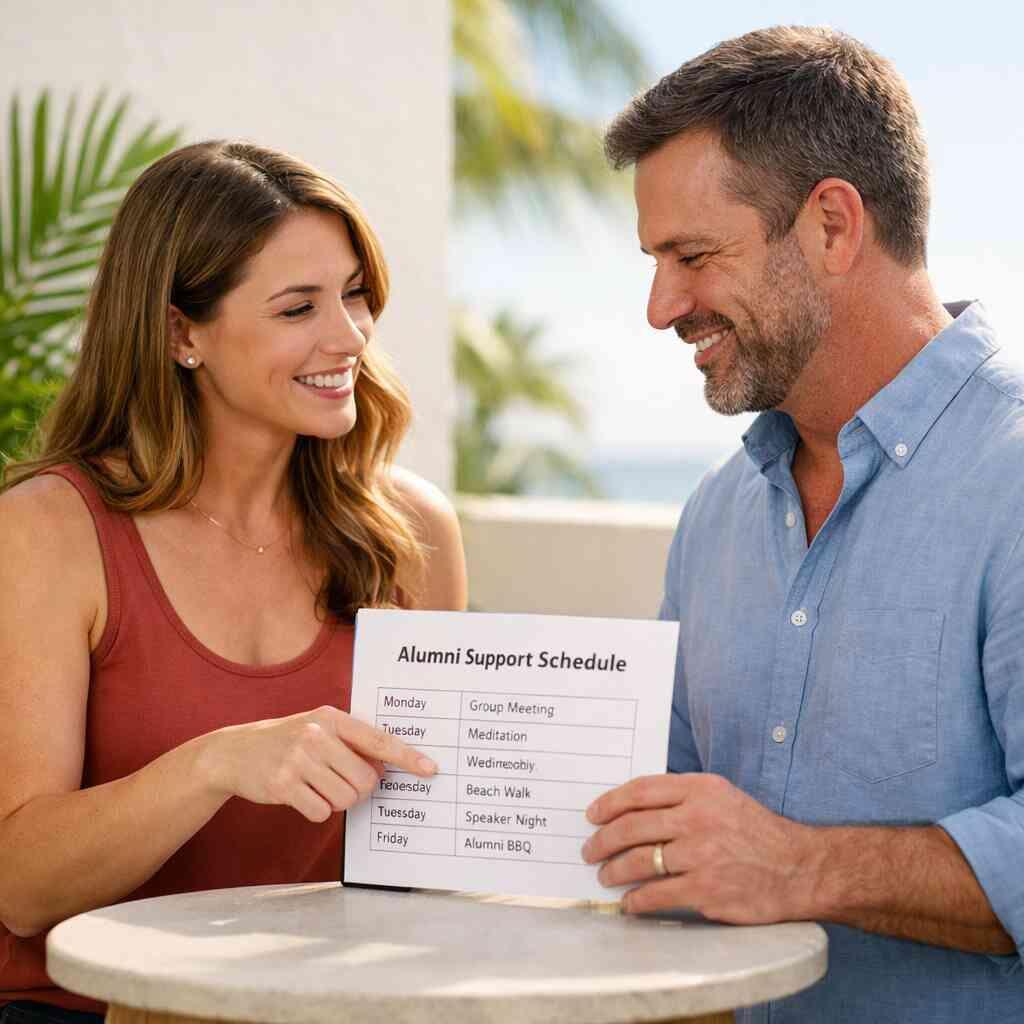
Some people also need sober living resources. That can give them a safer bridge while they practice recovery skills outside treatment. An alumni program adds another layer of connection. It keeps people linked to support, accountability, and reminders of what is working. If you want to see how this can look in practice, aftercare planning and sober living resources in Delray Beach is a smart place to start.
Alumni support aligns with continuing care best practices. Recovery is not a finish line. It is a series of practiced choices. The more support you keep after discharge, the less fragile those choices feel.
Where holistic recovery tools like yoga therapy, art therapy, mindfulness meditation, and relapse prevention planning fit
Holistic recovery is most useful when it supports, not replaces, clinical care. Yoga therapy, art therapy, and mindfulness meditation can help people reconnect with their bodies and lower stress. They work best alongside therapy, not instead of it. That is especially true for trauma, anxiety, and insomnia.
Relapse prevention planning deserves equal attention. It turns vague hope into concrete steps. For example, you identify triggers, early warning signs, coping skills, and who to call before you are in danger. That practical work often blends with SMART Recovery, 12-step alternatives, and other support systems. Different people need different language, but everyone needs a plan.
This is where a compassionate program stands out. It does not force a single path. It helps you find what is sustainable. That might mean morning meditation, evening meetings, or a simple check-in text. Small things matter when they happen consistently.
How to choose a rehab that supports long-term recovery in Delray Beach without losing sight of real-life needs
Choosing the right program means looking past slogans. Ask whether the team offers licensed clinicians, integrated psychiatric care, and clear step-down options. Ask about family weekend, case management support, and support for young adult rehab, a professional’s program, LGBTQ+ affirmative treatment, veterans support, or gender-specific treatment if those matter to you. The right rehab should match your life, not erase it.
You may also want to ask about RECO Intensive reviews, RECO Intensive alumni, and the program’s relationship to the broader Delray Beach recovery community. Reputation matters, but fit matters more. A private rehab can still feel personal if the staff listens, explains, and adjusts care with care. That is what a strong intake process should do.
If you are weighing your options, start with one practical move today: compare two programs, confirm insurance, and ask how they handle PHP to IOP step-down. You do not have to sort out every detail right now. Start with one call, ask one clear question, and let the answers tell you whether the program feels steady enough for your life.
Frequently Asked Questions
How long does detox last at a Delray Beach rehab?
Detox length depends on the substance, overall health, and withdrawal risk. Alcohol and benzodiazepine withdrawal can require close medical monitoring. Opioid detox may feel shorter physically, but cravings can last longer. A clinical team should assess you before giving a timeline. If safety is a concern, medical detox is the right place to start.
Does RECO Immersive take my insurance?
Many people use insurance for treatment, but coverage depends on your plan and benefits. RECO Immersive offers insurance verification for Florida rehab programs to help you review Aetna, Cigna, Blue Cross Blue Shield, and possible out-of-network benefits. The team can explain what your plan may cover before admission.
What’s the difference between PHP and IOP?
PHP usually provides more weekly hours, more structure, and more clinical oversight than IOP. It often fits people who need strong support after detox or crisis. IOP, or intensive outpatient, is a step-down level for people who are more stable but still need regular therapy. The right choice depends on safety, symptoms, and home support.
Can I bring my phone to treatment?
Policies vary by program and level of care. Some PHP programs allow limited phone use, while others restrict it during parts of the day to reduce distraction. Ask during intake so you know what to expect. Clear rules often help people settle in faster.
Is family involved in the program?
Family involvement is often helpful, especially when addiction or mental health symptoms have affected trust at home. Many programs offer family therapy, education, or a family weekend. The goal is not blame. It is better communication, firmer boundaries, and stronger support for recovery.
What if I need help for depression but not addiction?
PHP can still help if depression, anxiety, bipolar symptoms, or trauma are the main concern. Dual diagnosis care is useful when substance use is part of the picture, but it is not the only reason to seek support. A good intake assessment can help determine the right level of care for your needs.