What Parents Should Know About Teen Rehab Support in Florida
If your teen is hiding more than they are sharing, that ache in your chest is real. You may be watching grades slip, moods swing hard, or money disappear, and wondering what you missed. That fear can make every decision feel heavier. It also makes parents delay help longer than they should. Here is what […]


If your teen is hiding more than they are sharing, that ache in your chest is real. You may be watching grades slip, moods swing hard, or money disappear, and wondering what you missed. That fear can make every decision feel heavier. It also makes parents delay help longer than they should.
Here is what many families miss: teen substance use and mental health struggles often look like “just adolescence” at first. Then the pattern tightens. You see more lying, more isolation, and more risk. If you are searching for teen rehab support in Florida, you likely need clarity, not more noise.
When your teen needs more than reassurance and you need a plan that actually fits
The signs of addiction in teens that parents often mistake for mood swings or stress
Parents often tell us they thought it was stress from school, sports, or friends. That assumption is understandable. Teens protect privacy, and early substance use can hide behind normal behavior. Still, certain shifts deserve your full attention.
Watch for sudden changes in sleep, appetite, and friend groups. Look for missing prescriptions, empty bottles, vaping devices, or frequent red eyes. A teen who once stayed engaged may now avoid family meals and disappear behind a locked door. Those can be signs of addiction in teens, not just attitude problems.
One parent from the Boca Raton area described it like this: their son was “fine” in the morning, then angry by dinner. They later found weekend pill use and missed classes. The emotional whiplash felt like teen drama until it clearly was not. That kind of pattern is exactly why families start searching for drug rehab near me and feel relieved when someone finally names the problem.
When anxiety treatment, depression and addiction, or bipolar disorder therapy point to a deeper pattern
Some teens do not start with drugs. They start with panic, low mood, or intense mood swings. Then they begin using alcohol or pills to quiet what hurts. That is why anxiety treatment, depression and addiction, and bipolar disorder therapy often overlap in real life.
A teen who uses cannabis to sleep, stimulants to focus, or alcohol to calm down may be self-medicating. That pattern can signal dual diagnosis or co-occurring disorders. The mental health issue and the substance use feed each other. If you only treat one side, the other side usually pulls the teen back.
You may also see trauma underneath the behavior. In South Florida, we often hear from families dealing with divorce, assault, grief, or years of conflict. In those cases, trauma therapy South Florida programs, PTSD treatment, and careful mood assessment matter early. The right plan does not shame the teen. It explains the symptoms and treats both parts at once.
Why a Delray Beach rehab can feel less frightening than trying to handle teen mental health treatment at home
Home can be loving and still not be the right setting for stabilization. Parents are too close to the pain. Teens know how to push old buttons. Everyone gets tired, then conversations turn into standoffs.
A Delray Beach rehab can lower that tension because structure does some of the work. Meals, groups, check-ins, and clinician-led support create rhythm. Families often say it feels less like policing and more like treatment. That matters when a teen is already defensive.
A coastal setting can also help. The calm around Delray Beach, near Atlantic Avenue and the quieter stretches west of downtown, gives some teens a little breathing room. The setting is not the treatment, of course. But a steadier environment can make teen mental health treatment easier to begin and easier to maintain.
What happens behind the doors of teen rehab support in Florida
How a residential treatment facility, partial hospitalization program, and intensive outpatient fit together
Teen care usually works best as a ladder, not a single room. A residential treatment facility gives the highest daily support. A partial hospitalization program gives strong daytime structure without overnight stays. Intensive outpatient and mental health IOP reduce that intensity while still keeping frequent clinical contact.
This tiered model helps clinicians match care to need. Someone in crisis may need South Florida detox first, especially for alcohol, opioids, or benzodiazepines. Others can begin directly in PHP or IOP if they are medically stable. That is why families asking about Florida addiction treatment should always ask how levels of care connect.
Here is a simple snapshot:
Level of careWhat it usually includesBest fit forResidential treatment facility24-hour support, daily therapy, medical oversightHigher risk, unstable home environment, severe symptomsPartial hospitalization programFull-day treatment, evenings at homeTeens needing strong structure but not overnight careIntensive outpatientSeveral sessions weekly, school-friendly schedulingStepping down care, maintaining progressOutpatient program Delray BeachTherapy and monitoring with more independenceOngoing support and relapse preventionFamilies looking for inpatient rehab Palm Beach County often discover that the best fit depends on safety, school demands, and symptom severity, not labels alone.
What PHP vs IOP really means for school, sports, and family time
Parents ask this question constantly: what is PHP vs IOP? The answer is practical. PHP usually takes more of the day and works like a bridge between crisis care and independent living. IOP takes less time and often lets a teen keep more of their routine.
That difference matters if your child is trying to stay in school or maintain a team schedule. A teen in PHP may need academic coordination and a lighter outside load. A teen in IOP may be able to return to classes sooner while still attending groups after school. Both can be strong options when they match the teen’s real needs.
The schedule also affects family life. One family I worked with in Palm Beach County had a daughter in cheer and AP classes. She needed PHP after a hospitalization, then stepped into IOP once sleep and mood stabilized. The key was not forcing one schedule on every problem. It was matching care to the teen’s actual capacity.
Why dual diagnosis treatment and co-occurring disorders in adolescents change the treatment plan from day one
When a teen has substance use plus depression, anxiety, trauma, or bipolar symptoms, treatment must change fast. That is the core of dual diagnosis treatment for teens. It also reflects the co-occurring disorder model used across evidence-based care. NIDA has long emphasized that integrated treatment improves the chance of lasting stability.
This is not a minor detail. A teen with panic disorder and alcohol misuse needs different support than a teen with cannabis use alone. A teen with a trauma history may shut down in a loud, confrontation-heavy group. Another may look oppositional when they are actually dysregulated. The clinical plan should account for all of that.
At RECO Immersive, families often ask about teen mental health treatment for co-occurring disorders before they ask anything else. That is smart. If a program treats addiction without recognizing anxiety, PTSD, or bipolar disorder, the plan can break down quickly. The best programs build around the whole picture from day one.
Where evidence-based treatment shows up in real care, such as CBT, DBT, EMDR trauma therapy, and group therapy activities
Good teen treatment should not rely on inspiration alone. It should use methods with evidence behind them. Cognitive behavioral therapy helps teens spot thought traps and change actions. Dialectical behavior therapy teaches distress tolerance, emotion regulation, and safer choices. EMDR trauma therapy can help some teens process trauma without staying stuck in the story.
Group work matters too. Group therapy activities let teens hear honest feedback, practice speaking up, and learn skills from peers. It can feel awkward at first. Then it often becomes the place where they stop pretending. That shift is powerful.
When parents look for evidence-based treatment, they should ask how therapy is used each week, not just whether a program lists the names. On the evidence-based therapy for teen recovery with CBT, DBT, and EMDR page, you can see how these methods fit together in actual care. That kind of detail tells you far more than marketing language does.
The decision points that matter before you choose a program
How to choose a teen rehab without getting lost in marketing language
This part is genuinely confusing for most families. Every site sounds compassionate. Every center says it is different. But the real question is simpler: does the program match your teen’s risk, diagnosis, and home situation?
Start with the basics. Ask how they handle alcohol, cannabis, stimulants, and pills. Ask whether they treat prescription pill addiction, benzodiazepine withdrawal, opioid rehab Delray, fentanyl treatment, or heroin recovery when those issues appear. Ask whether they support young adult rehab, LGBTQ+ affirmative treatment, veterans addiction help, and gender-specific treatment when needed.
You can also look for local fit. A center near home can reduce travel stress and make family work easier. For many families, a trusted resource like how to choose a teen rehab in Delray Beach helps you compare options without getting buried in slogans.
What parents should ask about licensed clinicians, Joint Commission accreditation, and DCF licensed care
Ask direct questions. Who provides therapy? Who handles psychiatric care? What supervision exists overnight or after hours? Are the clinicians licensed? Is the program Joint Commission accreditation recognized? Is it DCF licensed in Florida?
Those questions are not paperwork trivia. They tell you whether the program can support safety and quality. They also tell you whether the center works with proper standards for youth care. If a team hesitates to answer clearly, that is useful information.
Parents should also ask about experience with specific issues like alcoholism treatment center needs, cocaine detox Florida, or South Florida detox for teens with heavy use. If the team speaks plainly and carefully, that is a good sign. If they dodge, keep looking.
How insurance verification works for Florida rehabs that take insurance, out-of-network benefits, and self-pay options
Money worries often sit right beside fear. That is normal. Treatment is hard enough without a confusing bill. The good news is that many families can start with insurance verification before making a final decision. 
Ask about Florida rehabs that take insurance, Aetna, Cigna, and Blue Cross Blue Shield. Ask whether the program is in-network or can use out-of-network benefits. If you need it, ask about self-pay options too. Clear answers protect you from surprises.
Our insurance verification for Florida rehabs that take insurance page exists for exactly that reason. The goal is not pressure. It is clarity. And clarity helps you choose based on care, not panic.
Why family therapy, family weekend, and parent education for addiction can change the rhythm of recovery
Teen recovery does not happen in a vacuum. Family patterns matter. Stress at home matters. So does the way adults respond when fear takes over. That is why family therapy is not an optional extra in strong teen care.
Parents often feel guilty, angry, or exhausted. Those feelings are real, and they can get in the way. Family weekend and parent education for addiction help reset the tone. You learn how to listen, set limits, and avoid constant crisis mode.
A family from Fort Lauderdale once told me their home felt like “a courtroom with snacks.” That changed after several family sessions. They stopped arguing every night about every detail. The teen still needed care, of course, but the home stopped acting like a second emergency room. That matters more than people realize.
How aftercare planning, relapse prevention, sober living resources, and alumni program support long-term recovery
Treatment should not end when a teen leaves the building. Recovery needs a bridge. That bridge is aftercare planning. It should include school support, therapy follow-up, relapse triggers, and who to call if things slip.
Good plans also cover relapse prevention, coping skills, case management, life skills training, vocational support, and nutritional counseling when needed. Some teens also benefit from sober living resources or a residential treatment facility step-down plan before they are fully independent. Those supports reduce the odds of a hard landing.
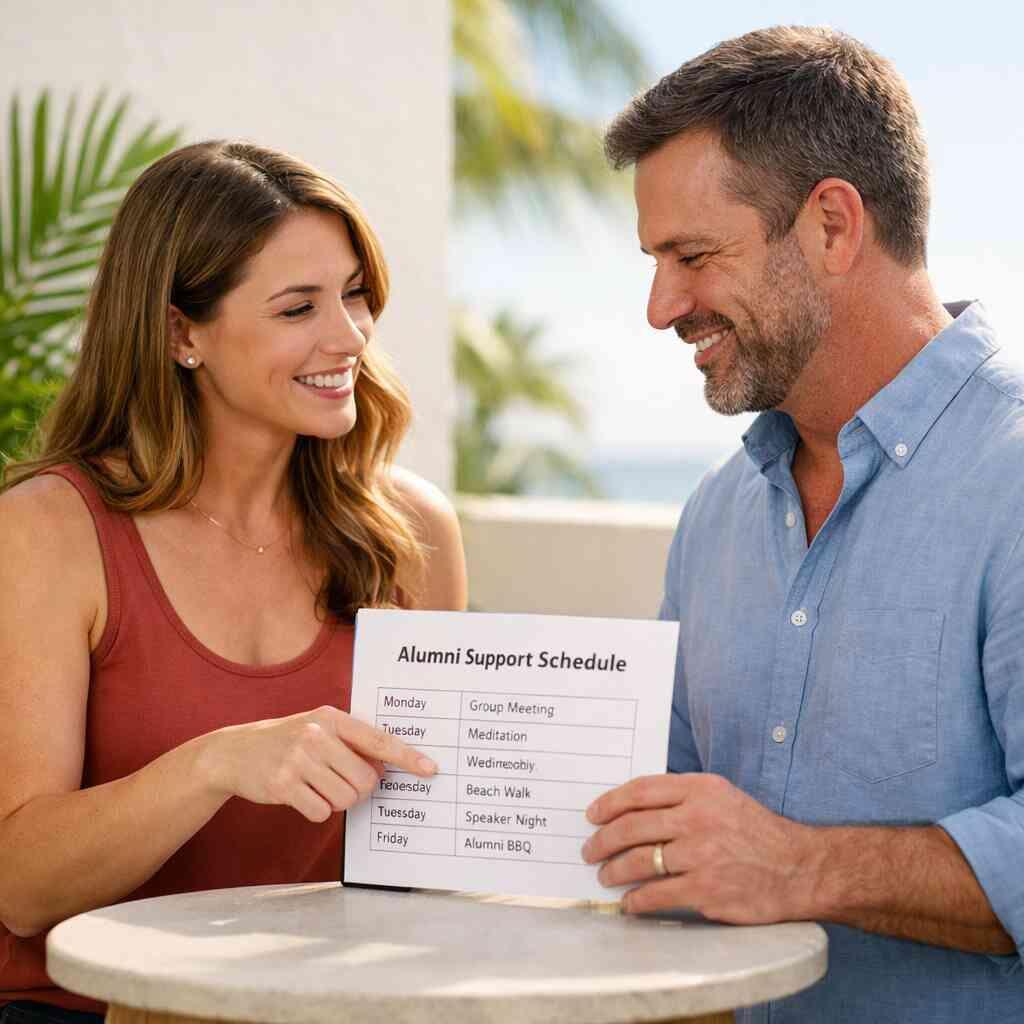
Families should ask how the center uses an alumni program and ongoing contact. On the aftercare planning and relapse prevention for teen rehab page, you can see how continuing care is structured. That continuity is not a luxury. It is part of the treatment.
What a smart next move looks like for families in Delray Beach and across South Florida
When intervention services make sense and when a calmer intake process is better
Sometimes families need a formal reset. Intervention services can help when denial, safety risks, or repeated crises block honest conversation. They work best when everyone is coached, calm, and clear about boundaries. They do not work well when they become a surprise attack.
Other times, a quieter intake process is the better path. If your teen is willing to talk, a respectful assessment can lower fear. That matters for teens with shame, trauma, or social anxiety. A calm start often leads to better engagement than a dramatic one.
If you live near Atlantic Avenue, you already know how quickly life in Delray Beach can feel busy and loud. A measured intake can feel like a relief. For some families, that is the difference between resistance and cooperation.
How medication-assisted treatment, Vivitrol injections, and Suboxone maintenance may fit some teen cases
Medication can play a helpful role for some adolescents, but it must be used carefully. Medication-assisted treatment is not one-size-fits-all. For certain opioid cases, FDA-approved options like Vivitrol injections or Suboxone maintenance may be considered by qualified clinicians. These decisions depend on age, medical history, substance use pattern, and close supervision.
That is especially true with opioid rehab Delray, fentanyl treatment, and some forms of heroin recovery. Medication can reduce cravings and lower relapse risk for some patients. It should always sit inside a broader treatment plan, not replace therapy.
Families should ask whether a program collaborates with medical staff and psychiatric care when medication may help. If your teen also has depression or anxiety, RECO Psychiatry for mental health support may be relevant within a coordinated plan. Medication works best when someone explains it in plain language and monitors it closely.
What holistic recovery can include through yoga therapy, art therapy, mindfulness meditation, and life skills training
Many teens do better when treatment includes more than talk. Holistic recovery can support regulation and engagement. That may include yoga therapy, art therapy, mindfulness meditation, and life skills training. These are not substitutes for therapy. They are supports that help the nervous system settle enough to learn.
This matters for teens who live in their bodies as much as their thoughts. A teen with trauma may not have words yet. A teen with ADHD may need movement. A teen with shame may open up more through creative work than direct questions. Good programs notice those differences.
Our team has seen teens respond best when structure stays consistent and the tools stay practical. The calm matters. The repetition matters. The small wins matter too.
How local support in Palm Beach County treatment centers, Broward County rehab, and the Delray Beach recovery community can keep progress going
Recovery tends to hold better when support stays close to home. That can mean Palm Beach County treatment centers, Broward County rehab, West Palm Beach mental health support, or Boca Raton outpatient follow-up. It can also mean using the Delray Beach recovery community for meetings, mentorship, and routine.
For some families, SMART Recovery or 12-step alternatives feel like a better fit than a single model. Others use both. The point is not loyalty to one path. The point is building enough support that a teen has places to go when stress rises.
If your family is weighing options near the coast, that local network can matter a lot. Beachside calm helps, but community keeps the work going. On the Delray Beach recovery community and outpatient support page, you can see how structured support and local life can fit together.
Why calling about insurance verification and RECO Intensive location 140 NE 4th Avenue Delray Beach FL 33483 can clarify the path forward
At some point, you need less research and more clarity. A call about insurance verification, level of care, and fit can answer the questions that keep circling in your head. If you are comparing private rehab options, this is where specifics matter.
RECO Immersive’s RECO Intensive location at 140 NE 4th Avenue Delray Beach FL 33483 serves families looking for thoughtful, individualized care in South Florida. If your teen needs help with depression and addiction, anxiety treatment, bipolar disorder therapy, or dual diagnosis treatment, a conversation can show you what the next step looks like. You do not have to solve every part of this today. Start with one call, ask direct questions, and let the answers be concrete.
“Reco was one of if not the best facilities that I have been apart of. Great staff that really cared for their clients. They showed levels of leniency that honestly most facilities would not allow. Specifically a lot of leniency towards me specifically. I was making chaos almost every second I was at Reco. Disruptive during groups, pushing boundaries, and going against the flow, amongst other things. At the same time this was my recovery. Some of the things I did was “decorate” my wall with behavioral contracts, show up to the facility without a shirt, and use sugar to simulate cocaine on my dresser. I take accountability for my actions, and accepted the consequences. I did get kicked out. The only thing that was piss poor about the facility was Travis McAllister. Who mind you, was not a therapist nor a physiatrist. Was screaming and cursing in the most disrespectful manner at a client (that was me). Treated me less than garbage at a facility geared towards getting support and recovering. On the other hand Brock McCoy was also brought in to try and reason with me. He sat me down and we had a civil conversation.(this was during the no shirt incident) I still was being uncooperative and not an ounce of negativity coming off of Brock MaCoy. And you know what? He gave me a killer shirt and on top of that, I put my shirt on 30 minutes later. After Travis McAllister Verbally assaulted me, I did stoop down to his level and started saying homosexual words and phrases at him. So yes at the end of the day I was engaging in idiotic behavior( hence RECOVERY facility) which lead to a punishment fitting of the crime. But Screaming, dropping F bombs, and being utterly disrespectful, is completely unprofessional. If you can’t take the heat get out of the Kitchen. Oh…..and one of the most engaged and caring director I’ve ever come across.”– Cristian D., a 5 star review from RECO Immersive on Google Business Reviews
Frequently Asked Questions
How long does detox last at a Delray Beach rehab?
Detox length depends on the substance, medical history, and severity of use. Alcohol and benzodiazepine withdrawal can require close medical oversight. Opioid detox may also vary based on prior use and symptoms. A program should give you a clear estimate after assessment, not a guess.
Does RECO Intensive take my insurance?
The safest answer is to verify benefits directly. Many Florida rehabs work with major insurers, but coverage depends on your plan and level of care. Ask about in-network and out-of-network benefits, deductibles, and any preauthorization needs. A benefits check can clarify this quickly.
What is the difference between PHP and IOP?
PHP, or partial hospitalization program, offers more hours and structure each day. IOP, or intensive outpatient, gives fewer hours and more flexibility for school or family life. PHP often fits higher needs, while IOP often supports step-down care. The best choice depends on safety and stability.
Can family be involved in teen treatment?
Yes. Strong teen programs usually include family therapy, parent education, and sometimes family weekend support. Family work helps change patterns at home and improves communication. It also gives parents tools for boundaries, accountability, and calmer responses. That support often matters as much as the teen’s individual sessions.
What if my teen has depression but not addiction?
That still deserves careful care. Depression in teens can affect sleep, school, appetite, and relationships. Some programs offer mental health IOP, psychiatric support, and therapy without a primary substance focus. If substance use is also present, ask for dual diagnosis screening so nothing gets missed.
Can my teen use SMART Recovery or 12-step alternatives?
Yes, many families explore both. Some teens connect with SMART Recovery because it feels practical and skills-based. Others prefer 12-step meetings for peer support and structure. The right fit depends on your teen’s personality, beliefs, and motivation. Good aftercare should offer choices.
Is a direct call really enough to start?
A call will not solve everything, but it can reduce confusion fast. Ask about levels of care, insurance, clinical fit, and family involvement. Then compare the answers with your teen’s real needs. You do not have to figure it all out today, but you can get clearer today.