Why RECO Immersive Uses Group Therapy Activities in 2026
Why group therapy activities feel different when treatment is built around real life If you are looking at Delray Beach rehab options and feeling tense about group work, that reaction makes sense. Most people worry they will be judged, pushed to talk too soon, or asked to share more than they can handle. In strong […]
Why group therapy activities feel different when treatment is built around real life
If you are looking at Delray Beach rehab options and feeling tense about group work, that reaction makes sense. Most people worry they will be judged, pushed to talk too soon, or asked to share more than they can handle. In strong treatment settings, group therapy activities do something gentler and more useful. They help you practice recovery in a room that feels close to real life.
That matters because healing does not happen only through insight. It also happens through repetition, feedback, and seeing yourself clearly in other people. In Florida addiction treatment, especially near the coast and the busy Atlantic Avenue corridor, people often arrive carrying shame, exhaustion, and a long list of unfinished conversations. Group work gives that pain a shape, and then it gives it direction.
“At Reco Immersive Mental Health, the emphasis on cutting-edge, holistic therapeutic approaches truly sets it apart. Their blend of evidence-based therapies—like cognitive-behavioral therapy, mindfulness practices, and innovative neurofeedback—ensures that each client receives personalized care. Their clinical director Weston is absolutely incredible and brilliant. The program’s integration of modern techniques with compassionate support really helps clients achieve lasting recovery.”– dayron G., a 5 star review from our business on Google Business Reviews
The moment shame starts to loosen in a room of peers
The first change is often quiet. Someone says, “I thought I was the only one,” and the room changes. That sentence is not dramatic, but it is powerful. Shame shrinks when it meets accurate mirrors.
We hear this from clients almost every week in South Florida recovery support settings. A person may walk in expecting pressure, then realize the room is built around respect. A man in early opioid recovery once sat through the first half of group with folded arms. By the end, he had spoken about fentanyl treatment fear, prescription pill addiction, and the relief of hearing others name the same dread. That shift did not fix everything. It did, however, lower the temperature enough for honesty.
Why structured activities work better than open-ended sharing alone
Open sharing has value, but structure keeps people safe and focused. A good group might use a prompt, a worksheet, a role-play, or a short reflection exercise. That structure helps people practice coping skills development instead of drifting into the same circular story. It also keeps sessions from becoming vague, which is a common problem in less organized programs.
Structured group therapy activities for immersive recovery support learning because they turn insight into action. For example, a coping plan becomes stronger when you say it out loud, refine it, and hear where it may break down. That is especially useful in mental health IOP, partial hospitalization program groups, and residential treatment facility programming. People need more than encouragement. They need reps.
How Delray Beach’s recovery community shapes the group experience
Delray Beach has a visible recovery community, and that changes the energy in treatment. You see it in sober living resources near Delray Beach, in local meetings, and in the way people talk about staying connected after discharge. The beachside recovery environment can feel calming, but the real benefit is social. Recovery becomes easier when it is not hidden.
In the programs that serve this area, local context matters. A person may live in Palm Beach County, commute through Boca Raton, or have family in Fort Lauderdale. Others come from Broward County rehab searches or from Miami addiction help queries. Group sessions help them build a South Florida recovery identity that goes beyond crisis. That identity supports long-term recovery, not just a short stay.
What happens in RECO Immersive group sessions that makes the work stick
RECO Immersive uses group sessions to help people practice recovery where it actually happens: in conversation, in conflict, and in pause. That is why group therapy activities are not treated like filler between bigger services. They are central to the work. The point is not to perform healing. The point is to train it.
What makes the work stick is repetition with guidance. Licensed clinicians can keep the room grounded, while peers bring lived truth. That combination is hard to fake, and clients usually feel the difference fast. It is one reason people comparing private rehab options often ask how groups are run, not just how many are offered.
How licensed clinicians use CBT, DBT, and EMDR-informed group work without making it clinical and cold
Evidence-based treatment does not have to sound sterile. Cognitive behavioral therapy helps people notice thoughts that fuel use, like “I already blew it” or “I cannot handle this.” Dialectical behavior therapy teaches skills for distress, boundaries, and emotional steadiness. EMDR trauma therapy can support healing from painful experiences, although it is usually delivered with careful clinical judgment and not as a one-size-fits-all tool.
In group, those models become practical. A clinician may ask members to identify a trigger, test a thought, or rehearse a response. That is why CBT, DBT, and EMDR therapy is useful in mental health IOP and outpatient program Delray Beach settings. The language stays human. The learning stays concrete. That balance helps people who are scared of “therapy talk” but still want real help.
Why emotional regulation skills and coping skills development are practiced in the room, not just talked about
People do not need more lectures about feelings. They need practice staying present when feelings rise. That is where emotional regulation skills come in. Group sessions can help people slow down, name the feeling, and choose a response instead of reacting on impulse.
Here is the part most people miss. Coping skills are not real until they survive stress. Someone can nod through a lesson on grounding, then freeze the first time their phone rings with bad news. In group, they can practice the skill with support, then troubleshoot what failed. That is why peer support in recovery and therapeutic group sessions can be so effective. It turns theory into habits.
How trauma-informed group therapy supports dual diagnosis treatment and co-occurring disorders support
Trauma, addiction, depression, bipolar disorder therapy, anxiety treatment, and PTSD treatment often show up together. That is the co-occurring disorders model, and it is why dual diagnosis treatment matters. Dual diagnosis and other major treatment authorities have long emphasized that substance use and mental health concerns should be treated together, not one after the other.
Trauma-informed group therapy creates a room where people do not have to explain their nervous system from scratch. A person with alcohol recovery support needs may also be dealing with panic, insomnia, or grief. Someone else may be in heroin recovery while also carrying depression and addiction. In those cases, trauma-informed group therapy for co-occurring disorders support helps people stay engaged without feeling exposed. That is not soft treatment. It is smart treatment.
Where art therapy, yoga therapy, and mindfulness meditation fit into intensive outpatient and partial hospitalization program groups
Not every group has to look like a circle of chairs and a worksheet. Some of the most useful work happens through movement, image, and breath. Art therapy in treatment gives people a way to externalize what they cannot yet say. Yoga therapy for healing can help the body release some of the vigilance that builds during withdrawal and stress.
Mindfulness meditation in recovery adds another layer. It teaches attention, which is a skill many people lose under pressure. In mindfulness meditation in recovery and stress management, people practice noticing urges without obeying them. That can matter in intensive outpatient and partial hospitalization program groups where the schedule is full and the emotional load is real. A short grounding exercise can change the whole session.
Which group therapy activities matter most when someone is juggling addiction, mental health, and family stress
When life is crowded with work, relationships, and symptoms, group therapy activities need to do more than entertain or comfort. They should build skills that hold up at home, at work, and in real conflict. That is especially true in alcoholism treatment center settings, cocaine detox Florida care, opioid rehab Delray programs, and prescription pill addiction treatment. People need tools they can use the same day.
The best group activities are the ones that lower isolation and raise accountability. They also need to fit the moment. Someone fresh from South Florida detox needs something different from someone in sober living resources or aftercare planning. A strong program adjusts without losing structure.
The peer support in recovery that reduces isolation and builds accountability
Peer support in recovery matters because addiction grows in secrecy. When people hear honest stories from others who have lived through similar chaos, isolation starts to break. That is not just emotional comfort. It is clinical leverage. Shame decreases, and participation rises.
A woman in early recovery once described walking into group after a benzodiazepine withdrawal scare with her family exhausted and frightened. She expected criticism. Instead, she heard peers talk about relapse prevention, family strain, and the fear of being “too much.” That room gave her language for what was happening. It also gave her accountability. How to compare outpatient program options in South Florida often starts with this exact question: Will the program help me stay connected when I want to disappear?
Why relapse prevention strategies are easier to learn in group than in a private conversation
Relapse prevention strategies are not just a list of do nots. They involve triggers, routines, people, and pressure points. In group, people can hear what others do when cravings spike, when family conflict lands hard, or when loneliness hits after dinner. That shared pattern recognition is hard to get from a single private conversation.
A group can also rehearse hard moments. Someone may practice calling a sponsor, asking for space, or using a coping script. Others can spot weak places in the plan. That back-and-forth is useful for 12-step alternatives and SMART Recovery support as well. It also helps people see that relapse prevention skills are learned, not magically known.
How communication skills training and social skills rebuilding help after detox and early abstinence
After detox, people are often physically steadier but emotionally raw. The question then becomes: how do you talk to people without blowing up, shutting down, or lying by omission? Communication skills training helps with that. So do social skills rebuilding exercises, especially in early abstinence when confidence is low. 
Group can practice a lot of this without embarrassment. Members can rehearse saying no, setting limits, or asking for help. That matters in essential skill training for accountability in treatment, especially when someone is trying to return to work, repair a marriage, or reconnect with adult children. Learning to speak clearly is recovery work. So is learning to listen.
The role of family therapy support, aftercare planning, and sober living resources in long-term recovery
Family stress is often part of the story, not separate from it. That is why family therapy support can be such a stabilizing part of the plan. It helps people understand patterns, reduce blame, and create realistic expectations. It also gives family members a place to ask hard questions safely.
Aftercare planning matters just as much. Good discharge planning connects people to sober living resources, outpatient follow-up, alumni support, case management support, and life skills training. Family therapy support and aftercare planning can help families learn what support looks like after treatment ends. That may include vocational support, nutritional counseling in rehab, or simply knowing who to call when stress spikes. Recovery lasts longer when the plan is specific.
How holistic recovery tools like mindfulness meditation, art therapy, and yoga therapy fit into trauma therapy South Florida care
Holistic recovery is not a substitute for evidence-based treatment. It is a way to support it. Mindfulness meditation, art therapy, and yoga therapy can help settle a nervous system that has been on alert for too long. They also give people different entry points when talking feels hard.
In trauma therapy South Florida care, that flexibility matters. Some people can name their fear right away. Others need a drawing, a breath exercise, or a body-based practice before words arrive. Art therapy in treatment for coping skills development and yoga therapy for healing in holistic recovery care fit well inside this kind of programming. They do not replace conversation. They deepen it.
What to do next when you are comparing Delray Beach rehab options and trying to choose wisely
Choosing treatment can feel like reading fine print while your life is on fire. That is a hard place to make decisions from. Still, you can compare programs in a grounded way. Focus on support level, clinical depth, family involvement, and what happens after discharge.
Delray Beach has many options, from private rehab to outpatient program Delray Beach services and residential treatment facility care. The differences matter. So do the details around insurance verification, relapse prevention, and dual diagnosis support. The right question is not “Which place sounds best?” It is “Which place fits what I need right now?”
How to think about PHP vs IOP when the schedule and support level are both under pressure
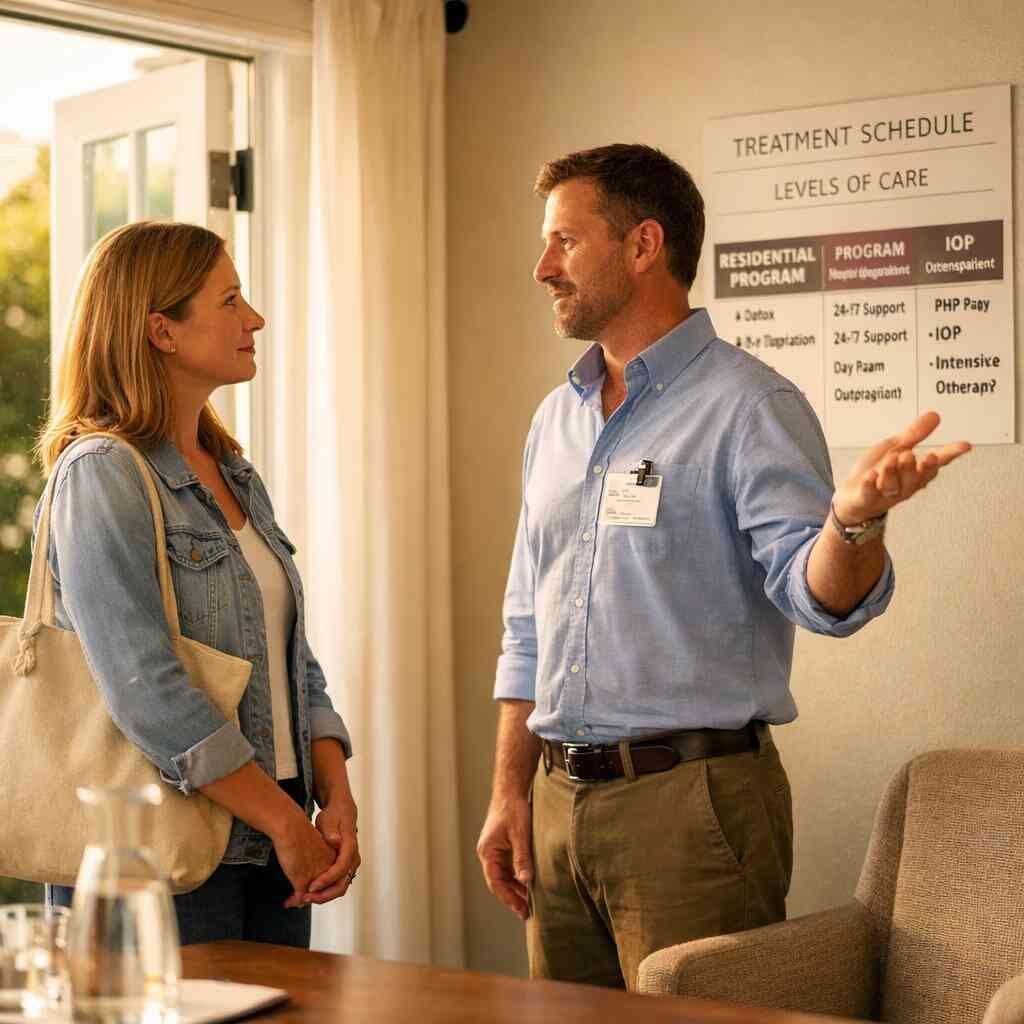
PHP vs IOP is one of the most common comparison points. PHP, or partial hospitalization program care, usually offers more weekly structure and support. IOP, or intensive outpatient, offers strong treatment with more flexibility for work, family, or school. The right fit depends on how stable you are, how much support you have at home, and how intense your symptoms feel.
If you want a deeper breakdown, what is PHP versus IOP for South Florida recovery can help you compare the two. The key is not prestige. It is containment. If nights are unstable, PHP may fit better. If you can manage more independence, IOP may make sense.
Level of careWhat it usually offersBest fitResidential treatment facilityHighest daily structure, 24-hour supportSevere instability or unsafe home settingPHPStrong daytime structure, less overnight supportNeed for high support without full residential stayIOPFewer weekly hours, more flexibilitySteadier symptoms and stronger home support### What insurance verification can uncover before admission and why out-of-network benefits matter
Insurance questions can be stressful, especially if you are comparing Florida rehabs that take insurance and private rehab options. But insurance verification can prevent surprises. It can show what the plan covers, what the deductible is, and whether out-of-network benefits may help. It can also clarify self-pay options if needed.
Before admission, ask for a plain explanation. That helps you compare Aetna, Cigna, Blue Cross Blue Shield, and other plans without getting buried in jargon. Insurance verification should tell you what your financial path looks like before you commit. Clear numbers reduce fear. They also make it easier to focus on care.
How to compare a residential treatment facility, outpatient program Delray Beach, and mental health IOP without getting lost in marketing language
Marketing language can blur important differences. Some programs sound similar but offer very different levels of structure, clinical depth, and aftercare support. Start by asking about the daily schedule, the types of group therapy activities used, and how dual diagnosis treatment is integrated. Then ask about alumni support, case management, and family weekend options.
One practical way to compare programs is to ask these questions:
- How many group hours happen each week?
- Do licensed clinicians lead the sessions?
- Is trauma therapy South Florida care built in?
- What happens after discharge?
- How do you support co-occurring disorders?
- Is there medication-assisted treatment when appropriate, including Suboxone maintenance or Vivitrol injections?
That kind of comparison cuts through the noise. It helps you evaluate an outpatient program Delray Beach or a residential treatment facility on substance, not slogans.
Why the safest next move is to ask about dual diagnosis support, group therapy activities, and aftercare support before you enroll
If you are still deciding, ask direct questions before you enroll. Ask how dual diagnosis support works, how group therapy activities are chosen, and how aftercare planning begins. Ask about sober living resources, alumni program support, and whether the team helps with intervention services when families need that path. Those answers tell you a lot.
The best programs talk plainly about signs of addiction, detox needs, depression and addiction, anxiety treatment in rehab, and long-term sobriety planning. They do not pretend recovery is simple. They also do not leave you guessing about the next month. If you want a local place to compare against your options, RECO Immersive location guide for 140 NE 4th Avenue, Delray Beach can give you a clearer sense of fit. Start with one call, ask three specific questions, and keep the conversation honest. You do not have to figure everything out today.
Frequently Asked Questions
How long does detox last at a Delray Beach rehab?
Detox length varies based on the substance, the person’s health, and withdrawal severity. Alcohol, opioids, benzodiazepines, and cocaine can all affect timing differently. Medical teams usually watch for safety issues first, then move toward stabilization. If you are asking because you are worried about how long you will feel sick, that worry is normal. A good team will explain the plan in plain language and help you understand what happens hour by hour.
Does RECO Immersive take my insurance?
That depends on your plan and benefits. Insurance verification can clarify whether your policy includes behavioral health coverage, out-of-network benefits, deductibles, and any preauthorization needs. The easiest way to avoid confusion is to have the admissions team review the policy details directly. If insurance does not cover everything, self-pay options may still be possible. The important part is knowing the numbers before admission.
What is the difference between PHP and IOP?
PHP, or partial hospitalization program care, usually gives you more weekly hours and more structure. IOP, or intensive outpatient, offers fewer hours and more flexibility for work, school, or family duties. PHP may fit better if you need more support after detox or during a rough mental health period. IOP may fit better if you have stronger stability and a safer home environment. The right choice depends on your symptoms, goals, and support system.
Can I bring my phone to treatment?
Policies vary by program level and treatment phase. Some residential treatment facility settings limit phone access early on so you can focus on stabilization and group work. Outpatient settings often allow more normal use outside session hours. The best move is to ask about communication rules during intake so nothing surprises you. Clear expectations can reduce stress right away.
Is family involved in the program?
Many quality programs include family therapy support because addiction affects the whole system. Family sessions can help reduce blame, improve communication, and set healthier boundaries. Some programs also offer family weekend programming or education about relapse prevention and aftercare planning. If family relationships are strained, that does not disqualify anyone from care. It simply means the work may need to be paced carefully.
What if I need help for depression but not addiction?
You can still seek care. Mental health IOP, trauma therapy, and dual diagnosis treatment can help when depression, anxiety, PTSD, or bipolar disorder symptoms are the main concern. Some people also have substance use concerns that are less visible at first. A good intake process will sort that out without judgment. The goal is to match the level of care to the symptoms you actually have.