What Is Benzodiazepine Withdrawal Care at RECO Immersive
If you are reading this because stopping Xanax, Ativan, Valium, or Klonopin feels scary, that fear makes sense. Benzo withdrawal can start as unease and then turn severe quickly. Many people wait too long because the symptoms look like “just anxiety.” That is the part most families miss. At RECO Immersive in Delray Beach, benzodiazepine […]
If you are reading this because stopping Xanax, Ativan, Valium, or Klonopin feels scary, that fear makes sense. Benzo withdrawal can start as unease and then turn severe quickly. Many people wait too long because the symptoms look like “just anxiety.” That is the part most families miss.
At RECO Immersive in Delray Beach, benzodiazepine withdrawal care is designed to reduce risk, not add stress. The goal is to keep your nervous system steady while the body adjusts. For some people, that means benzodiazepine withdrawal care in Delray Beach with close monitoring and a calm setting near the coast. For others, it means connecting detox with broader Florida addiction treatment and dual diagnosis treatment so the full picture gets addressed.
When benzodiazepine withdrawal stops feeling like a side effect and starts feeling dangerous
The warning signs that benzo withdrawal needs medically supervised detox
Benzo withdrawal does not always announce itself with one dramatic symptom. Often, it begins with shaking hands, rising panic, sweating, poor sleep, or a strange sense that your body is “off.” Then the signs intensify. If you notice confusion, severe agitation, a racing heart, vomiting, or any seizure risk, medically supervised detox matters right away.
We hear this from people in Delray Beach rehab settings all the time: “I thought I could tough it out.” That is understandable, but benzo withdrawal is different from many other withdrawals. It can become medically dangerous, especially after long-term use, high doses, or abrupt stopping. A medically supervised South Florida detox for benzo withdrawal gives clinicians a chance to track changes early and respond before symptoms spiral.
Why stopping Xanax, Ativan, Valium, or Klonopin too fast can turn risky
Benzodiazepines slow down brain activity. When they leave the body too quickly, the nervous system can rebound hard. That rebound can bring insomnia, panic, tremors, nausea, blood pressure changes, and, in severe cases, seizures or hallucinations. The risk rises when someone has used prescription pills for months or years.
Here is what many online guides miss: the danger is not just the medication itself. It is the speed of change. If you have been taking a daily dose for a long time, the body may depend on that chemical rhythm. Slow tapering support, rather than a sudden stop, helps lower the shock. SAMHSA guidance supports careful withdrawal management for sedatives because safety comes first.
How anxiety, insomnia, tremors, and panic can hide a deeper withdrawal picture
Benzo withdrawal can look like a panic disorder flare. It can also look like depression, restless legs, or plain exhaustion. That overlap confuses people, and it can confuse families too. If you already receive anxiety treatment, the symptoms may seem familiar even when the cause is different.
One client near Atlantic Avenue described feeling “wide awake and terrified” for days, then convinced the problem was only stress. The evaluation showed a much broader withdrawal pattern. That is why skilled assessment matters. In South Florida detox, the clinical team watches for the pattern behind the symptoms, not just the symptoms themselves.
When co-occurring disorders make benzodiazepine withdrawal harder to read
Co-occurring disorders make withdrawal harder to separate from underlying mental health needs. Someone seeking PTSD treatment may feel more flashbacks as benzos fade. Someone with depression and addiction may suddenly feel blank, hopeless, or irritable. Bipolar disorder therapy also becomes more complex when sleep drops and mood shifts.
This is where dual diagnosis treatment matters. NIDA and other addiction medicine experts stress that co-occurring disorders need integrated care, not split care. If anxiety, trauma, or mood symptoms are driving the medication use, the withdrawal plan should account for that. A center that understands dual diagnosis treatment for co-occurring anxiety and addiction can help you sort out what is withdrawal, what is baseline mental health, and what needs ongoing support.
The benzo detox support plan that steadies the nervous system instead of shocking it
What medically supervised detox looks like at RECO Immersive in Delray Beach
Medically supervised detox is not about forcing the body through discomfort. It is about reducing risk while symptoms settle. At RECO Immersive, the process focuses on intake, medication review, symptom tracking, and individualized treatment planning. That structure matters when withdrawal can shift hour by hour.
The setting also matters. Delray Beach has a calm, coastal healing environment, and that can help people feel less trapped during a hard time. Some families compare the experience to trying to focus while the world keeps moving outside on Federal Highway or Atlantic Avenue. Here, care is meant to feel contained. If benzo withdrawal overlaps with broader stabilization needs, medically supervised detox and medication stabilization can be the bridge.
How tapering support, medication stabilization, and symptom monitoring work together
A safe taper often uses small, planned dose reductions. The pace depends on the medication, how long it has been used, other substances involved, and the person’s medical history. Clinicians monitor sleep, blood pressure, mood, tremor, appetite, and alertness. They also watch for warning signs that the taper is moving too fast.
Medication stabilization does not mean replacing one dependency with another. It means using evidence-based medical support to keep withdrawal manageable. For some people, medication-assisted treatment may be part of the broader plan when alcohol or opioids are also involved, though that is separate from benzo tapering itself. The point is simple: symptoms should be managed, not ignored. That is the logic behind medically supervised detox and medication stabilization.
Where dual diagnosis treatment fits when benzodiazepine use overlaps with anxiety treatment or PTSD treatment
Many people started benzodiazepines with a real prescription for panic, sleep, trauma, or acute stress. That does not make the withdrawal any less serious. It often makes the emotional side more layered. If you are trying to stop a medication that once felt like relief, grief and fear can show up too.
Dual diagnosis care treats both the substance issue and the mental health condition together. That approach fits treatment for co-occurring anxiety and addiction, PTSD, depression, bipolar symptoms, and trauma-related distress. A partial hospitalization program in Delray Beach can often provide the structure needed after detox if symptoms remain active. It is a strong option when you need more than outpatient support but less than full residential intensity.
Why evidence-based treatment and licensed clinicians matter during South Florida detox
Benzo detox care should never rely on guesswork. Evidence-based treatment uses proven methods, close monitoring, and clinical judgment shaped by training. Licensed clinicians can distinguish panic from withdrawal, insomnia from destabilization, and medication side effects from a medical emergency. That skill protects people when symptoms blur together. 
A DCF-licensed, Joint Commission-accredited setting adds another layer of trust, although families should always verify current status directly. RECO Immersive’s model aligns with anxiety treatment with benzo detox support in Delray Beach when anxiety is part of the picture. In South Florida detox, that matters because people often arrive with multiple stressors at once: work, family, driving on I-95, and the fear of being judged. Care should lower that pressure, not increase it.
“At Reco Immersive Mental Health, the emphasis on cutting-edge, holistic therapeutic approaches truly sets it apart. Their blend of evidence-based therapies—like cognitive-behavioral therapy, mindfulness practices, and innovative neurofeedback—ensures that each client receives personalized care. Their clinical director Weston is absolutely incredible and brilliant. The program’s integration of modern techniques with compassionate support really helps clients achieve lasting recovery.”– dayron G. (5 stars), a 5 star review from our business on Google Business Reviews
How our medical detox process connects to inpatient rehab Palm Beach County and outpatient program Delray Beach options
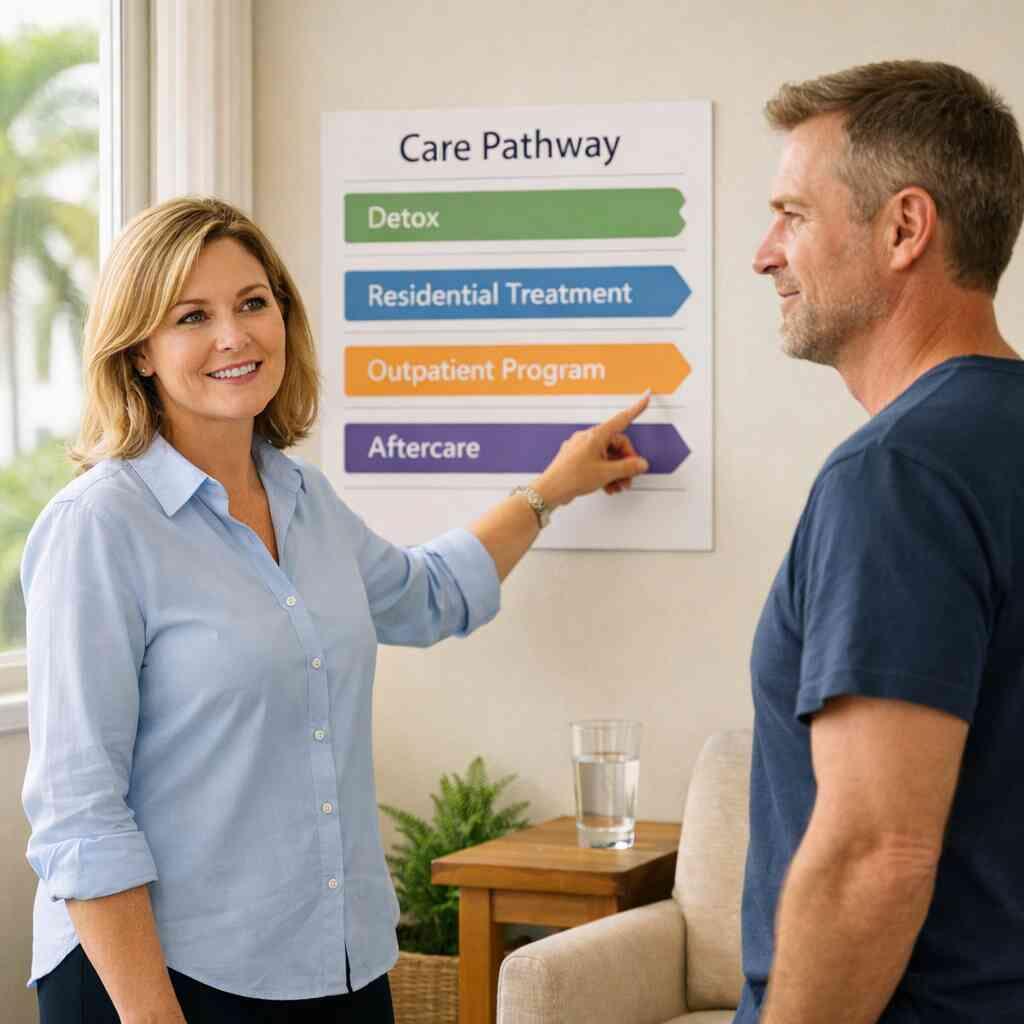
Detox is only the beginning of the plan. If the body stabilizes but the triggers stay untouched, the risk rises again. That is why medical detox should connect cleanly to the next level of care. At RECO Immersive, that may mean inpatient rehab Palm Beach County placement, residential treatment, or an outpatient program Delray Beach option based on your needs.
Here is the part families often ask about after the worst symptoms fade: “What happens next?” The answer depends on how stable you feel, how severe the underlying anxiety or trauma is, and how much structure your days need. Our medical detox process is designed to keep that transition clear. For many people, it is the difference between temporary relief and real momentum.
What happens after the worst symptoms pass and why recovery still needs a map
How recovery planning turns short-term withdrawal care into long-term recovery
When the acute symptoms ease, people often feel both relieved and exposed. That is normal. The nervous system is quieter, but the habits that formed around the medication still need attention. Recovery planning turns that vulnerable moment into a structured path.
Strong planning includes coping skills, relapse prevention, and a clear schedule. It also includes sober living resources when the home setting is unstable or too triggering. In a place like Delray Beach, where the recovery community is active and beachside recovery can feel hopeful, the plan still has to be practical. Good planning answers the hard questions before cravings do.
What PHP vs IOP means when stepping down from partial hospitalization program to intensive outpatient
PHP means partial hospitalization program. It offers a high level of daytime treatment without an overnight stay. IOP means intensive outpatient, which gives support with more flexibility for work, family, or school. The difference is mainly intensity and time in treatment, not quality.
If you are comparing options, think of PHP as a stronger container and IOP as a step-down with more independence. That step-down often helps after detox or residential care. A partial hospitalization program in Delray Beach can support early stabilization, while an intensive outpatient program for mental health support in Delray Beach helps maintain progress as daily life resumes. For many people, that transition is where long-term recovery starts to feel possible.
Level of careBest forMain focusPHPHigher symptom load, early stabilizationDaily structure, therapy, monitoringIOPMore stability, more independenceSkill-building, relapse prevention, reintegration### How CBT, DBT, EMDR trauma therapy, group therapy activities, and family therapy support relapse prevention
Different therapies help in different ways. Cognitive behavioral therapy teaches you how thoughts, feelings, and actions connect. Dialectical behavior therapy builds coping skills and emotional regulation. EMDR trauma therapy can help when past trauma keeps the body on alert. These are not buzzwords; they are evidence-based tools with clear goals.
RECO Immersive uses cognitive behavioral therapy for relapse prevention, dialectical behavior therapy for coping skills and emotional regulation, and EMDR trauma therapy for co-occurring disorders. Group therapy activities help people feel less isolated, while family therapy improves communication and boundaries. A mother from Boca Raton once told staff that the first family session made the problem feel “smaller and more solvable.” That is the power of structure and shared language.
Where case management, life skills training, sober living resources, and aftercare planning fit next
Recovery is not only about feelings. It is also about rides, meals, schedules, prescriptions, and bills. Case management helps coordinate those practical pieces. Life skills training builds the routines that keep stress from becoming relapse.
This is where aftercare planning matters most. It can include follow-up therapy, support groups, sober living resources, and clear crisis steps. Some people choose 12-step alternatives such as SMART Recovery. Others prefer a more traditional mutual-support path. Aftercare planning and relapse prevention for long-term recovery keeps the plan moving after discharge, when motivation can wobble and real life returns.
How insurance verification, private rehab options, and the RECO Immersive location help families choose the next right level of care
Families often delay action because they do not know what insurance will cover. That stress is real. Insurance verification should happen early, before small delays turn into bigger ones. If you are comparing Florida rehabs that take insurance, ask for a benefit check and a plain explanation of in-network and out-of-network benefits.
RECO Immersive is located at 140 NE 4th Avenue, Delray Beach, FL 33483, close to the heart of the local recovery community and not far from the beach. That location can matter for families in Palm Beach County, Broward County, Miami, Fort Lauderdale, and West Palm Beach who want care with a South Florida feel. Insurance verification for private rehab options can help you compare Aetna, Cigna, Blue Cross Blue Shield, and self-pay options without guessing. You do not have to solve everything today. Start with one call, ask for clarity, and let the next decision get easier from there.
Frequently Asked Questions
Question: What is Benzodiazepine Withdrawal Care at RECO Immersive, and how does medically supervised detox help in Delray Beach rehab?
Answer: Benzodiazepine withdrawal care at RECO Immersive is designed to support people coming off Xanax, Ativan, Valium, Klonopin, and other benzodiazepines with a focus on safety, stability, and comfort. Because benzo withdrawal can escalate from anxiety-like symptoms into medically serious issues such as severe agitation, vomiting, confusion, or seizure risk, medically supervised detox is often the safest first step. At RECO Immersive in Delray Beach, the care model emphasizes close monitoring, symptom tracking, medication review, and individualized treatment planning so the nervous system can adjust without being shocked. This approach is especially important for people with prescription pill addiction histories, co-occurring disorders, or anxiety treatment needs. For many families looking for Florida addiction treatment or South Florida detox, the goal is not just to stop the medication, but to create a calmer, more controlled path into long-term recovery.
Question: How does RECO Immersive approach tapering support, medication stabilization, and withdrawal symptom management during South Florida detox?
Answer: RECO Immersive approaches benzo detox support by using careful tapering support rather than abrupt discontinuation whenever clinically appropriate. Since the speed of change is a major factor in benzodiazepine withdrawal, a slow, medically guided reduction can help lower the risk of rebound panic, insomnia, tremors, and other withdrawal symptoms. During South Florida detox, licensed clinicians monitor sleep, blood pressure, mood, appetite, alertness, and other changes so the care plan can be adjusted if symptoms intensify. Medication stabilization is used to help the body settle while withdrawal is managed in a more controlled way, always within an evidence-based treatment framework. This is especially valuable for people who may be searching for drug rehab near me, inpatient rehab Palm Beach County, or a private rehab option that can provide structure without losing compassion.
Question: How does RECO Immersive handle dual diagnosis treatment when benzodiazepine withdrawal overlaps with anxiety treatment, PTSD treatment, or depression and addiction?
Answer: Dual diagnosis treatment is essential when benzodiazepine withdrawal overlaps with mental health concerns such as anxiety treatment, PTSD treatment, depression and addiction, or bipolar disorder therapy. At RECO Immersive, the goal is to understand what is coming from withdrawal, what is part of a co-occurring disorder, and what needs ongoing care after detox. This matters because benzo withdrawal can mimic or intensify symptoms like panic, irritability, insomnia, emotional numbness, or trauma-related distress. By using integrated care, RECO Immersive can connect detox with therapy and recovery planning that address the full picture rather than treating each issue separately. For people seeking mental health IOP, partial hospitalization program support, or outpatient program Delray Beach options, this kind of coordinated care can help build a more stable foundation for recovery.
Question: What therapies and recovery supports are available after detox at RECO Immersive, and how do they help prevent relapse?
Answer: After detox, RECO Immersive helps people move into a recovery plan that may include partial hospitalization program, intensive outpatient, or mental health IOP support depending on the level of care needed. The treatment approach can include cognitive behavioral therapy, dialectical behavior therapy, EMDR trauma therapy, group therapy activities, and family therapy to help address triggers, build coping skills, and improve communication. For many people, relapse prevention is not just about avoiding substances; it is also about learning how to manage stress, sleep, trauma symptoms, and daily responsibilities without returning to benzodiazepines. RECO Immersive also emphasizes aftercare planning, case management, life skills training, sober living resources, and holistic recovery supports like mindfulness meditation, yoga therapy, and art therapy when appropriate. These services can be especially helpful for those transitioning from a residential treatment facility or looking for long-term recovery support after South Florida detox.
Question: How can families compare insurance verification, private rehab options, and the RECO Immersive location before starting benzodiazepine withdrawal care?
Answer: Families often delay treatment because they are unsure about cost, coverage, or where to begin, which is why insurance verification is such an important early step. RECO Immersive can help people explore Florida rehabs that take insurance, including questions about Aetna, Cigna, Blue Cross Blue Shield, out-of-network benefits, and self-pay options so they can make a more informed choice. The RECO Immersive location at 140 NE 4th Avenue, Delray Beach, FL 33483 places care in the heart of a strong Delray Beach recovery community, with access to a coastal healing environment that many people find grounding during a difficult transition. For families comparing how to choose a rehab, this combination of location, compassionate care, and structured treatment can make the next step feel less overwhelming. Whether someone needs detox, inpatient rehab Palm Beach County placement, or an outpatient program Delray Beach option, starting with insurance verification and a clear intake process can help turn uncertainty into action.