How RECO Immersive Supports Dual Diagnosis Recovery
If you are reading this because substance use and mental health symptoms keep feeding each other, that fear makes sense. The cycle can feel exhausting. One problem quiets the other for a while, then both return harder. Families in Delray Beach often call this the “nothing is sticking” problem. That is exactly why dual diagnosis […]
If you are reading this because substance use and mental health symptoms keep feeding each other, that fear makes sense.
The cycle can feel exhausting.
One problem quiets the other for a while, then both return harder.
Families in Delray Beach often call this the “nothing is sticking” problem.
That is exactly why dual diagnosis treatment matters.
When a mental health crisis keeps colliding with substance use
Why anxiety, depression, PTSD, or bipolar symptoms can make alcohol or drug use spiral
Anxiety can make your body feel trapped in alarm. Depression can flatten energy and hope. PTSD can keep the nervous system stuck on edge. Bipolar disorder can bring rushed decisions, sleeplessness, and risk-taking. When any of these conditions meet alcohol or drugs, the brain often learns a painful shortcut. The substance seems to quiet distress, then the distress returns stronger.
Here is the part most people miss: substance use does not always begin as a search for pleasure. Often, it starts as a search for relief. We hear this from people looking for Florida addiction treatment for mental health and substance use after months of trying to self-manage panic, grief, insomnia, or trauma.
On Atlantic Avenue, a parent once described their son as “fine until nightfall.” He worked, smiled, and kept appointments, but evenings brought drinking and trouble sleeping. That pattern is common in depression and addiction, anxiety treatment, and PTSD treatment cases. Late hours, quiet rooms, and racing thoughts can become a dangerous mix.
At Reco Immersive Mental Health, the emphasis on cutting-edge, holistic therapeutic approaches truly sets it apart. Their blend of evidence-based therapies—like cognitive-behavioral therapy, mindfulness practices, and innovative neurofeedback—ensures that each client receives personalized care. Their clinical director Weston is absolutely incredible and brilliant. The program’s integration of modern techniques with compassionate support really helps clients achieve lasting recovery. *- dayron G., a 5 star review from our business on Google Business Reviews
What dual diagnosis means and why treating only one side rarely holds
Dual diagnosis means a person has both a substance use disorder and a mental health condition at the same time. Clinicians also call these co-occurring disorders. NIDA and SAMHSA both support treating these conditions together because each one can drive the other. If you only treat alcohol use and ignore trauma, the pain remains. If you only treat anxiety and ignore cocaine use, the brain chemistry still keeps the cycle alive.
That is why dual diagnosis treatment in Delray Beach has to look at the whole picture. A person may need help for alcoholism treatment center needs, opioid rehab Delray, or prescription pill addiction, while also getting care for mood symptoms. The same can apply to benzodiazepine withdrawal, fentanyl treatment, heroin recovery, or cocaine detox Florida concerns.
One young adult we saw struggled with daytime focus, then used pills to “slow the noise.” The pills helped briefly, then anxiety worsened and school disappeared from the picture. Once both sides were treated together, he could finally talk about sleep, shame, and coping without reaching for another chemical fix. That is the clinical logic behind the co-occurring model.
The signs a Delray Beach family notices before things get worse
Families usually notice the changes before the person does. Sleep shifts first. Then appetite, money, and mood start to wobble. The person may miss work, stop answering texts, or become unusually defensive. In Delray Beach and nearby Boca Raton, families often describe a house that feels quieter and more tense at the same time.
Common warning signs include:
- Isolation and vanished routines
- Bigger mood swings than usual
- Drinking or using earlier in the day
- Unexplained absences from work or class
- New panic, paranoia, or hopelessness
- Repeated promises that do not last
If you are searching for a drug rehab near me after seeing these signs, you are likely past the “wait and see” stage. That does not mean crisis is inevitable. It does mean you should take the pattern seriously and ask for a clinical assessment.
Why judgment, shame, and delay are often the real barriers to care
Shame delays care more often than lack of information. People worry they will be labeled. They worry about job consequences, family reactions, or being told they “should have handled it sooner.” Those fears are real, and they keep many people stuck far longer than necessary.
The stigma is especially strong for young adult rehab, professional’s program, LGBTQ+ affirmative treatment, veterans addiction help, women’s rehab, and men’s recovery populations, because each group carries its own pressure. In practice, the most dangerous delay is usually not the diagnosis. It is the silence around it.
The treatment map that matches the person, not just the diagnosis
How RECO Immersive layers evaluation, stabilization, and planning from the intake process forward
Good care starts with a careful intake process. That means a clinician asks about symptoms, substances, sleep, trauma, medications, safety, and support systems. It also means the team watches for urgent risks, such as withdrawal, suicidality, or psychosis. At RECO Immersive, that evaluation helps match the person to the right level of care instead of forcing a one-size-fits-all plan.
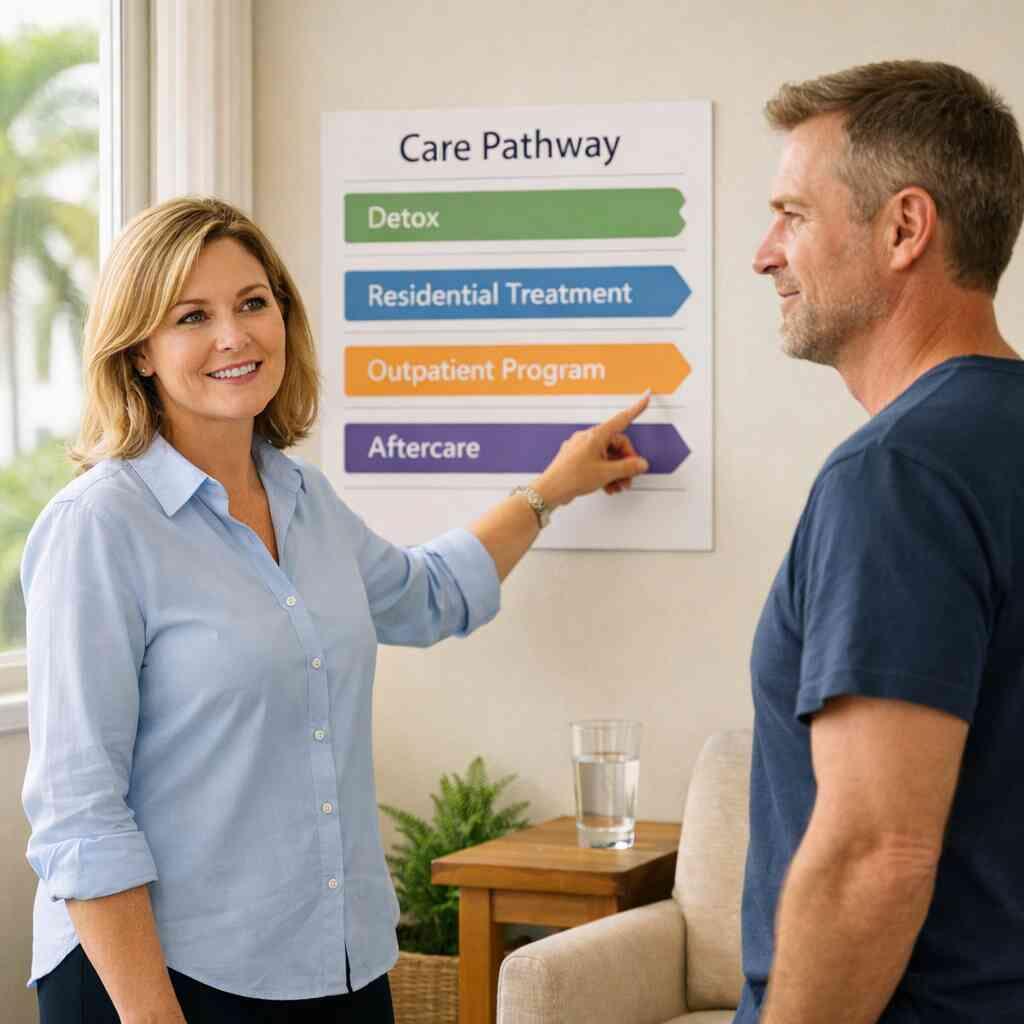
If you are comparing a residential treatment facility with dual diagnosis recovery support at RECO Intensive, the key question is fit. Does the person need 24-hour support? Do they need structure, but not a full residential setting? Are they stable enough for therapy, or do they need medical stabilization first?
That planning stage should also include case management, relapse prevention, coping skills, and practical needs like transportation, work leave, or family support. The best plans are clinical and real-world at the same time.
When South Florida detox or medical detox may be needed before therapy can stick
Some people need detox before deeper therapy can work. That is especially true with alcohol, opioids, benzodiazepines, and heavy stimulant use. Withdrawal can be more than uncomfortable. It can be medically risky. That is why South Florida detox and medical stabilization matters so much in early recovery.
A simple way to think about it: detox helps the body clear the substance. Treatment helps the mind and habits change. You need both, but not always at the same time or in the same setting. Families often ask how long detox lasts. The honest answer is that it varies by substance, use history, and medical needs.
If someone has shakes, vomiting, severe anxiety, confusion, or seizure risk, a South Florida detox setting may be the safer choice. For cocaine detox Florida or stimulant use, the risk looks different, but the crash can still be intense. A clinical team should decide, not guess.
Why PHP vs IOP matters for people balancing safety, work, school, or family
People often hear PHP vs IOP and think it is just scheduling. It is more than that. A partial hospitalization program gives more structure and more clinical contact. Intensive outpatient treatment gives strong support with more room to handle work, school, or family life. That difference can decide whether treatment is sustainable.
For someone stepping down from detox, PHP can provide a strong bridge. For someone stable enough to live at home, an outpatient program Delray Beach or mental health IOP may fit better. The right level of care should protect safety without overwhelming daily life.
Level of careBest forDaily structureResidential treatment facilityHigher support needsMost structuredPartial hospitalization programStable, but still fragileHigh structureIntensive outpatient treatmentMore independenceModerate structureIf you want a deeper comparison, see what PHP and IOP mean for recovery. That choice often depends on sleep, cravings, psychiatric symptoms, and home stress.
How evidence-based care like CBT, DBT, and EMDR trauma therapy fits co-occurring disorders
The strongest plans use evidence-based treatment. Cognitive behavioral therapy helps people spot thought traps and change actions. Dialectical behavior therapy teaches distress tolerance, emotion regulation, and safer choices. EMDR trauma therapy can help process traumatic memories without forcing endless retelling.
These methods matter for co-occurring disorders because symptoms overlap. A panic spike may trigger drinking. A trauma flashback may lead to pill use. A shame spiral may lead to isolation. What CBT and DBT mean for recovery explains why these tools work best when used together.
If PTSD is central, EMDR trauma therapy in South Florida can be a critical piece of care. It is not magic. It is structured trauma work that can reduce how strongly old memories hijack the present.
Where medication-assisted treatment and psychiatric medication management can support recovery
Medication can be part of recovery, not a failure of it. Medication-assisted treatment may include Suboxone maintenance for opioid use disorder or Vivitrol injections for alcohol or opioid relapse prevention. Psychiatric medication management can also help with depression, bipolar symptoms, anxiety, or sleep disruption.
The point is not to medicate feelings away. The point is to lower the noise enough for therapy to work. SAMHSA supports using FDA-approved medications when clinically indicated, especially for opioid and alcohol use disorders.
People often ask about fentanyl treatment, opioid rehab Delray, or benzodiazepine withdrawal and hope for a simple answer. There is no shortcut. There is, however, careful prescribing, monitoring, and adjustment by licensed clinicians.
How our Delray Beach rehab setting supports private rehab and beachside recovery without feeling clinical
The setting matters more than most people expect. A bright, calm environment can lower stress and help people stay engaged. In Delray Beach, the coastal pace, nearby nature, and quieter side streets create a different tone than a stark hospital wing. That can matter for people who already feel worn down.
RECO Immersive is built to feel more personal than a large, impersonal facility. That is helpful for private rehab, beachside recovery, and people who want treatment that feels respectful. On a practical level, this also helps families looking for inpatient rehab Palm Beach County or a higher-touch program near home.
What daily care looks like when mental health and addiction are treated together
How group therapy activities, individual therapy, and family therapy work as one plan
Recovery gets stronger when treatment is layered. Group therapy activities build honesty and accountability. Individual therapy gives space for private work. Family therapy helps repair communication and set boundaries that support sobriety.
A person with depression and addiction may need group support for isolation, one-on-one work for shame, and family sessions for conflict at home. That is not duplication. It is reinforcement. Family therapy support for dual diagnosis recovery helps families learn what helps and what accidentally fuels relapse.
One Delray family told us they kept arguing about “motivation.” What changed things was learning the difference between support and pressure. Once they stopped lecturing and started using clear, calm check-ins, the household tension dropped. Small shifts can change the whole room.
Why holistic recovery tools like yoga therapy, art therapy, and mindfulness meditation matter
Holistic tools are not decoration. They help people regulate stress in their bodies. Yoga therapy, art therapy, and mindfulness meditation can lower arousal, improve focus, and give the brain a break from constant threat scanning. That matters in trauma and addiction recovery. 
Holistic recovery tools like yoga and mindfulness can support people who feel too flooded for words alone. Some clients do better after sitting quietly with breathwork. Others open up after drawing, stretching, or a guided grounding exercise. The goal is not wellness theater. It is nervous system stabilization.
How case management, life skills training, and vocational support reduce relapse risk
Many relapses begin with logistics, not cravings. A person loses a job, misses rent, or cannot manage a schedule. Stress rises. Sleep falls apart. Substance use starts to look like relief again. That is why case management, life skills training, and vocational support matter.
These supports can include:
- Planning transportation
- Setting up follow-up appointments
- Coordinating school or work needs
- Building a daily routine
- Practicing money and time management
- Connecting to nutritional counseling
Here is what almost no online guide mentions: life skills work often protects sobriety more than people expect. A stable calendar can be just as therapeutic as a good insight.
What aftercare planning, sober living resources, and RECO Intensive alumni support can do after discharge
Discharge is not the finish line. It is the handoff. Aftercare planning should begin early and include therapy follow-up, medication checks, recovery meetings, and housing support. For some people, sober living resources help bridge the gap between treatment and normal life.
Aftercare planning and sober living resources give structure when the safety net gets thinner. RECO’s alumni support can also help people stay connected after formal treatment ends. That continuity aligns with continuing care best practices used in strong addiction programs.
People often ask about 12-step alternatives and SMART Recovery. Both can be useful, depending on the person. The best aftercare plan matches belief, schedule, and support needs.
How insurance verification, out-of-network benefits, and self-pay options fit into admissions
Money worries can stop people before they even ask for help. That is understandable. Admissions should explain insurance verification, out-of-network benefits, and self-pay options clearly, without pressure. If a center accepts Aetna, Cigna, or Blue Cross Blue Shield, that still does not mean every plan covers every level of care.
Insurance verification for Delray Beach rehab is usually the fastest way to see what is possible. Ask for plain language about deductibles, copays, and any authorization needs. If the plan is out of network, get a written estimate before making assumptions.
Why people from Palm Beach County, Broward County, and Miami often look for South Florida recovery close to home
Families want care that is close enough for real visits, but far enough to create space. That is one reason people from Palm Beach County, Broward County, and Miami look north or south within the region. A Delray Beach setting can feel familiar without bringing every old trigger into the room.
South Florida also has a deep recovery community. That helps with referrals, meetings, transportation, and long-term support. If you are looking for Florida rehabs that take insurance, local access matters. If you are balancing work in Fort Lauderdale or family in West Palm Beach, proximity can decide whether treatment actually happens.
Choosing the next move when the path still feels unclear
How to compare a residential treatment facility, inpatient rehab Palm Beach County, and outpatient program Delray Beach
People often compare programs by price alone. That misses the bigger question: what level of care keeps the person safe and engaged? A residential treatment facility gives the most daily support. Inpatient rehab Palm Beach County may be helpful when a person needs full containment. An outpatient program Delray Beach can work when the person is stable enough to live at home.
How to choose a private rehab in Palm Beach County should always begin with symptoms, not labels. Ask how the program handles withdrawal, psychiatric care, family involvement, and step-down options. If a center cannot explain those clearly, keep looking.
What to ask when looking at Florida rehabs that take insurance or a mental health IOP
The right questions save time and stress. Ask whether they treat both substance use and mental health together. Ask whether they offer a mental health IOP, medication support, and trauma therapy. Ask who provides care and how often you will see them. Also ask how they handle crisis changes after admission.
A practical checklist helps:
- Does the program treat dual diagnosis?
- Are therapies like CBT, DBT, and EMDR offered?
- Is the setting structured enough for your current risk level?
- What does insurance verification show?
- What happens if symptoms worsen?
If you are comparing Florida rehabs that take insurance, ask for details before you sign anything. Good programs answer clearly. Vague ones usually stay vague later.
How to think about co-occurring disorders alongside trauma therapy South Florida, opioid rehab Delray, or alcoholism treatment center needs
It helps to stop thinking in single categories. A person may need trauma care and an alcoholism treatment center. Another may need trauma therapy South Florida and opioid rehab Delray at the same time. Another may need support for prescription pill addiction plus mood stabilization.
Co-occurring disorders and mental health recovery means the treatment plan must fit the person’s full clinical picture. That includes trauma, substance type, medication needs, and home stress. For some, the right mix also includes bipolar disorder therapy or support for anxiety treatment and PTSD treatment.
Why family weekend, intervention services, and sober living resources can change the long game
Families often wait too long to ask for help. Intervention services can create a structured conversation when everyone is stuck. Family weekend can help loved ones learn skills instead of arguing from fear. Sober living resources can extend that support after discharge.
This is especially important when someone has cycled through treatment before. The issue is rarely just willpower. It is usually missing structure, missing support, or untreated mental health symptoms. Family work gives the plan more traction.
What a realistic recovery plan looks like for the next 30, 60, and 90 days
Recovery works better when the timeline is concrete. In the first 30 days, focus on stabilization, sleep, and attendance. In the next 60, build coping skills and test routine changes. By 90 days, the goal is stronger self-management, more predictable follow-through, and a workable aftercare plan.
A realistic plan often includes:
- Weekly therapy
- Medication follow-up
- Recovery meetings or 12-step alternatives
- Sleep and meal routines
- A relapse plan for triggers
- Housing and work decisions
That rhythm is not glamorous. It is effective.
When to verify benefits and contact RECO Immersive at 140 NE 4th Avenue Delray Beach FL 33483
If the question keeps coming back, it may be time to act on it. Verify benefits, ask about level of care, and see whether the program fits the symptoms you are seeing now. You can contact RECO Immersive at 140 NE 4th Avenue Delray Beach FL 33483 to review options for South Florida recovery in a calm, direct way.
If you are still unsure, start with the one thing you can control today: make the call, gather your insurance card, and write down the top three symptoms you are seeing. You do not have to solve everything tonight. You only need enough clarity for the next conversation.
Frequently Asked Questions
How long does detox last at a Delray Beach rehab?
It depends on the substance, use pattern, and medical risks. Alcohol and benzodiazepine withdrawal can require close monitoring. Opioid detox often looks different from stimulant detox. A clinical team should assess the person before giving a timeline. If you want details, ask about the facility’s medical detox process and what symptoms require a higher level of care.
Does RECO Immersive take my insurance?
The best way to know is to complete insurance verification. Coverage depends on your specific plan, deductible, network status, and level of care. Ask about Aetna, Cigna, Blue Cross Blue Shield, and any out-of-network benefits. Admissions should explain what is covered in plain language before you commit.
What’s the difference between PHP and IOP?
A partial hospitalization program gives more structure and more hours of care. Intensive outpatient gives strong support with more flexibility for work, school, or family. PHP often fits people who need more daily containment. IOP often fits people who are more stable but still need regular treatment and monitoring.
Can I bring my phone to treatment?
Policies vary by program and level of care. Some centers limit phone use early on so people can focus on stabilization. Others allow supervised access. Ask about phone rules before admission, especially if you need it for work or family contact.
Is family involved in the program?
Family involvement is often helpful, especially in dual diagnosis recovery. Many programs offer family therapy, education, or family weekend. This can improve communication and help loved ones support boundaries, not just emotions.
What if I need help for depression but not addiction?
That still belongs in treatment. Depression can exist with or without substance use. If alcohol or drugs are part of the picture, a dual diagnosis assessment helps clarify what is driving what. If substance use is not present, a mental health program or psychiatric evaluation may be the better fit.
How do I know if a rehab is a good fit?
Ask about licensure, level of care, therapies, medical support, and aftercare planning. Look for clear answers about trauma treatment, relapse prevention, and psychiatric care. A good program should explain how it treats the full picture, not just one symptom.