What Veterans Should Know About Addiction Help in 2026
The question usually sounds simple: can addiction help also treat PTSD? For many veterans, that question arrives late at night, after another drink, another pill, or another sleepless stretch. If that is where you are, take a breath. This is hard, and it makes sense that it feels confusing. Veterans addiction help works best when […]


The question usually sounds simple: can addiction help also treat PTSD?
For many veterans, that question arrives late at night, after another drink, another pill, or another sleepless stretch. If that is where you are, take a breath. This is hard, and it makes sense that it feels confusing. Veterans addiction help works best when it treats the whole picture, not just substance use.
What veterans often get wrong when addiction and PTSD show up together
Why military trauma can hide behind drinking, pills, or stimulant use
Many veterans do not notice the pattern at first. Alcohol can seem like sleep. Pain pills can seem like relief. Cocaine or other stimulants can seem like energy, focus, or a way to stay sharp. Then the crash comes, and the shame gets louder. That is where military trauma and substance use recovery has to start: with honest naming, not blame.
Here is the part most people miss. Trauma does not always look like panic attacks or nightmares. Sometimes it looks like irritability, isolation, overwork, or a person who never sits still. We hear this from families in Delray Beach, Palm Beach County, and across South Florida recovery circles all the time. The signs of addiction can hide inside routines that look normal until the body starts demanding more.
One veteran we spoke with, not long ago, described using beer to “turn the volume down” after evening drills in his memory. Another said prescription pills helped him feel human enough to get through family dinners. Those stories are common, and they are exactly why a veteran addiction help in 2026 approach must look deeper than the substance itself. If the trauma stays untreated, the substance often comes back.
How co-occurring disorders change what treatment needs to look like
When PTSD, depression, anxiety, bipolar disorder, or other symptoms appear with substance use, treatment has to change too. That is the co-occurring disorders model, and it is standard in modern addiction care. In plain terms, you cannot fully treat one problem while ignoring the other. NIDA and SAMHSA both support this integrated view. It is one of the clearest signs of evidence-based addiction treatment.
In practice, dual diagnosis treatment means the plan should address sleep, panic, mood swings, cravings, and trauma triggers together. It may include medical detox, therapy, relapse prevention, and medication support. It should also include real-world structure. A veteran dealing with both alcohol use and PTSD may need very different support from someone who only needs a brief counseling plan.
The mistake we see most often is delay. People try to “get stable first” before talking about trauma. Then the trauma keeps driving the use. A better plan uses trauma-informed care from the start, so the person does not have to choose between safety and honesty. That is the core of military trauma and substance use recovery.
When shame and stoicism keep veterans from asking for veteran rehab resources
Shame is quiet, but it is powerful. So is stoicism. Many veterans were trained to keep moving, keep functioning, and keep personal pain private. That skill can save lives in combat. It can also block care at home. You may recognize the thought: “I should handle this myself.” That thought is understandable, but it can become a trap.
We hear this from clients almost every week. They worry that asking for help means they failed. It does not. It means the load got too heavy to carry alone. Veteran rehab resources exist because people should not have to white-knuckle withdrawal, insomnia, and trauma symptoms at the same time.
There is also a social fear that treatment will feel judgmental or rigid. A strong program should not do that. It should use licensed clinicians, group therapy activities, and practical support without making you feel small. If you have been searching for a drug rehab near me or an alcoholism treatment center, the real question is not distance alone. It is whether the place understands military trauma and treats it with respect.
Why a Delray Beach rehab can feel safer than trying to white-knuckle it at home
Delray Beach has a recovery culture that many veterans find grounding. The setting matters more than people admit. A calm, coastal environment can lower the sense of threat that keeps the nervous system on edge. That does not mean healing is easy. It means the surroundings stop adding stress. For some people, that difference changes everything.
A local Delray Beach rehab can also reduce the pressure of staying hidden. You are not trying to manage withdrawal alone in a spare bedroom while answering work emails. You are in a place built for structure, privacy, and steady support. That matters for South Florida detox, inpatient rehab Palm Beach County, and outpatient program Delray Beach options alike.
If you want a more private setting, private rehab can help, especially when you are balancing a career, family, and the need for discretion. Some veterans also ask about RECO Intensive Rehab Reviews What Families Should Know before they call. That is wise. Look for clear descriptions of care, not polished promises. The best programs speak plainly about the intake process, safety, and the limits of any treatment plan.
The treatment path that fits the mission and the moment
How South Florida detox and medical support help with alcohol, opioid, fentanyl, and benzodiazepine withdrawal
Detox is where many people feel the most fear. That fear is real. Alcohol withdrawal can include shakes, sweating, nausea, and dangerous medical complications. Opioid withdrawal can bring aches, restlessness, vomiting, and intense cravings. Cocaine detox Florida concerns often involve exhaustion, mood swings, and sleep disruption. Benzodiazepine withdrawal can be especially risky and should never be guessed at.
A good detox plan uses medical monitoring, hydration, symptom support, and clear thresholds for escalation. For some people, how long detox lasts depends on substance type, use history, and other health issues. There is no honest one-size-fits-all answer. The right question is whether the center can respond quickly if symptoms change. That is why South Florida detox for alcohol and opioids should always mean medical support, not just a bed.
From what we have seen this year, the people who do best in detox are the ones who are told the truth early. Detox is not treatment by itself. It is the doorway. For opioid rehab Delray, fentanyl treatment, heroin recovery, and prescription pill addiction, the plan after detox matters just as much as the first hours. If needed, medication-assisted treatment may begin there or soon after.
When residential treatment facility care makes more sense than a mental health IOP
Sometimes a person needs more than therapy a few days a week. If cravings are strong, sleep is broken, or the home setting is unstable, a residential treatment facility can offer the right level of structure. That environment helps during the messy middle, when motivation is there but willpower is not enough. It is especially useful after severe withdrawal or repeated relapse.
A mental health IOP can be a good match for people with more stability, but it still requires consistency. You need to show up, stay engaged, and manage daily life with fewer guardrails. That can work well after the crisis phase passes. It can also work for people who need therapy for anxiety, depression, or trauma while still living at home. The right level of care depends on what is happening now, not what sounds strongest.
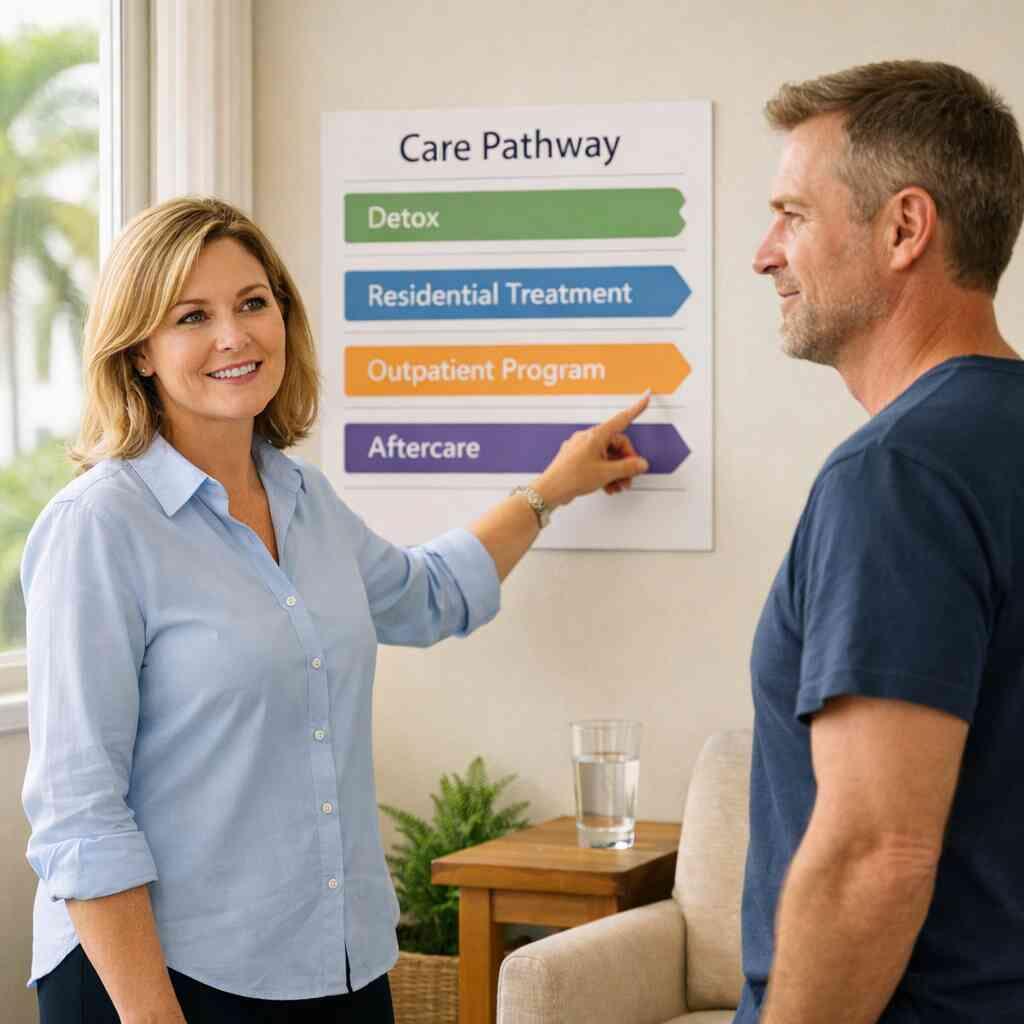
Here is a simple way to think about it:
Level of careBest fitDaily structure ResidentialHigh risk, unstable home life, strong withdrawal needsFull-day support PHPNeed structure, but can sleep at homeMost of the day IOPMore stable, need ongoing therapy and accountabilitySeveral hours a week If you are comparing residential treatment in Delray Beach with a lower level of care, ask what support you actually need on a Tuesday afternoon, not just what sounds ideal on paper.
What PHP vs IOP really means for veterans balancing work, family, and structure
People ask about what is PHP vs IOP because the names sound similar. They are not the same. A partial hospitalization program usually provides more hours, more clinical contact, and more structure. Intensive outpatient care gives you significant support, but with more room for work, parenting, and outside responsibilities. Both can help. The question is which one fits your current stability.
For veterans trying to protect employment or family routines, that distinction matters. PHP can feel like a reset when symptoms are still intense. IOP can help you practice recovery in real life while staying closely supported. In Palm Beach County, veterans often ask for a middle ground that keeps structure without full residential admission. That is where PHP vs IOP for veterans in Palm Beach County becomes a practical comparison, not a billing term.
A veteran in Boca Raton once told us the schedule itself became part of recovery. He did not need more speeches. He needed mornings planned, meals steady, and evenings less empty. That is what structured care does. It buys you time to learn coping skills before life gets loud again.
Why dual diagnosis treatment should include CBT, DBT, EMDR, trauma therapy, and group therapy activities
Good dual diagnosis care does not only talk about feelings. It gives you tools. Cognitive behavioral therapy helps you notice the thoughts that trigger use. Dialectical behavior therapy teaches distress tolerance, emotion regulation, and better response patterns. EMDR trauma therapy can help process traumatic memories in a guided way. None of these are magic. They are skills that improve with repetition.
Group work matters too. A man in a local veteran group once said, “I stopped feeling strange when I heard my own story in someone else’s mouth.” That is why group therapy activities can be so powerful. They reduce isolation and create practice space for honest conversation. If the program offers CBT, DBT, and EMDR trauma therapy with good pacing, that is a strong sign.
Holistic support can help as well. Mindfulness meditation, yoga therapy, and art therapy are not replacements for clinical care. They are tools that help the body settle enough to learn. In a place like Delray Beach, where the coast feels close and the pace can soften a little, these supports often land well. That coastal healing environment can matter more than people expect.
How medication-assisted treatment with Suboxone maintenance or Vivitrol injections can fit into recovery
For opioid use disorder, medication can be part of recovery, not a detour from it. Suboxone maintenance and Vivitrol injections are both FDA-approved options that may reduce cravings or block opioid effects, depending on the person and the clinical plan. This is what medication-assisted treatment looks like when it is done well: thoughtful, monitored, and combined with counseling. It is not a shortcut. It is support. Veterans sometimes worry that medication means weakness. That belief can keep suffering in place. The better question is whether the medication helps you function, think clearly, and keep moving toward stability. For some people, it fits early recovery. For others, it helps longer term. A program should explain the options without pressure. If you want to read more, see medication-assisted treatment with Suboxone or Vivitrol. This also matters for fentanyl treatment, where overdose risk can be high and tolerance can change fast. It matters for heroin recovery too. Recovery is not about proving toughness. It is about surviving the next month with more steadiness than the last. 
Why family therapy, intervention services, and case management matter after the crisis passes
Once the urgent part settles, the real repair work begins. That is where family therapy and case management help. Families often need help with boundaries, trust, and practical planning. If a spouse has been covering for missed work, or a parent has been rescuing every crisis, the pattern must change. Treatment should support that change, not ignore it.
Intervention services can help when a veteran is not ready to ask for care. They are not about shame. They are about creating a clear, respectful path into treatment. After admission, case management can handle appointments, referrals, discharge planning, and sober living resources. It can also connect people to vocational support, nutritional counseling, and life skills training.
If family is involved, ask about family therapy and case management after treatment. That support often lowers relapse risk because recovery stops living in a vacuum. It becomes a shared plan, with clearer roles and less chaos.
What to do next if you are ready for real support
How to choose a rehab without getting lost in sales talk or empty promises
Choosing a program can feel like sorting through noise. Start with the basics. Look for DCF licensed care, Joint Commission accreditation if available, and a clear description of services. Ask how the program handles trauma, co-occurring disorders, and withdrawal. Ask what happens after the first week. Good programs answer plainly.
Be careful with big promises. Nobody can promise a cure. Nobody can predict exactly how your recovery will unfold. What a real program can promise is a careful assessment, a matched level of care, and a plan that adjusts as your needs change. If you are comparing options, use how to choose a rehab near me in Palm Beach County as a checklist, not a sales page.
Look for details like:
- Licensed clinicians
- Evidence-based treatment
- Dual diagnosis support
- Aftercare planning
- Family involvement options
- Sober living resources
- Alumni program access
That is the kind of structure that supports long-term recovery, not just admission.
What insurance verification, private rehab, and out-of-network benefits should cover before admission
Money stress can freeze decision-making. That is common. Before admission, ask for insurance verification and a clear review of out-of-network benefits. If you have Aetna, Cigna, or Blue Cross Blue Shield, ask what the plan covers and what it does not. If you are looking at self-pay options, ask for the full estimate before you commit.
A reputable admissions team should explain what is included in the level of care, not just say “we take insurance.” That includes detox, residential care, PHP, or IOP if those apply. It also includes common questions about clinical reviews, deductibles, and authorization steps. For a direct look, see insurance verification for Florida addiction treatment.
If you have heard about Florida rehabs that take insurance, remember that “takes insurance” is not the same as “fully covered.” The details matter. Clear answers now prevent surprises later.
Why aftercare planning, sober living resources, and alumni program support protect long-term recovery
Recovery after discharge needs a plan. Without one, the old routine can rush back in. Aftercare planning should cover therapy appointments, medication follow-up, relapse warning signs, and living arrangements. Sober living resources can add structure when home is not yet stable. Alumni program support can keep you connected after formal treatment ends.
This is where good programs prove their value. A discharge packet is not enough. You need real follow-through. That may include check-ins, peer support, and access to community recovery meetings. Some veterans prefer 12-step alternatives like SMART Recovery, while others prefer traditional meetings. A strong plan respects both.
If you want to understand the difference between a discharge paper and a real plan, read aftercare planning and alumni support for long-term recovery. That kind of continuity helps protect long-term recovery when motivation dips and life gets messy again.
How trauma therapy South Florida fits veterans who also live with depression, anxiety, or bipolar disorder therapy needs
Trauma rarely travels alone. Many veterans also live with depression and addiction, anxiety treatment needs, or bipolar disorder therapy needs. That is why trauma therapy must sit inside a larger clinical plan. If the mood symptoms stay active, cravings often rise with them. If trauma keeps getting triggered, sleep and impulse control usually suffer.
A good South Florida program should treat the whole pattern, not one symptom at a time. That means therapy, medication review if needed, and clear coordination between clinicians. It also means helping you spot the difference between a trauma trigger and a mood swing. For many people, that difference changes how they respond in the first critical minutes.
If you are comparing options, look closely at trauma-informed care for co-occurring disorders. Programs that understand co-occurring disorders tend to make treatment feel less chaotic and more usable in daily life.
Why RECO Intensive location in Delray Beach offers a coastal healing environment close to Palm Beach County treatment centers and South Florida recovery supports
Location matters more than many people think. The RECO Intensive location at 140 NE 4th Avenue Delray Beach FL 33483 sits near the energy of Atlantic Avenue, but still close enough to feel calm. That balance can help veterans who need structure without sensory overload. The nearby beach, quiet side streets, and wider Delray Beach recovery community can support early stabilization.
This part matters for people comparing Palm Beach County treatment centers, Broward County rehab, Miami addiction help, Fort Lauderdale detox, West Palm Beach mental health, or Boca Raton outpatient care. You do not need to choose based on county lines alone. You need a place that fits your symptoms, your schedule, and your comfort level. For some, that means a private, coastal setting where the day feels more manageable.
If you are looking at residential treatment in Delray Beach, ask how the environment supports focus, privacy, and follow-through. The setting should lower stress, not add to it.
When veterans should reach out for admission help and what the intake process usually looks like
Reach out when you notice the pattern, not after it gets worse. If you are missing work, hiding use, drinking earlier, taking more than prescribed, or feeling unsafe with your thoughts, do not wait for a perfect moment. That moment may not come. You can call while you are still sorting out the details. Admission help exists for exactly that reason.
The intake process usually starts with a clinical conversation about substance use, mental health symptoms, medical history, and safety needs. Then the team matches you to a level of care. That may be detox, residential, PHP, or IOP. A good team will also ask about family support, transportation, work obligations, and any prior treatment. If the admission process feels rushed or vague, slow it down.
The fastest way to move forward is simple. Call one program, ask for verification, and write down the answers. Ask what happens in the first 24 hours, what belongings you can bring, and whether the schedule fits your life. You do not have to solve the whole thing today. Start with one call, and let the next conversation make the path clearer.
Frequently Asked Questions
Question: How does RECO Immersive support veterans who need veterans addiction help and dual diagnosis treatment for PTSD and substance use?
Answer: RECO Immersive takes a whole-person approach to veterans addiction help, which is especially important when PTSD and substance use appear together. Instead of treating alcohol or drugs in isolation, the team looks at co-occurring disorders such as depression and addiction, anxiety treatment needs, bipolar disorder therapy needs, and trauma-related symptoms that may be driving the pattern. That integrated model is the heart of dual diagnosis treatment and trauma-informed care.
For many veterans, the first step is simply being understood without judgment. RECO Immersive’s compassionate approach is designed to help people feel safe enough to talk honestly about military trauma and addiction, sleep problems, cravings, and stress. From there, a care plan may include evidence-based treatment, licensed clinicians, and therapies like cognitive behavioral therapy, dialectical behavior therapy, and EMDR trauma therapy. The goal is not just to reduce symptoms for a moment, but to build coping skills, relapse prevention strategies, and long-term recovery support that actually fit real life.
Question: What should veterans expect from South Florida detox if they are facing alcohol withdrawal, opioid rehab Delray needs, fentanyl treatment, or benzodiazepine withdrawal?
Answer: South Florida detox is often the first clinical step when withdrawal is unsafe, unpredictable, or overwhelming. At RECO Immersive, detox planning is meant to be medically informed and individualized, especially for alcohol withdrawal, opioid rehab Delray needs, fentanyl treatment, heroin recovery, prescription pill addiction, cocaine detox Florida concerns, and benzodiazepine withdrawal. The team understands that detox is not the same as treatment, but it is often the doorway into it.
A strong detox experience should include monitoring, symptom support, and clear communication about what is happening and what comes next. A common question is how long detox lasts, and the honest answer is that it depends on the substance, the amount used, and the person’s overall health. What matters more than a timeline is whether the program can respond quickly if symptoms change. RECO Immersive also helps connect detox to the next level of care, whether that is a residential treatment facility, partial hospitalization program, intensive outpatient, or outpatient program Delray Beach option. That continuity matters because recovery is strongest when the transition is smooth and the plan does not stop at withdrawal management.
Question: In What Veterans Should Know About Addiction Help in 2026, why is it important to compare residential treatment facility care with a partial hospitalization program or intensive outpatient?
Answer: The main reason is that different levels of care fit different levels of stability. A residential treatment facility can be the best choice when cravings are intense, the home environment is unstable, or withdrawal and trauma symptoms are still highly active. A partial hospitalization program offers strong daily structure while allowing someone to return home at night, and intensive outpatient can work well for people who need treatment while balancing work, family, or other responsibilities.
RECO Immersive helps people think through these options based on real needs, not labels. Veterans often need help deciding what is most appropriate when PTSD, depression and addiction, anxiety treatment, or bipolar disorder therapy are also part of the picture. That is where dual diagnosis treatment becomes important. A program should not only ask what substance was used, but also how the veteran is sleeping, how safe home feels, and whether the person has enough structure to stay engaged. When comparing inpatient rehab Palm Beach County care with a mental health IOP or an outpatient program Delray Beach, the best question is not which level sounds strongest, but which one fits this season of recovery.
Question: What therapies and holistic recovery supports does RECO Immersive offer for veterans who want more than basic group therapy activities?
Answer: Veterans often benefit from a blend of clinical and holistic recovery supports, especially when trauma is part of the story. RECO Immersive emphasizes evidence-based treatment while also offering supportive modalities that help the body and mind settle. That can include cognitive behavioral therapy, dialectical behavior therapy, EMDR trauma therapy, and group therapy activities that reduce isolation and make it easier to practice coping skills with others who understand the experience of recovery.
Holistic recovery options can also play an important role. Mindfulness meditation may help with stress regulation, yoga therapy can support body awareness and grounding, and art therapy can create a safer way to express things that are hard to say directly. These supports do not replace medical or trauma-focused care, but they can strengthen it. For veterans who feel stuck in survival mode, that combination can make treatment feel more usable and less intimidating. RECO Immersive’s approach is built to help people reconnect with themselves in a coastal healing environment that supports calm, focus, and steady progress.
Question: How does RECO Immersive help veterans plan for aftercare planning, sober living resources, and long-term recovery after discharge?
Answer: Aftercare planning is one of the most important parts of treatment because recovery does not end at discharge. RECO Immersive helps veterans prepare for the real world with practical planning that may include follow-up therapy, relapse prevention strategies, sober living resources, alumni program support, and referrals for case management, vocational support, nutritional counseling, and life skills training. That kind of structure matters because it helps people move from treatment back into daily life without losing momentum.
Families also benefit from support such as family therapy and intervention services when needed. Recovery often improves when the people around the veteran understand boundaries, communication, and how to respond to stress without recreating old patterns. Some people also want 12-step alternatives or SMART Recovery options, and a good program should respect that choice. RECO Immersive’s goal is to help build a sustainable plan for long-term recovery, not just a short-term reset. For veterans and families searching for Florida addiction treatment, that continuity can make all the difference.
Question: How can veterans verify insurance and choose the right Delray Beach rehab or private rehab without getting lost in sales talk?
Answer: The best way to start is with clear insurance verification and honest questions about coverage. RECO Immersive helps people review insurance verification details, including Aetna, Cigna, Blue Cross Blue Shield, out-of-network benefits, and self-pay options when needed. This step is important because many Florida rehabs that take insurance still vary widely in what they actually cover, and surprises can create unnecessary stress during an already difficult time.
When choosing a rehab, look for DCF licensed care, Joint Commission accreditation if available, licensed clinicians, and a strong explanation of how the program handles co-occurring disorders, trauma-informed care, and evidence-based treatment. Ask about the intake process, what happens in the first 24 hours, and whether the program can support veterans, young adults, professionals, or people seeking gender-specific treatment, women’s rehab, men’s recovery, or LGBTQ+ affirmative treatment. RECO Immersive’s Delray Beach rehab setting at 140 NE 4th Avenue Delray Beach FL 33483 offers a calm, private, and supportive atmosphere near Palm Beach County treatment centers and the wider South Florida recovery community. For many people comparing drug rehab near me searches, that combination of location, structure, and clinical depth is exactly what helps them move forward with confidence.
“I’ve had a really positive experience here, especially because of the technicians and staff. Bella in particular has been incredibly kind and caring. She takes her job seriously while making everyone feel comfortable and welcome. She always checks in on us, helps out when needed, and contributes to a really positive sense of community at housing. Liam and Kendall have also been super kind and helpful! You guys really make the difference!”– kyra L., a 5 star review from RECO Immersive on Google Business Reviews