The Difference Between CBT and DBT for Recovery
The Difference Between CBT and DBT for Recovery When You Are Trying to Stay Sober and Your Mind Keeps Pulling You in Two Directions If you are reading this because cravings are loud, shame feels heavy, or your family keeps asking what treatment should look like, take a breath. This can be confusing for most […]

The Difference Between CBT and DBT for Recovery
When You Are Trying to Stay Sober and Your Mind Keeps Pulling You in Two Directions
If you are reading this because cravings are loud, shame feels heavy, or your family keeps asking what treatment should look like, take a breath. This can be confusing for most people. CBT and DBT sound similar, yet they address different problems in recovery. In a Delray Beach rehab, that difference can change your treatment plan.
Why CBT and DBT Often Come Up Together in Recovery Conversations
Cognitive behavioral therapy for recovery focuses on the link between thoughts, feelings, and actions. Dialectical behavior therapy for recovery focuses more on emotions, urges, and what to do in the moment. Both are evidence-based treatment models, and both can support substance use disorder counseling. That is why people hear them discussed together so often.
Here is the part most people miss: CBT helps you question the thought that says, “I already blew it, so I may as well use.” DBT helps you survive the wave that follows that thought. In recovery, you often need both. You need a clear mind and a steady body.
The Real Reason This Comparison Matters for Craving, Shame, and Relapse Risk
Craving does not live in the body alone. It feeds on shame, fear, isolation, and old habits. CBT for cravings helps you spot the trigger, challenge the thought, and change the action. DBT gives you distress tolerance skills for moments when the feeling is too strong to think clearly.
A man in early recovery once told our team that evenings were the hardest part. He could list every trigger by noon, then fall apart by dinner. CBT helped him map the pattern. DBT helped him make it through the hour. That is the kind of practical difference people want to understand.
What a Worried Family Member in Delray Beach Usually Wants to Know First
Families near Atlantic Avenue often ask the same questions. Is this a thinking problem, a feeling problem, or both? Do they need detox first? Will therapy help if trauma is part of the picture? Those questions are fair.
If you are calling from Delray Beach, Boca Raton, or anywhere in South Florida, you may also want to explore therapy for addiction recovery in Delray Beach. You might be comparing Delray Beach rehab options or looking for an outpatient program Delray Beach can support after work. The answer is rarely one-size-fits-all. It depends on symptoms, safety, and the level of structure needed.
“My therapist, Dvora, was nothing short of a godsend. Her compassion, insight, and genuine investment in my recovery made all the difference.”- Meghan M., a 5 star review from our business on Google Business Reviews
The Split That Changes Everything Between Changing Thoughts and Surviving Feelings
How Cognitive Behavioral Therapy for Recovery Targets Thought Loops, Triggers, and Behavior
CBT works by making the invisible visible. It helps you notice thought loops such as “I cannot handle this” or “I always fail.” Then it shows you how those thoughts drive behavior. That is why cognitive behavioral therapy for addiction recovery is so useful for relapse prevention. It gives shape to the chaos.
In addiction treatment, CBT often supports better choices around people, places, and routines. It can also help with time management, problem solving, and coping skills for relapse prevention. For someone in Florida addiction treatment, that might mean learning how a stressful text message leads to a drink, or how boredom leads to a run to the store. The goal is not perfection. The goal is interruption.
How Dialectical Behavior Therapy for Recovery Builds Emotional Regulation and Distress Tolerance
DBT was built for people who feel emotions intensely and need help staying safe. It teaches emotional regulation skills, distress tolerance skills, mindfulness in recovery, and interpersonal effectiveness skills. Dialectical behavior therapy for recovery support can be a strong fit when emotions feel too fast, too big, or too painful to manage. It is not about “calming down” in a shallow way. It is about learning how to ride the wave without getting pulled under.
A woman in treatment once said, “My feelings are not suggestions. They are sirens.” That is exactly where DBT helps. It does not shame the feeling. It gives structure. It gives language. It gives a next move.
When CBT for Cravings Makes Sense and When DBT for Self-Harm Urges Fits Better
CBT often works well when the main problem is a predictable trigger pattern. You know the thought, you know the urge, and you know the behavior that follows. DBT often fits better when the issue is self-destructive behavior, self-harm urges, or emotion dysregulation support. That does not mean the therapies are opposites. It means they target different pain points.
Here is a simple contrast:
AreaCBTDBTMain focusThoughts and behaviorEmotions and urgesBest forCBT for cravings, habit loops, relapse preventionDBT for self-harm urges, crisis moments, intense emotionsCore skillReframing and action planningDistress tolerance and emotion regulationThat table is simplified, but it is useful. In real care, both often blend together.
Why Trauma Therapy South Florida Often Needs Both Thinking Skills and Feeling Skills
Trauma can make the brain scan for danger even when you are safe. It can also leave you disconnected from your own body. That is why trauma therapy South Florida often works best when both thought-based and emotion-based tools are present. Trauma-informed therapy in South Florida can include CBT strategies, DBT tools, and sometimes EMDR trauma therapy.
What we have seen in 2026 is simple: people in trauma recovery need language for the story and skills for the body. If therapy only challenges thoughts, the body may still panic. If therapy only soothes feelings, the thinking may still spiral.
Which Therapy Fits Which Kind of Recovery Problem at a Delray Beach Rehab
Using CBT for Alcohol Recovery Therapy, Drug Addiction Therapy, and Relapse Prevention Plans
CBT is often a strong fit for alcohol recovery therapy and drug addiction therapy. It helps people identify high-risk situations and build a clear addiction relapse prevention plan. If alcohol use starts after stress, CBT asks what thought showed up first. If cocaine use starts after shame, CBT asks what action kept the cycle alive. That clarity matters.
For people searching “drug rehab near me” or looking at cognitive behavioral therapy for addiction recovery, the question is not academic. It is practical. Can this therapy help me resist the next drink, pill, or call? Often, yes. CBT can support prescription pill addiction, opioid rehab in Delray, and even recovery after benzodiazepine withdrawal when used within a broader care plan.
When DBT Becomes the Better Match for Emotion Dysregulation, Self-Destructive Behavior, and Co-Occurring Disorders
DBT often becomes the better match when the main struggle is emotion dysregulation or self-destructive behavior. It is also valuable in co-occurring disorders therapy, where mental health symptoms and substance use keep feeding each other. Someone with dual diagnosis may drink to quiet panic, then feel worse, then drink again. DBT gives the person a pause point.
Dialectical behavior therapy for recovery support can be especially helpful in an inpatient rehab Palm Beach County setting or a residential treatment facility. It gives people tools they can use during a hard conversation, a panic spike, or a craving after conflict. That is why DBT often shows up in dual diagnosis rehab in South Florida.
How Dual Diagnosis Treatment Changes the Plan for Anxiety Treatment in Rehab, Depression and Addiction, PTSD Treatment and Recovery, and Bipolar Disorder Therapy
Dual diagnosis treatment changes the whole picture. It means the team treats substance use and mental health together, not one after the other. That matters for anxiety treatment in rehab, depression and addiction support, PTSD treatment and recovery, and bipolar disorder therapy. The NIDA model of co-occurring disorders supports this integrated view, because untreated symptoms often drive relapse.
A person with panic and alcohol use needs more than willpower. A person with PTSD and opioid use needs more than advice. A person with bipolar disorder therapy needs careful pacing and medical support. If you are comparing South Florida detox or a mental health IOP, look for a program that understands all of that.
Where Group Therapy Activities, Family Therapy in Recovery, and Individual Therapy in Rehab Each Do Different Work
These services are not duplicates. They each solve a different part of the problem. Individual therapy in rehab gives privacy and depth. Group therapy activities give feedback, practice, and accountability. Family therapy in recovery helps repair patterns at home.
A mother from Palm Beach County once said her son could explain his triggers in private, but froze when his sister pushed back in group. That did not mean group failed. It meant the group revealed what needed practice. For co-occurring disorders therapy and support, that kind of real-time feedback is often essential.
What a Day Can Look Like When CBT and DBT Are Woven Into Real Treatment
How a Residential Treatment Facility, Partial Hospitalization Program, or Mental Health IOP Can Use Both Therapies
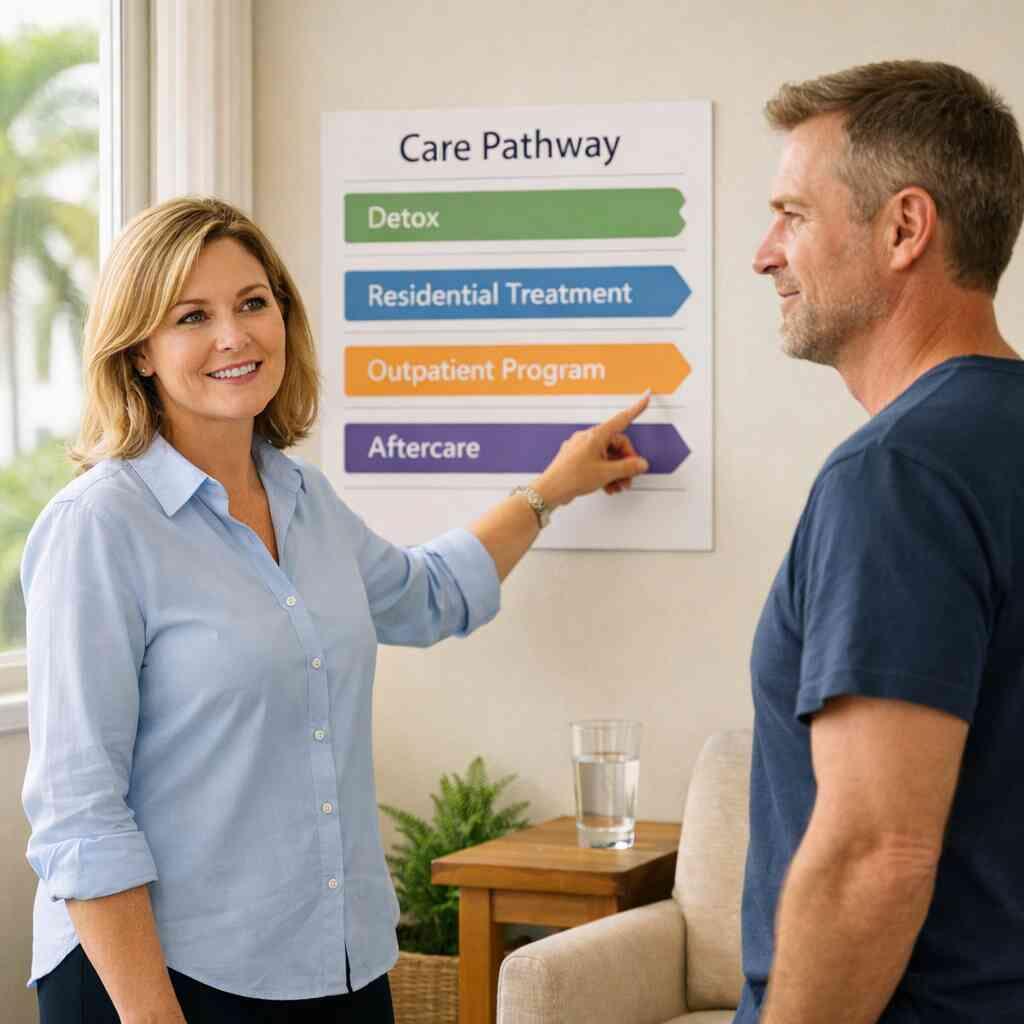
A residential treatment facility gives the most structure. A partial hospitalization program gives strong daytime support with more freedom at night. A mental health IOP gives a step-down option for people who still need steady care. Each level can use CBT and DBT together in different amounts.
If you are wondering what is PHP vs IOP, think structure. PHP is more intensive. IOP is more flexible. Both can support intensive outpatient treatment for mental health when the person is stable enough to sleep at home or in sober living. The right level depends on symptoms, safety, and daily functioning.
Where Mindfulness Meditation, Coping Skills Training, and Interpersonal Effectiveness Skills Show Up in the Schedule
Mindfulness meditation can appear at the start of group, during a grounding exercise, or before a difficult family session. Coping skills training may include urge surfing, breathing work, or a written plan for a trigger-heavy afternoon. Interpersonal effectiveness skills teach you how to ask for help without exploding, collapsing, or disappearing. These are not abstract ideas. They are repeatable actions. A person who needs cocaine detox in Florida may use them during craving spikes. Someone in heroin recovery may use them after an argument. Someone practicing mindfulness skills in recovery may finally learn how to sit with discomfort long enough to make a different choice. 
How Holistic Recovery Support Like Yoga Therapy, Art Therapy, and Family Therapy Can Reinforce Evidence-Based Treatment
Holistic recovery support is not a substitute for evidence-based treatment. It works best as reinforcement. Yoga therapy can help people reconnect with their bodies after stress or trauma. Art therapy can give shape to feelings that are hard to say aloud. Family therapy can reduce blame and improve communication.
The best results come when these supports are tied to clear clinical goals. For example, a person in trauma therapy South Florida may use art to process shame, then use CBT to challenge the self-talk behind it. That is where family therapy in recovery can become especially useful.
Why Aftercare Planning, Sober Living Resources, and Alumni Support Matter as Much as the Therapy Room
Treatment does not end when the daily schedule ends. Aftercare planning turns progress into a practical plan. Sober living resources can add stability. Alumni support keeps connection alive after discharge. Without that, many people feel dropped too soon.
Strong programs build long-term recovery support with case management, life skills training, and vocational support when needed. They also help people compare outpatient rehab near Delray Beach and sober living resources before leaving higher care. Recovery is not a single event. It is a series of supported choices.
Choosing the Right Level of Care in South Florida Without Guessing Wrong
What to Look for in a Private Rehab Near Delray Beach With Licensed Clinicians and Joint Commission Accreditation
Look for licensed clinicians, clear treatment planning, and real coordination between therapy and medical care. Joint Commission accreditation can signal strong standards, though it is not the only thing that matters. You also want a center that understands the benefits of a beachside recovery environment without pretending scenery alone heals anything. Calm helps. Skill matters more.
A good Delray Beach rehab should be able to explain how it treats signs of addiction, how long detox lasts, and how it handles dual diagnosis. If you are comparing Florida rehabs that take insurance, ask direct questions. The intake process should feel organized, respectful, and transparent. If it does not, keep looking.
How Insurance Verification, Aetna, Cigna, Blue Cross Blue Shield, and Out-of-Network Benefits Affect Treatment Access
Money stress can stop people before treatment starts. That is why insurance verification for rehab matters early. Aetna, Cigna, and Blue Cross Blue Shield plans may cover parts of care, but benefits vary. Out-of-network benefits can also help, depending on the plan.
Insurance verification for rehab should answer the real questions: what is covered, what needs approval, and what the likely gaps are. Ask about self-pay options too. If you are worried about cost, do not guess. Get the numbers in writing.
When Medication-Assisted Treatment, Suboxone Maintenance, or Vivitrol Injections May Enter the Picture
Medication-assisted treatment can be important for opioid use disorder and alcohol use disorder. Suboxone maintenance may help some people with opioid rehab Delray needs, including fentanyl treatment, heroin recovery, and prescription pill addiction. Vivitrol injections may be considered in some alcohol recovery or opioid recovery plans. These are medical decisions, not moral ones.
The FDA and SAMHSA both support medication as part of care when clinically appropriate. That does not mean medication is required for everyone. It means some people need it to stabilize enough to use therapy well. The best plan is individualized, monitored, and respectful.
Why RECO Immersive at 140 NE 4th Avenue Delray Beach FL 33483 Is Built for Long-Term Recovery Support in a Coastal Healing Environment
RECO Immersive sits in the heart of the Delray Beach recovery community, close to the energy of Atlantic Avenue and the calm of the coast. That location matters because environment shapes follow-through. A private rehab with therapy for addiction recovery in Delray Beach can offer structure while still feeling grounded and human. That balance helps many people stay engaged.
At RECO Immersive, the focus stays on personalized, guided care. For people comparing South Florida recovery options, that can mean a better fit, clearer communication, and support beyond discharge. If you want to compare programs, review the schedule, verify benefits, and ask how CBT, DBT, and trauma therapy South Florida are used together. Then choose the place that answers plainly.
Frequently Asked Questions
How long does detox last at a Delray Beach rehab?
Detox length depends on the substance, the dose, your health, and whether you have used more than one substance. Alcohol detox and opioid detox often follow different timelines. Some people need only a few days, while others need longer medical monitoring. A careful program will explain symptoms, safety steps, and what happens after detox. If you are unsure, ask about our medical detox process.
Does RECO Immersive take my insurance?
Insurance coverage depends on your plan and benefits. Many people ask about Aetna, Cigna, Blue Cross Blue Shield, and out-of-network benefits. The only accurate way to know is through verification. A good admissions team can review coverage before you start. Use insurance verification for rehab to get a clearer answer.
What is the difference between PHP and IOP?
A partial hospitalization program usually offers more hours of treatment each week. An intensive outpatient program offers fewer hours and more flexibility. PHP often fits people who need more structure after detox or residential care. IOP often fits people stepping down or balancing treatment with work or family. The right fit depends on symptoms, safety, and daily stability.
Can I bring my phone to treatment?
That depends on the level of care and the program rules. Some residential programs limit phone use at first to help you focus. Others allow scheduled use. The goal is not punishment. It is to reduce distractions and support early recovery. Ask about phone policy during intake so there are no surprises.
Is family involved in the program?
Family involvement often helps, especially in recovery from alcohol, opioids, and co-occurring disorders. Many programs use family therapy, education, or family weekend sessions. This can improve communication and reduce misunderstandings at home. If family contact is stressful or unsafe, the team can usually adjust the plan. Family therapy in recovery should always be purposeful, not chaotic.
What if I need help for depression but not addiction?
You can still seek care. Depression, anxiety, PTSD, and bipolar disorder can be treated with therapy, medication support, and structured programming. If substance use is present too, dual diagnosis treatment may be the better fit. If not, mental health care alone may be enough. A good assessment will sort that out without judgment.
What happens after treatment ends?
Aftercare should include relapse prevention planning, sober living resources if needed, outpatient follow-up, and alumni support. The point is continuity. Recovery is easier when the next phase is already mapped out. Ask how the program handles aftercare support and whether alumni connections stay active. That planning can make the transition steadier.
FAQPage schema can be applied to this section with each question and answer as a paired item.