RECO Intensive Rehab and Aftercare Planning in Palm Beach
What people are really asking when they search for Delray Beach rehab after a relapse scare A relapse scare can make everything feel urgent and private at the same time. You may be searching for Delray Beach rehab at midnight, worried about withdrawal, judgment, and whether insurance will even help. That fear is real. It […]

What people are really asking when they search for Delray Beach rehab after a relapse scare
A relapse scare can make everything feel urgent and private at the same time. You may be searching for Delray Beach rehab at midnight, worried about withdrawal, judgment, and whether insurance will even help. That fear is real. It can also keep people stuck longer than the substance itself.
Why fear of withdrawal, judgment, and insurance checks often shows up before someone ever calls
Most people do not start by asking, “What level of care do I need?” They ask, “How bad will detox be?” and “Will someone shame me?” Those questions are normal, especially if you have already tried to stop once. In South Florida, families also worry about whether care will fit work, school, and real life.
On the medical side, withdrawal concerns deserve respect. How long detox takes depends on the substance, the dose, and your health history. Alcohol, opioids, cocaine, benzodiazepines, and prescription pills each bring different risks. That is why a careful clinical review matters before anything else.
If you are searching for a drug rehab near me or an alcoholism treatment center, you may not need a generic list of options. You need a place that asks smart questions fast. RECO Intensive’s RECO Intensive rehab in Delray Beach is designed for that kind of moment, when clarity matters more than sales talk.
What makes RECO Intensive different from a generic Florida addiction treatment search result
A search result can tell you a facility exists. It cannot tell you how thoughtfully care is matched to the person. That difference matters in Florida addiction treatment and especially in dual diagnosis treatment, where substance use and mental health care must move together. A person with depression and addiction needs more than a detox bed. They need an actual plan.
Here is the part most people miss. The best programs do not treat every relapse scare the same way. Someone with opioid rehab Delray needs a different path than someone with cocaine detox Florida concerns or benzodiazepine withdrawal concerns. Someone with heroin recovery needs different medical oversight than someone facing prescription pill addiction treatment.
RECO Intensive also stands out because it sits inside a broader care system. That helps when you need South Florida detox, then step-down care, then continuing support. If you are comparing programs, a strong Delray Beach recovery community and a connected clinical team can reduce chaos quickly. That is especially useful for families who feel overwhelmed by RECO Intensive reviews and want more than marketing language.
“RECO Immersive Mental Health Rehab isn’t just a treatment center; it’s a sanctuary. The serene environment, nestled in nature, provides a calming backdrop for healing. What truly stands out is the dedication of the staff.. from therapists to support personnel especially Courtney and Jayden, everyone is genuinely committed to each client’s well-being, creating a supportive and nurturing atmosphere that makes recovery feel attainable and hopeful. Truly blessed to have found this program…”– Bryanna Y., a 5 star review from RECO Immersive on Google Business Reviews
How the coastal setting in Delray Beach can lower pressure without lowering clinical standards
A calm setting does not replace good treatment. It helps people stay regulated enough to use it. That is why beachside recovery appeals to many clients, especially those who feel boxed in by city stress or past treatment settings. Delray Beach offers a different emotional texture. The air, the light, and even a short walk near Atlantic Avenue can soften the edge.
One client came in after a weekend of heavy drinking and panic. They were terrified to call, mostly because they had already heard one harsh comment from a prior provider. After intake, what changed was not the scenery alone. It was the combination of structure, kindness, and a level of care that matched the situation without overreacting to it.
RECO Intensive’s Florida addiction treatment and dual diagnosis care reflects that balance. The setting feels calm, but the standards stay high. That matters when you need a residential treatment facility, a partial hospitalization program, or an intensive outpatient step-down that actually fits your life.
The treatment map that keeps care steady from admission through PHP and IOP
People often think treatment is a single event. In reality, good care works like a map. The route changes as your symptoms, stability, and responsibilities change. That is why the intake process, the level of care, and the transition plan all need to fit together.
What happens in the intake process and why a careful assessment changes the whole plan
The intake process should feel thorough, not rushed. A sound assessment looks at substance use, mental health symptoms, medical history, safety concerns, family stress, work demands, and housing. It also asks about past treatment, relapse patterns, and medications. That information helps decide whether someone needs detox first, or whether another level of care is safer.
A person asking about how to choose a rehab should expect practical questions. What substances are involved? Are there panic attacks, trauma symptoms, or mood swings? Is there risk tied to fentanyl treatment or alcoholism treatment center needs? These details shape care from day one.
If you want a deeper look at medical stabilization, our medical detox process explains how clinical monitoring supports safety. The point is simple. Better assessment leads to better matching, and better matching lowers the odds of starting in the wrong place. That matters for young adult rehab, professional’s program needs, and people who need care that respects privacy.
When a residential treatment facility makes sense and when a partial hospitalization program fits better
A residential treatment facility makes sense when the person needs round-the-clock structure, stronger supervision, or a break from a high-risk home setting. That often applies after severe relapse, unstable housing, repeated failed attempts, or active co-occurring symptoms. It can also fit people stepping down from detox who still need daily support.
A partial hospitalization program is different. PHP gives intensive daytime care while allowing more independence at night. It works well when someone is medically stable but still needs frequent therapy, monitoring, and support. If you are asking what is PHP vs IOP, the simplest answer is that PHP is more intensive and IOP is more flexible.
Level of careBest fitMain benefitResidential treatment facilityHigh risk, unstable home, severe symptoms24/7 structure and supportPartial hospitalization programNeeds daily care, but can sleep at homeIntensive therapy with more independenceIntensive outpatient programStable enough for work, school, or family dutiesFlexibility with strong accountabilityFor many people, the right next move is not permanent. It is staged. Our Delray Beach outpatient program can help bridge that gap when PHP or IOP is more appropriate than full residential care.
What an intensive outpatient program looks like in real life for work, school, or family schedules
An outpatient program Delray Beach should look livable, not theoretical. People often need treatment while keeping a job, parenting, or handling school. A good intensive outpatient program uses those real limits as part of the plan. It does not pretend life pauses for recovery.
One parent described arriving exhausted after school drop-off and leaving with a notebook full of coping tools. They were not looking for inspiration. They wanted a schedule that worked. That is the real value of IOP: consistent treatment with enough flexibility to keep life moving.
A strong mental health IOP also helps when symptoms are mixed. That can include cravings, insomnia, shame, and anxiety all at once. The structure can support group therapy activities, skills practice, and check-ins without requiring total removal from daily life. For people balancing Boca Raton outpatient needs, West Palm Beach mental health concerns, or even Miami addiction help, this middle path can be the right fit.
How dual diagnosis treatment changes the plan for co-occurring disorders, anxiety treatment, PTSD treatment, and depression and addiction
Dual diagnosis means treating substance use and mental health together. That matters because one often fuels the other. Co-occurring disorders can look like panic, low mood, trauma symptoms, bipolar swings, or sleep problems that worsen drinking or drug use. NIDA and SAMHSA both support integrated care because split treatment often leaves gaps.
For people seeking anxiety treatment, PTSD treatment, or bipolar disorder therapy, the plan should not stop at symptom labels. A trauma-informed team looks at triggers, safety, medication needs, and coping skills. Trauma therapy South Florida can be part of that plan, especially when past events still drive current use.
RECO Intensive’s South Florida trauma therapy can be part of a broader strategy that includes CBT, DBT, and careful psychiatric oversight. That combination matters because depression and addiction rarely resolve by willpower. They improve when the whole picture gets treated.
Aftercare planning in Palm Beach is not a discharge note it is the part that protects momentum
Discharge should never mean “you are on your own now.” Good aftercare planning starts early and keeps going after the main phase ends. It connects the person to housing, routines, therapy, medication follow-up, and support groups. That is how short-term gains become long-term recovery.
How sober living resources, case management, and life skills training support long-term recovery
People often need help with the basics first. Sleep. Meals. Transportation. Work routines. These may sound simple, but they are often the first things to wobble after treatment. That is why sober living resources, case management, and life skills training matter so much. Case management can help with appointments, school forms, referrals, and stable routines. Nutritional counseling can also support energy and mood. For people leaving inpatient rehab Palm Beach County or stepping down from PHP, practical support reduces the risk of drifting. It also supports relapse prevention planning because predictable days are easier to protect. If you want to see how continuity works over time, our aftercare planning in Palm Beach resource explains the pieces in plain language. The goal is not perfection. It is stability with a plan. 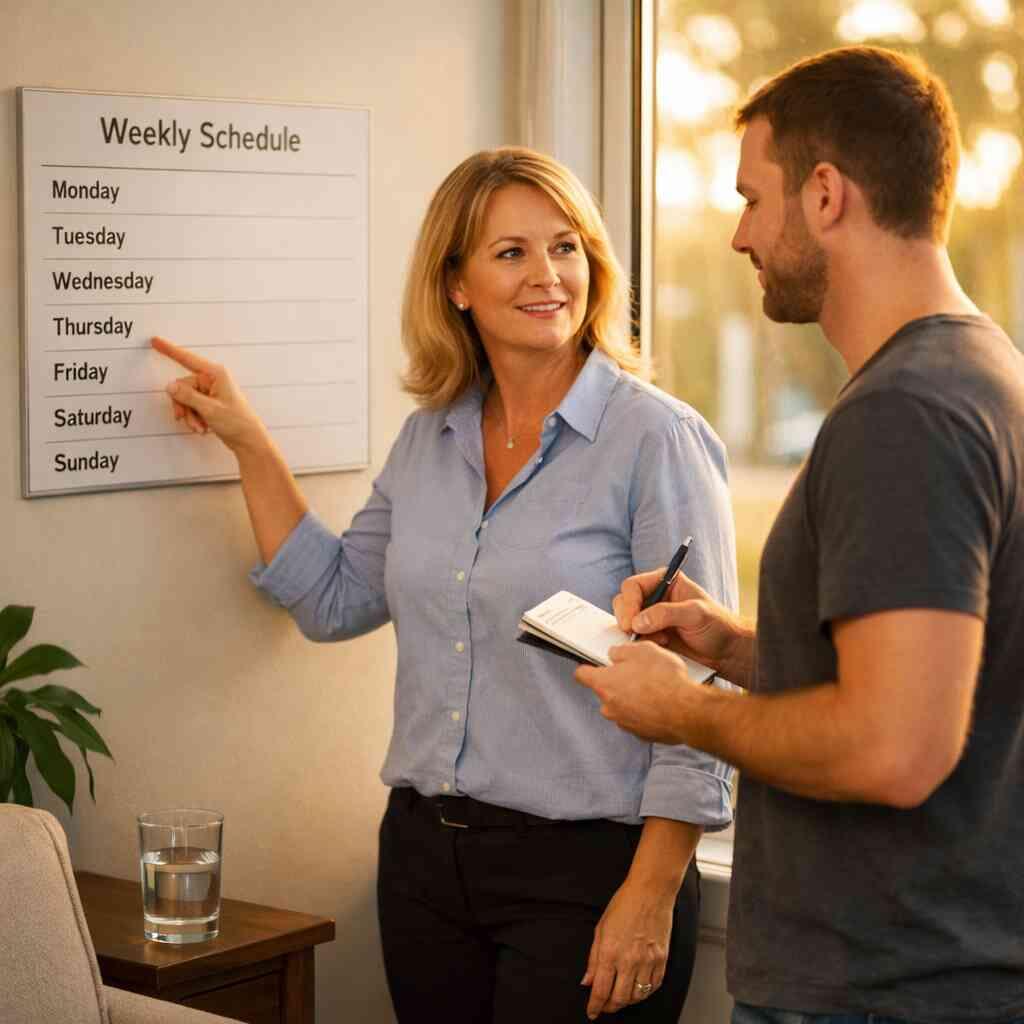
Why relapse prevention planning works best when it includes coping skills, group therapy activities, and family therapy
Relapse prevention works best when it is specific. “Stay sober” is not a plan. A plan includes triggers, warning signs, support contacts, and replacement behaviors. It also includes what to do when shame spikes, because shame often drives secrecy.
Skills matter here. Cognitive behavioral therapy helps people notice thought patterns that push them toward use. Dialectical behavior therapy can help with emotion regulation and distress tolerance. EMDR trauma therapy may help some people process older trauma that keeps the nervous system on high alert. Together, these tools make the plan more durable.
Family support can change outcomes in daily life. A strong family therapy component and family weekend can help loved ones stop repeating the same fights. That is especially important for women’s rehab, men’s recovery, gender-specific treatment, and families dealing with LGBTQ+ affirmative treatment or veterans addiction help needs.
Where medication-assisted treatment, Vivitrol injections, and Suboxone maintenance fit for opioid rehab Delray and fentanyl treatment
Medication-assisted treatment, or MAT, uses FDA-approved medications to support recovery. It does not replace therapy. It can make therapy possible by reducing cravings and withdrawal risk. For opioid rehab Delray, fentanyl treatment, heroin recovery, and some forms of prescription pill addiction, MAT can be a critical part of care.
Two common options are Vivitrol injections and Suboxone maintenance. Vivitrol blocks opioid effects after full detox, while Suboxone can reduce withdrawal and cravings during stabilization. The right choice depends on the person’s history, current use, and goals. A physician or psychiatric provider should make that decision with the patient.
The best programs explain MAT clearly and without stigma. If you want a focused overview, our fentanyl treatment and MAT options guide covers the basics. That kind of clarity matters when people are also dealing with benzodiazepine withdrawal support, alcohol use, or multiple medications.
How alumni program support, vocational support, and sober things to do in Delray help people stay connected after treatment
Aftercare should keep people connected, not isolated. That is where an alumni program helps. It gives people a place to return for encouragement, accountability, and practical reminders. For many, that steady contact becomes a real buffer against relapse.
Vocational support also matters. Work is not just income. It is structure, identity, and confidence. When people leave treatment without a plan for work, school, or daily purpose, the old routine often rushes back. That is why supportive planning should include local options and realistic timing.
Delray Beach gives people a lot of sober things to do in Delray. Beach walks, coffee with supportive friends, exercise, meetings, and low-pressure social time all help. In a place with a visible recovery culture and easy access to Florida recovery resources, staying connected can feel more doable than isolated at home. RECO Intensive’s alumni program helps that connection last.
The decisions that matter next if you are comparing private rehab options in South Florida
Choosing a program can feel like a high-stakes decision. It is. But the best decision is usually not the fanciest one. It is the one that matches clinical needs, family realities, insurance, and the person’s readiness for change. That is where careful comparison pays off.
How to choose a rehab by looking at evidence-based treatment, licensed clinicians, and Joint Commission accreditation
Start with the basics. Does the program use evidence-based treatment? Are there licensed clinicians involved in therapy and medical oversight? Does the facility hold Joint Commission accreditation? Those signals do not guarantee a perfect fit, but they do tell you the program takes standards seriously.
Also ask about DCF licensed status and, when relevant, whether the organization is an NAATP member. Those details can help separate polished marketing from actual accountability. For private rehab and private rehab in Palm Beach County, those markers matter because families often compare several centers at once.
If you are sorting through Florida rehabs that take insurance, do not stop at the website headline. Ask how treatment is staffed, how discharge planning works, and how the center handles co-occurring disorders. That is often where quality becomes obvious.
What to ask about insurance verification, Aetna rehab coverage, Cigna rehab coverage, Blue Cross Blue Shield rehab coverage, and out-of-network benefits
Insurance questions can feel awkward. They should not. You have every right to ask about benefits before you commit. A good admissions team should help with insurance verification and explain Aetna rehab coverage, Cigna rehab coverage, Blue Cross Blue Shield rehab coverage, out-of-network benefits, and self-pay options in clear terms.
Ask for plain answers:
- What level of care is covered?
- Are there deductibles or coinsurance?
- Is prior authorization needed?
- What happens if the plan is out of network?
- Are there payment options if benefits are limited?
RECO Intensive’s insurance verification for Florida rehab page can help you start that conversation. If you are comparing centers across Palm Beach County treatment centers, Broward County rehab, Fort Lauderdale detox, or Miami addiction help options, this step can save a lot of stress.
Why therapies like CBT, DBT, EMDR trauma therapy, yoga therapy, art therapy, and mindfulness meditation are often combined
The strongest programs rarely rely on one therapy alone. They combine tools because people are complex. CBT helps with thoughts and behavior. DBT helps with emotional control. EMDR trauma therapy can help process trauma. Yoga therapy, art therapy, and mindfulness meditation can help the body settle enough to absorb the work.
This mix is not fluff. It is practical. Someone with panic and cravings may need grounding before insight. Someone with trauma may need body-based tools before talking feels useful. That is why holistic recovery can be clinically serious when it is paired with evidence-based methods.
For readers who want a deeper comparison, this guide on private rehab in Palm Beach County explains what to look for in a program. Here is the part many families miss: a good schedule should help the person use the therapy, not just attend it.
When to call for intervention services or a higher level of care and how RECO Intensive location in Delray Beach fits the next move
Sometimes the next move is not a conversation about preferences. It is a conversation about safety. If someone is blacking out, mixing substances, losing contact with reality, or unable to stay safe, intervention services or a higher level of care may be needed quickly. The same is true if depression is severe or if relapse has become frequent and dangerous.
RECO Intensive’s RECO Intensive location at 140 NE 4th Avenue, Delray Beach, FL 33483 places care inside the heart of a real recovery community. That matters for people who need to stay connected while getting serious help. It also helps families who are balancing logistics and emotion at the same time.
If you are still comparing how to choose a rehab, use one simple filter: does the program make the next 30 days clearer, or more confusing? If you need help thinking through it, start with one call. You do not have to solve every piece today, and you do not have to do it alone.
Frequently Asked Questions
Question: What makes RECO Intensive rehab in Delray Beach different from a generic Florida addiction treatment search result?
Answer: RECO Intensive is built for people who need more than a surface-level recommendation. Instead of offering a one-size-fits-all path, the team focuses on careful assessment, evidence-based treatment, and level-of-care matching that can support people with dual diagnosis treatment needs, depression and addiction, anxiety treatment, PTSD treatment, or substance-specific concerns like opioid rehab Delray, cocaine detox Florida, fentanyl treatment, or benzodiazepine withdrawal support. The setting in Delray Beach also supports beachside recovery without lowering clinical standards, which can help people feel calmer and more ready to engage in care. For families comparing Florida rehabs that take insurance, private rehab options, or a residential treatment facility versus a partial hospitalization program or intensive outpatient program, that combination of personalization and structure can make a real difference.
Question: How long is detox, and how does RECO Immersive help people decide whether South Florida detox or another level of care is the safest next step?
Answer: How long detox takes depends on the substance involved, the dose, overall health, and whether there are co-occurring disorders such as anxiety, bipolar disorder, or trauma symptoms. Alcohol withdrawal, opioid withdrawal, prescription pill addiction, and benzodiazepine withdrawal support all require different levels of monitoring, so a careful intake process matters before anything else. RECO Immersive helps people sort out whether South Florida detox, residential treatment, PHP, or intensive outpatient care is the safest next step by reviewing the full clinical picture, not just the immediate crisis. That matters for people searching for drug rehab near me or alcoholism treatment center options because the right start can reduce risk and create a smoother path into long-term recovery planning.
Question: What is PHP vs IOP, and how do the outpatient program Delray Beach and mental health IOP options fit into aftercare planning in Palm Beach?
Answer: PHP and IOP are both structured outpatient levels of care, but they serve different needs. A partial hospitalization program is typically more intensive and works well for people who need frequent therapy, clinical monitoring, and support during the day while sleeping at home. An intensive outpatient program is more flexible and can fit around work, school, parenting, or family responsibilities. RECO Immersive uses these levels as part of a broader aftercare planning in Palm Beach approach, helping clients transition from higher structure into a realistic outpatient program Delray Beach or mental health IOP when they are ready. This step-down model supports relapse prevention planning, coping skills development, and continued accountability for people who are balancing recovery with everyday life.
Question: How does RECO Intensive support dual diagnosis treatment for co-occurring disorders like PTSD treatment, anxiety treatment, and depression and addiction recovery?
Answer: RECO Intensive approaches dual diagnosis treatment by recognizing that substance use and mental health conditions often reinforce one another. Someone struggling with co-occurring disorders may need support for cravings and withdrawal at the same time they are managing trauma symptoms, panic, mood instability, or sleep problems. That is why integrated care is so important. RECO’s approach can include cognitive behavioral therapy, dialectical behavior therapy, EMDR trauma therapy, group therapy activities, family therapy, and, when appropriate, medication-assisted treatment such as Suboxone maintenance or Vivitrol injections. This kind of coordinated care supports people with PTSD treatment needs, anxiety treatment concerns, bipolar disorder therapy goals, and depression and addiction recovery, while keeping the plan grounded in evidence-based treatment and compassionate clinical oversight.
Question: What does comprehensive aftercare support look like at RECO Intensive, and how do sober living resources, case management, and alumni program support help with long-term recovery?
Answer: Comprehensive aftercare support at RECO Intensive is designed to protect momentum after the primary phase of treatment ends. That can include sober living resources, case management, life skills training, vocational support, nutritional counseling, family therapy, and connection to the RECO Intensive alumni community. For many people, those pieces matter just as much as therapy because they help stabilize daily routines, strengthen relapse prevention planning, and reduce the chances of feeling isolated after discharge. The goal is not just to finish treatment, but to build long-term recovery with practical support that fits real life. For people who need structure after inpatient rehab Palm Beach County care or a partial hospitalization program, this kind of aftercare can make the transition feel less overwhelming and more sustainable.
Question: In RECO Intensive Rehab and Aftercare Planning in Palm Beach, how do insurance verification, Aetna rehab coverage, Cigna rehab coverage, and Blue Cross Blue Shield rehab coverage help families choose care?
Answer: Insurance verification is often one of the most important first steps because it helps families understand what level of care may be covered and what financial options exist before treatment begins. RECO Intensive can help people review Aetna rehab coverage, Cigna rehab coverage, Blue Cross Blue Shield rehab coverage, out-of-network benefits, and self-pay options in a clear and practical way. That matters because families comparing private rehab, Florida addiction treatment, or Florida rehabs that take insurance often need answers fast, especially when they are worried about signs of addiction, relapse, or whether an intervention services conversation is necessary. By making the insurance process more understandable, RECO helps reduce stress so people can focus on the real priority: getting the right care at the right time.