How to Choose a Palm Beach County Detox Center 2026
If you are searching late at night, you are probably carrying fear, guilt, and urgency all at once. That mix is common. The hardest part is not always admitting help is needed. It is sorting through clinics, promises, insurance questions, and the worry that time is running out. A good Palm Beach County detox center […]


If you are searching late at night, you are probably carrying fear, guilt, and urgency all at once. That mix is common. The hardest part is not always admitting help is needed. It is sorting through clinics, promises, insurance questions, and the worry that time is running out.
A good Palm Beach County detox center should make this clearer, not more confusing. The right place will explain what happens next in plain language. It will also tell you when detox alone is not enough. That matters because stopping alcohol or drugs without support can make symptoms worse, not better.
In Delray Beach, families often tell our team the same thing. They want safety, but they also want dignity. They want a place that feels calm, not flashy. That is a fair expectation, especially when the person in crisis is exhausted, scared, or ashamed.
When a Palm Beach County detox center is the right call and the wrong one could slow recovery
The signs of addiction often build slowly before they turn into a crisis. You may notice missed work, secrecy, money problems, sleep changes, or a growing need to use early in the day. Sometimes the clearest sign is not the substance use itself. It is the way life starts shrinking around it.
Here is the part most people miss: signs of addiction are not only about quantity. They are also about control. If stopping feels impossible, if withdrawal starts quickly, or if the person keeps using despite harm, treatment deserves real attention. That is especially true with alcoholism treatment center needs, prescription pill addiction, or a search for drug rehab near me after a scare.
The signs of addiction that usually show up before a crisis
People often wait for a dramatic event. They wait for a DUI, an overdose, a fall, or a family fight that cannot be patched over. But the earlier signs matter more than people think. A delayed response can lead to stronger dependence and a harder detox.
Look for patterns like:
- Using more than planned
- Trying to cut down and failing
- Hiding bottles, pills, or paraphernalia
- Missing obligations
- Shifts in mood, sleep, or hygiene
- Withdrawal from family, work, or friends
One family in the Lake Worth area called after noticing their adult son stopped eating dinner with them and began sleeping through mornings. They thought it was stress. It turned out to be a deeper pattern that needed Florida addiction treatment and a careful intake. That kind of delay is common, and it is fixable with the right help.
How long is detox when alcohol, opioids, cocaine, or benzodiazepines are involved
People ask this more than any other question. The honest answer is that how long detox takes depends on the substance, use history, and medical risk. Alcohol and benzodiazepines often need close monitoring because withdrawal can become dangerous. Opioids may bring intense discomfort, while cocaine can bring exhaustion, agitation, and sleep trouble.
Detox is not one-size-fits-all. It may last a few days or longer when symptoms stay active. Cocaine detox Florida cases often need support for mood crashes and cravings. Opioid rehab Delray planning may also need medication support. Fentanyl treatment and heroin recovery can be especially complex because tolerance can change quickly.
Why South Florida detox needs medical oversight instead of willpower alone
Willpower does not protect against seizures, dehydration, high blood pressure, or severe anxiety. South Florida detox should include medical oversight because withdrawal can become unpredictable. That is especially true for benzodiazepine withdrawal and heavy alcohol use. Medical teams can watch symptoms, adjust care, and reduce risk.
The goal is not to punish anyone for needing help. The goal is to keep the body safe while the brain stabilizes. SAMHSA guidance supports medically supervised withdrawal when risks are present. That approach is more humane, and it is more effective than trying to “tough it out.”
When a rehab should also screen for depression, PTSD, anxiety, or bipolar disorder
Addiction rarely travels alone. Many people also live with depression and addiction, anxiety treatment needs, PTSD treatment, or bipolar disorder therapy concerns. A strong program screens for those issues early. That matters because untreated symptoms can drive relapse.
If someone drinks to sleep, uses pills to calm panic, or uses stimulants to escape numbness, the emotional side deserves attention. Dual diagnosis treatment and co-occurring disorders care help identify both conditions together. NIDA has long emphasized that treating substance use without mental health support can leave the core problem untouched. In practice, that means screening should happen before the plan is finalized.
What separates a safe detox from a place that only looks polished from the curb
A polished lobby can be comforting. It can also hide weak clinical care. The real test is what happens when the doors close and the intake starts. You want evidence-based treatment, not pretty marketing.
In Delray Beach, people often compare a private rehab with a residential treatment facility or an outpatient program Delray Beach option. That comparison should include staffing, supervision, and discharge planning. It should not end with photos on a website. If you are reading RECO Intensive reviews, look for repeated themes about responsiveness, structure, and respect.
Why licensed clinicians and Joint Commission accreditation matter when you are scared and exhausted
Licensed clinicians should lead care planning, not guesswork. Joint Commission accreditation can signal that a program follows recognized quality standards. That does not guarantee perfection, but it does matter. It tells you the center has submitted its systems to outside review.
If a place cannot clearly explain who evaluates withdrawal risk, who checks vitals, and who handles emergencies, pause. Ask directly. A serious team will answer without defensiveness. That clarity helps families breathe when emotions are high.
How to read intake process details without getting lost in sales language
The intake process should feel structured, not slippery. You should know what will be asked, what records matter, and what happens after the first call. A good program will explain level of care, safety screening, and whether an intervention services referral makes sense. You should not have to decode vague phrases.
A strong admissions process and intake checklist for rehab usually covers medical history, substance use patterns, medications, mental health history, and transportation. It may also ask about work, family, and legal stress. That is not nosy. It is how teams build safe care. If the questions feel rushed or careless, that is a warning sign.
The questions insurance verification should answer before admission starts
Insurance verification should answer more than “Are you covered?” It should clarify benefits, deductibles, authorizations, and any out-of-network benefits. It should also tell you whether Florida rehabs that take insurance include your plan type. If the center offers self-pay options, ask what that actually includes.
Use a short checklist:
- What level of care does my plan cover?
- Is preauthorization needed?
- Are labs or medications separate?
- What out-of-pocket costs remain?
- Who follows up if coverage changes?
If a center offers insurance verification for rehab benefits and coverage, use it. Families often save time and stress by getting this sorted before admission starts.
What to look for in a residential treatment facility versus an outpatient program Delray Beach
A residential treatment facility gives more structure. It works well when risk is high, cravings are strong, or home feels unstable. An outpatient program Delray Beach option gives more flexibility, which helps when work or family duties cannot stop. The right choice depends on safety, not preference alone. If someone needs round-the-clock support, residential care may fit better. If they are medically stable and ready for therapy several days a week, an outpatient track may work. The cleanest way to compare options is through a levels of care for detox, PHP, and intensive outpatient overview. That keeps the decision grounded in need, not fear. ### How medication-assisted treatment with Vivitrol injections or Suboxone maintenance may fit the plan 
For opioid use, medication-assisted treatment can be a stabilizing part of care. Vivitrol injections may help reduce cravings for some people after detox. Suboxone maintenance can support people who need ongoing opioid recovery structure. These medicines do not replace therapy. They support it.
A man from Broward once described feeling “stuck between pain and panic” after repeated relapses. Medication plus counseling gave him enough steadiness to stay in treatment. That is the point. Medications should lower the noise so real healing work can begin. If you want more detail, read about medication-assisted treatment for opioid recovery in Delray Beach.
Why trauma therapy South Florida and dual diagnosis treatment should be part of the conversation early
Trauma often sits underneath substance use. Trauma therapy South Florida programs may use cognitive behavioral therapy, dialectical behavior therapy, or EMDR trauma therapy when appropriate. These methods have evidence behind them. They help people process triggers, body reactions, and painful memories without flooding them.
If the team waits too long to ask about trauma, they may miss the real driver of relapse. That is why dual diagnosis treatment should come up early, not as an afterthought. A program that addresses PTSD treatment, panic, and mood instability from the start gives the person a better chance to stay engaged. For a deeper look, see dual diagnosis treatment for co-occurring disorders in Palm Beach County.
The decision map that turns a stressful search into a workable plan
The search gets easier when you compare levels of care in a clear order. Start with safety, then structure, then support after discharge. That keeps emotion from taking over every decision. It also helps you match treatment to daily life.
A lot of people mix up inpatient rehab Palm Beach County, partial hospitalization program, and intensive outpatient. They are related, but they serve different needs. A simple comparison helps.
Level of careMain purposeBest fitInpatient/residentialHighest structure and monitoringMedical or emotional instabilityPHPDay treatment with strong clinical supportNeed for structure without overnight stayIOPSeveral therapy sessions weeklyMore stability, more flexibility### How to compare inpatient rehab Palm Beach County, partial hospitalization program, and intensive outpatient without guessing
An inpatient rehab Palm Beach County option usually provides the most containment. A partial hospitalization program gives intensive daytime treatment, then sleep at home or in sober housing. Intensive outpatient offers fewer hours and works best when symptoms are steadier. The decision should follow the risk level, not the marketing pitch.
If you are asking, “What is safest for this person right now?” you are asking the right question. If cravings are intense, sleep is broken, or the home environment is unstable, higher structure often helps. If the person can manage daily routines and wants to keep working, outpatient may be enough. For a side-by-side guide, review inpatient rehab in Palm Beach County versus outpatient care.
What PHP vs IOP really means for work, school, and family life
The phrase what is PHP vs IOP can sound clinical, but the practical difference is simple. PHP usually means more hours and more support. IOP usually means more flexibility and fewer weekly sessions. Both can include group therapy activities, individual therapy, and relapse prevention work.
If you are juggling a job, children, and recovery, the schedule matters. A mental health IOP can help someone keep momentum while rebuilding routines. A PHP may be the safer bridge after detox when symptoms still flare. A good center will explain this in plain terms before admission.
How aftercare planning, sober living resources, and alumni program support long-term recovery
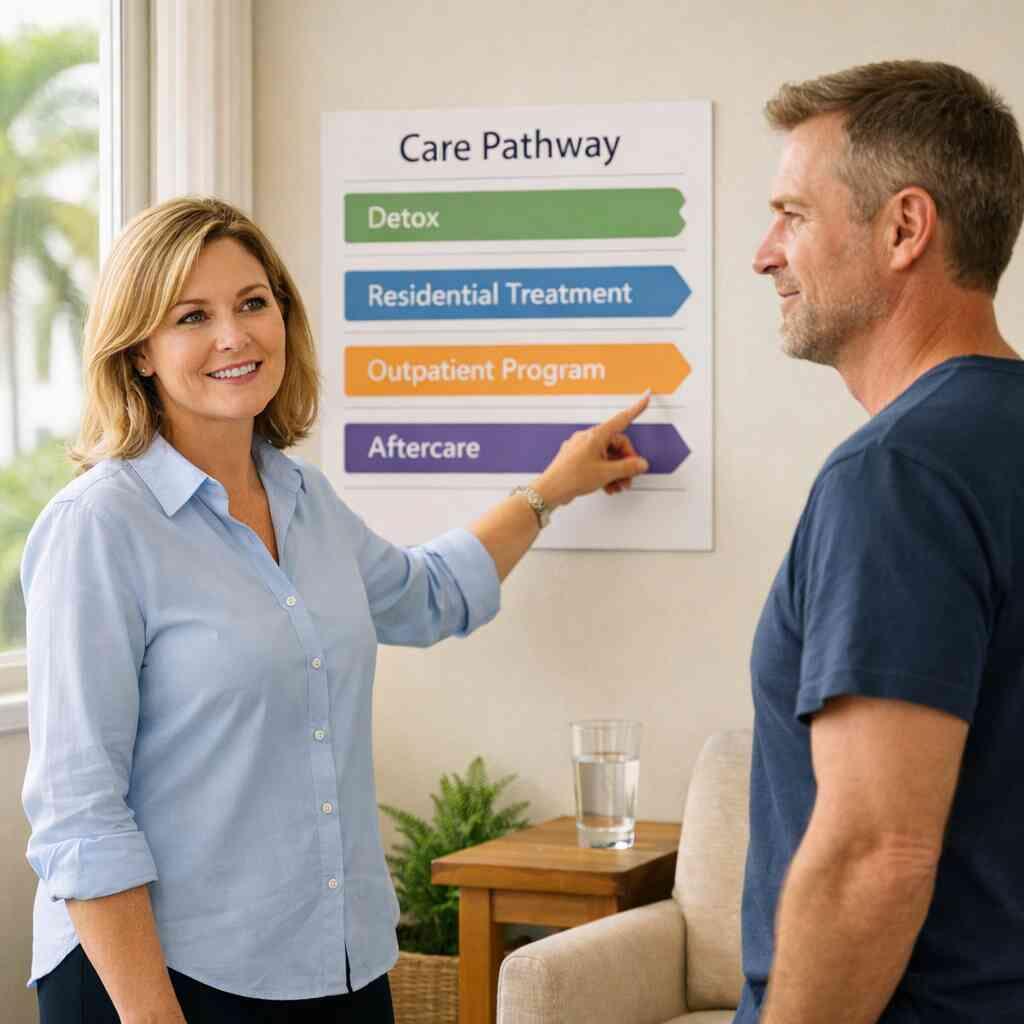
Detox ends. Recovery work does not. That is why aftercare planning matters from day one. It may include therapy referrals, medication follow-up, sober living resources, and 12-step alternatives like SMART Recovery.
A strong aftercare planning for long-term recovery in Palm Beach plan also uses relapse prevention, coping skills, and accountability. An alumni program can keep people connected after discharge. That continuity matters more than many people expect. Small touches, like check-ins and group events, can make early recovery feel more stable.
Why family therapy, case management, life skills training, and nutritional counseling change outcomes after detox
Family strain often lingers after substance use stops. Family therapy can reduce blame and improve communication. Case management helps coordinate appointments, work notes, and referrals. Life skills training and nutritional counseling help rebuild routines that addiction often erodes.
If the person is a young adult, a professional’s program, LGBTQ+ affirmative treatment, veterans addiction help, or gender-specific treatment may also matter. People heal better when they feel understood. On the projects we’ve finished this year, the programs that hold people the longest usually address the whole life, not only the withdrawal window. If family support is part of your plan, see family therapy and recovery support.
What a local Delray Beach recovery community can offer after the first few days of care
Delray Beach has a deep recovery culture. That does not fix everything, but it helps. People can find meetings, coffee shop check-ins, and simple routines near Atlantic Avenue and quiet coastal spots. A beachside recovery setting can lower stress when paired with real structure.
One recent caller asked if “sober things to do Delray” really matter. They do. A walk, a meeting, and a meal can be protective in early sobriety. That support can also connect people to RECO Intensive alumni and broader South Florida recovery resources. For some, Delray Beach, Florida recovery community becomes part of the treatment plan itself.
The next move when you are ready to verify a fit with RECO Immersive at 140 NE 4th Avenue Delray Beach FL 33483
If you want a place that blends structure, compassion, and careful screening, start by checking fit. RECO Immersive’s RECO Intensive location at 140 NE 4th Avenue Delray Beach FL 33483 is in the heart of a city many people already associate with recovery. The setting is calm, but the clinical work should still be serious. That balance matters.
A recent Google review captured that tone well: “She takes her job seriously while making everyone feel comfortable and welcome. She always checks in on us, helps out when needed, and contributes to a really positive sense of community at housing.” – Kyra L., 5-star review from RECO Immersive on Google Business Reviews.
If you are comparing options now, use the article-so-far context to keep your questions focused. Ask about the intake process, detox supervision, trauma care, and aftercare support. You do not have to figure this out alone, and you do not have to sort it all out today. Start with one call, one insurance check, or one honest conversation with the person you are trying to help.
Frequently Asked Questions
Question: How do I choose a Palm Beach County detox center if I’m looking for safe, compassionate South Florida detox and Delray Beach rehab support?
Answer: Start with safety, then look at structure, transparency, and follow-through. A strong Palm Beach County detox center should offer evidence-based treatment, licensed clinicians, and clear answers about monitoring, intake process steps, and what happens after detox. If the program can explain when a residential treatment facility, partial hospitalization program, or intensive outpatient level of care is appropriate, that is a good sign. RECO Immersive in Delray Beach is designed to help people sort through those decisions without pressure, while also considering co-occurring disorders, dual diagnosis treatment, and aftercare planning from the beginning. It is especially helpful if you are comparing Florida addiction treatment options and want a calm, coastal healing environment that still takes clinical care seriously.
Question: How long is detox for alcohol, opioids, cocaine, or benzodiazepine withdrawal, and when should someone seek medical help instead of trying to stop alone?
Answer: How long detox takes depends on the substance, how long it has been used, and the person’s medical and mental health history. Alcohol and benzodiazepine withdrawal can be dangerous, so medical oversight is important. Opioid detox, including fentanyl treatment, heroin recovery, and prescription pill addiction support, can involve intense discomfort and cravings. Cocaine detox Florida cases often need support for exhaustion, mood crashes, and sleep disruption. At RECO Immersive, the goal is to keep people medically supported while they stabilize and to guide them into the next level of care when detox alone is not enough. That may include opioid rehab Delray services, medication-assisted treatment, Vivitrol injections, or Suboxone maintenance when appropriate and clinically indicated.
Question: What is PHP vs IOP, and how do inpatient rehab Palm Beach County, outpatient program Delray Beach, and mental health IOP options compare?
Answer: The simplest way to understand what is PHP vs IOP is that PHP usually provides more hours of care and more structure, while IOP offers more flexibility for work, school, or family responsibilities. Inpatient rehab Palm Beach County or a residential treatment facility is usually best when someone needs the highest level of supervision, especially after detox or when home life is unstable. An outpatient program Delray Beach or mental health IOP can be a strong fit when the person is medically stable and ready for consistent therapy sessions, group therapy activities, and relapse prevention work. RECO Immersive helps people match the level of care to the actual risk level, not just convenience. That means the plan can include dual diagnosis treatment, trauma therapy South Florida, PTSD treatment, depression and addiction support, anxiety treatment, or bipolar disorder therapy depending on the person’s needs.
Question: Why does dual diagnosis treatment matter when signs of addiction overlap with depression, anxiety, PTSD, or bipolar disorder?
Answer: Because substance use and mental health symptoms often feed each other. If someone is using alcohol or drugs to sleep, calm panic, numb trauma, or manage mood swings, then treating only the addiction can leave the real driver untouched. That is why dual diagnosis treatment and co-occurring disorders screening should happen early in the admissions process. RECO Immersive looks at the whole picture, including signs of addiction, emotional health, and daily functioning, so the treatment plan can include cognitive behavioral therapy, dialectical behavior therapy, EMDR trauma therapy, family therapy, mindfulness meditation, and other evidence-based treatment approaches when appropriate. This kind of integrated care is often what helps people build long-term recovery instead of bouncing between short-term fixes.
Question: Does RECO Immersive help with insurance verification, self-pay options, and Florida rehabs that take insurance like Aetna, Cigna, or Blue Cross Blue Shield?
Answer: Yes, insurance verification is an important part of starting care, and it should answer more than just whether a plan is accepted. A good team should explain benefits, deductibles, authorizations, and any out-of-network benefits so families know what to expect before admission. RECO Immersive can help people review coverage for Florida rehabs that take insurance, including plans such as Aetna, Cigna, and Blue Cross Blue Shield when applicable, while also discussing self-pay options if needed. That kind of clarity reduces stress and helps people move forward faster. It also gives families more space to focus on what matters most: getting the right support in place, including aftercare support, sober living resources, alumni program connections, and Florida recovery resources for long-term recovery.
Question: What makes RECO Immersive different if I’m comparing private rehab, RECO Intensive reviews, and South Florida recovery options near 140 NE 4th Avenue Delray Beach FL 33483?
Answer: RECO Immersive is built around personalized, guided care in a setting that feels calm but still clinically serious. If you are comparing private rehab options, it helps to look for licensed clinicians, Joint Commission accreditation, a thoughtful intake process, and a real plan for aftercare planning, relapse prevention, coping skills, case management, life skills training, and nutritional counseling. The RECO Intensive location at 140 NE 4th Avenue Delray Beach FL 33483 places treatment in the heart of the Delray Beach recovery community, which can be helpful for people who want access to sober things to do Delray, 12-step alternatives, SMART Recovery, and RECO Intensive alumni support. If you are reading RECO Intensive reviews, focus on themes like communication, structure, compassion, and follow-through. Those are the qualities that often matter most when someone is choosing between Broward County rehab, Miami addiction help, Fort Lauderdale detox, West Palm Beach mental health care, or Boca Raton outpatient services.