What to Expect During Benzodiazepine Withdrawal Care
If you are searching for this at night, the fear is probably already loud. You may be wondering if the pills that once calmed you are now part of the problem. That is a heavy realization, and it can feel embarrassing, confusing, and isolating. The good news is that benzodiazepine withdrawal care can be planned, […]

If you are searching for this at night, the fear is probably already loud. You may be wondering if the pills that once calmed you are now part of the problem. That is a heavy realization, and it can feel embarrassing, confusing, and isolating. The good news is that benzodiazepine withdrawal care can be planned, monitored, and adjusted with skill.
When the medication that once felt like relief starts causing fear
The quiet warning signs that benzodiazepine dependence may be building
Dependence rarely announces itself in one dramatic moment. It usually starts with small changes that feel easy to excuse. You may notice that you need a little more to get the same calm. You may also feel uneasy when a dose is late, even by a short time. That is often when people start searching for benzodiazepine withdrawal care in Florida.
The signs can look ordinary at first. Sleep gets lighter. Patience runs thin. Morning anxiety feels sharper than before. Some people begin checking the clock for the next dose, which is a quiet clue that prescription medication dependence may be forming. In Delray Beach rehab settings, this is a common story, and it deserves care, not shame.
A client in Palm Beach County once described it perfectly: “The medicine stopped feeling like medicine.” That sentence captures the shift many people feel. The relief becomes a chain. The fear of missing a dose starts driving the day. Here is the part most people miss: that fear itself is a clinical signal.
“Didn’t know what to expect walking in but I walked out knowing how to actually take care of myself. The whole team there is the real deal.”- Andrew J., a 5 star review from RECO Immersive on Google Business Reviews
Why rebound anxiety and insomnia can feel worse than the original problem
Rebound symptoms happen when the brain reacts more intensely after the medicine wears off. Anxiety can surge. Sleep can break apart. Muscles may tighten, and your mind may race. This can feel more intense than the original problem, even if the original problem was already serious. That is why supervised benzodiazepine detox in South Florida matters.
Insomnia often becomes its own crisis. You get tired, then wired, then hopeless. Many people fear they are “going crazy,” but that feeling often reflects rebound symptoms and changes in the withdrawal timeline, not personal failure. In South Florida detox care, teams watch those changes closely. They know sleep loss can quickly amplify panic, depression, and irritability.
The brain learns calm through repetition, and benzodiazepines can interrupt that learning. That is why stopping suddenly is risky. A gradual plan gives the nervous system room to adjust. It also reduces the chance that rebound anxiety during withdrawal becomes the reason you return to the medication.
When prescription pill addiction treatment needs a higher level of care
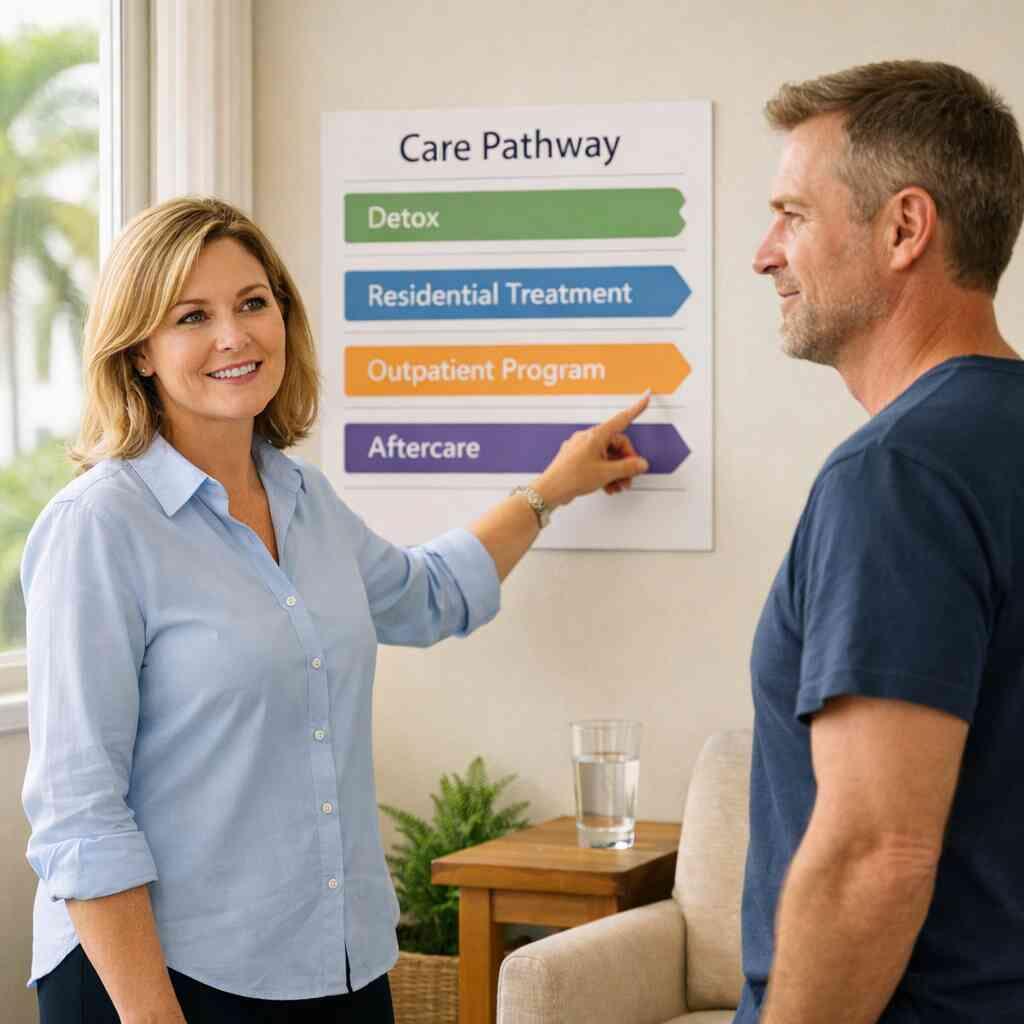
Not every case needs the same setting. Some people need outpatient support. Others need a residential treatment facility or a partial hospitalization program because symptoms are too unstable. If you have a history of seizures, heavy use, or severe panic attacks, a higher level of care may be the safer route. That is where medically monitored withdrawal and detox in Florida can make a real difference.
The question we hear most is simple: “How long is detox?” The honest answer is that it depends on the dose, length of use, health history, and taper plan. SAMHSA guidelines support individualized care because benzodiazepine withdrawal does not follow one neat clock. A strong intake process looks at your symptoms, risks, and supports before anything starts.
If alcohol, opioids, or prescription pill addiction are part of the picture, the level of care may need to rise again. Co-use can complicate withdrawal and mood symptoms. In that case, Florida addiction treatment works best when it is coordinated across detox, therapy, and follow-up.
What actually happens inside supervised benzodiazepine detox
How medically monitored withdrawal lowers risk during the early days
Supervised detox is about safety first. Staff monitor your pulse, blood pressure, sleep, mood, and confusion level. They also watch for tremors, agitation, and worsening anxiety. In many cases, the earliest days are the most fragile, so medically monitored withdrawal helps lower risk before symptoms spike. That is the core of supervised benzodiazepine detox in South Florida.
The team may use drug detox protocols that follow evidence-based treatment standards. Those protocols are not rigid. They are adjusted if symptoms shift. That matters because benzo withdrawal can change from hour to hour. A patient may seem stable in the morning and deeply unsettled by evening. Licensed clinicians watch for those swings and respond in real time.
One person arriving from Broward County told staff they had tried to quit twice at home. Both times, the panic became so intense that they restarted the medication. That pattern is common. It is also preventable with the right setting and close monitoring.
What a benzo taper can look like when it is matched to your body
A benzo taper means reducing the medication slowly and carefully. It is not a test of willpower. It is a medical plan. The pace depends on the drug, the dose, your health, and whether anxiety or trauma symptoms are already active. In some cases, clinicians change the timing rather than only the amount. That is why medically monitored withdrawal and detox in Florida should be personalized.
A taper often includes frequent check-ins and symptom tracking. If sleep collapses, the team may slow the reduction. If panic rises, they may pause and reassess. The goal is steady progress, not heroics. During South Florida detox, that flexibility can keep a person engaged long enough to stabilize.
The best tapers account for more than the pill itself. They account for your stress load, job demands, family pressure, and mental health history. That is why Delray Beach rehab programs often coordinate detox with therapy and case management. A taper works better when your whole life is part of the plan.
How seizure prevention and panic attack support are handled in real time
Seizure prevention is one of the biggest reasons not to stop benzodiazepines alone. Some people have a higher risk because of dose, duration, or prior withdrawal history. Medical teams track that risk before tapering begins. They also monitor for warning signs, such as shaking, confusion, or sensory changes. In a strong benzo tapering plan, safety is never an afterthought.
Panic attack support matters just as much. A panic surge during withdrawal can feel like a medical emergency. Staff can coach breathing, grounding, hydration, and environmental calm while checking for physical causes. That quick response helps keep fear from escalating into a spiral. It also shows why prescription pill addiction treatment works best with live supervision.
The difference between home withdrawal and supervised care is not subtle. At home, people often guess. In detox, the team measures, observes, and responds. That shift lowers chaos. It also gives the nervous system a better chance to settle.
Why withdrawal symptom management changes from hour to hour
Withdrawal is not a straight line. You may feel almost normal, then suddenly shaky, tearful, or unable to sleep. Symptom management changes because the brain is recalibrating. That recalibration is messy, and it can feel unfair. Yet it is exactly why medically monitored withdrawal and detox in Florida exists.
Good care uses frequent reassessment. Nurses, medical staff, and therapists each notice different things. One sees appetite loss. Another notices slowed thinking. Another catches rising dread before it becomes full panic. That layered attention supports safer withdrawal symptom management and better emotional regulation.
The hidden layer most people miss when benzo withdrawal meets trauma and mood symptoms
How co-occurring anxiety disorders and dual diagnosis change the plan
Many people use benzodiazepines because anxiety already feels unmanageable. Others also live with depression, bipolar disorder, or PTSD. That is why dual diagnosis treatment often matters during withdrawal. If the anxiety disorder was never treated well, symptoms can return once the medication is reduced. In that case, dual diagnosis treatment for anxiety and addiction in Palm Beach County becomes central, not optional.
The co-occurring disorder model, which NIDA supports, recognizes that mental health and substance use can feed each other. Treating one without the other usually leaves gaps. If you have depression and addiction together, or anxiety and addiction together, the treatment plan should match both. That often means therapy, medication management, and recovery support in the same system.
This is also where co-occurring disorder care and support becomes practical, not theoretical. The team may screen for trauma history, mood swings, and self-medication patterns. Those details shape the taper, the therapy plan, and the pace of care. They also help prevent the painful cycle of withdrawal, relapse, and shame.
Why trauma therapy South Florida often matters during benzodiazepine withdrawal care
A lot of benzo use is rooted in old fear. Sometimes it starts after a panic disorder. Sometimes it follows grief, abuse, or a medical crisis. When withdrawal begins, those old emotions can rise again. That is why trauma therapy in South Florida for co-occurring disorders can be so important.
Trauma work should not be rushed during acute withdrawal. Still, it can begin in gentle ways. Staff may teach grounding, body awareness, and stress reduction before deeper processing starts. That is especially helpful for post-traumatic stress disorder treatment because trauma can intensify insomnia, fear, and avoidance.
A woman from West Palm Beach once came in saying, “My body never forgot what happened.” She was right, and her withdrawal symptoms made that memory louder. What helped was pacing. First, stabilization. Then, skill building. Then, trauma work when her system could actually hold it.
Where CBT, DBT, and EMDR trauma therapy fit when depression and addiction overlap
CBT, or cognitive behavioral therapy, helps you notice the thoughts that drive panic and craving. DBT, or dialectical behavior therapy, teaches distress tolerance, emotional regulation, and self-soothing. EMDR, or eye movement desensitization and reprocessing, can help some people process traumatic memory. These methods are often used in CBT, DBT, and EMDR therapy options when depression and addiction overlap.
The value is practical. If a thought says, “I cannot sleep without this pill,” CBT helps test that belief. If your body is flooded with panic, DBT skills can help you ride out the wave without reaching for the bottle. EMDR may later help reduce the intensity of trauma triggers. Together, they support CBT and DBT skills for withdrawal symptom management.
A helpful detail: these are skills, not magic. They work through practice. That is why recovery plans at RECO Immersive often pair therapy with repetition and daily structure.
How medication management can support non-addictive anxiety treatment
Some people fear every medication after benzodiazepines. That fear is understandable. Still, treatment sometimes includes carefully chosen non-addictive anxiety treatment. Medication management can help reduce cravings, stabilize mood, and support sleep without returning to the same dependence pattern. That is where medication management for non-addictive anxiety treatment may fit. 
Clinicians may consider FDA-approved options when indicated, along with therapy and monitoring. They look at side effects, other medications, and your withdrawal history. They also keep an eye on depression, since depression and addiction often travel together. The point is not to replace one crutch with another. The point is to widen your options.
What your days may look like in Delray Beach while your nervous system resets
How a residential treatment facility or partial hospitalization program supports structure
Structure can feel strange after benzos. Yet structure is often what helps the nervous system settle. In a residential treatment facility, your day may include clinical check-ins, therapy, meals, and rest. In a partial hospitalization program, you get intensive daytime support and return home or to housing later. Both can fit into levels of care for detox and recovery.
A partial hospitalization program is often a bridge after detox. It gives more support than standard outpatient care, but less than 24-hour residential treatment. That middle level can be especially useful if you still feel shaky, emotional, or sleep-deprived. In Delray Beach, that structure often pairs well with a calm, coastal setting.
The daily rhythm matters more than people expect. Wake times, meals, therapy, and movement all help restore predictability. Predictability calms a nervous system that has been living in alarm.
What an intensive outpatient or outpatient program Delray Beach may look like after stabilization
Once symptoms ease, an intensive outpatient program or outpatient program Delray Beach can keep recovery moving. This is often where people rebuild life skills while still getting clinical support. You may attend several sessions each week, then return to work, school, or family duties. For many, that balance is the difference between staying engaged and dropping out.
The contrast between PHP and IOP is useful. PHP usually offers more hours and more oversight. IOP gives more flexibility and still keeps therapy active. If you are comparing PHP and IOP support in Palm Beach County, the right choice depends on stability, home stress, and relapse risk.
Delray Beach recovery community culture can help here too. The area has support groups, sober events, and practical resources. If you are looking for Boca Raton outpatient support or West Palm Beach mental health follow-up, proximity can matter.
How group therapy activities, family therapy, and case management support recovery
Recovery gets stronger when other people understand the plan. Group therapy activities reduce isolation and help you hear your story reflected back safely. Family therapy can repair communication, set boundaries, and lower conflict at home. Case management ties the pieces together, from appointments to transportation to discharge planning. That is why group therapy activities for recovery support and family therapy during recovery and withdrawal matter so much.
- Group support helps you practice honesty.
- Family sessions help reduce enabling and blame.
- Case managers help you track appointments and next steps.
- Life skills training can support work, sleep, and daily habits.
A second client story stands out. A man from Boca Raton kept saying he just needed to “tough it out.” After one family session, his sister admitted she had been hiding his pills for months, hoping it would help. It did not. Once everyone had the full picture, the plan finally matched reality.
Why holistic recovery tools like yoga therapy, art therapy, and mindfulness meditation matter near the coast
Holistic tools do not replace medical care. They support it. Yoga therapy helps reconnect breath and body. Art therapy gives fear a shape when words fail. Mindfulness meditation teaches your attention to return instead of racing ahead. These are especially useful in holistic recovery tools like yoga therapy and mindfulness meditation.
In a place like Delray Beach, the coastal environment can help calm the senses. Light, movement, and fresh air matter more than people think. A short walk near the beach or a quiet hour away from Atlantic Avenue noise can reduce internal pressure. That does not cure withdrawal. It does, however, make healing easier to tolerate.
What to do next when the withdrawal phase ends but recovery still needs a plan
How aftercare planning, relapse prevention, and coping skills reduce backsliding
Detox is not the finish line. It is the point where planning becomes urgent. Aftercare planning should include relapse prevention, coping skills, and a clear map for stress. If cravings, insomnia, or panic return, you need to know what to do before the moment hits. That is why aftercare planning for long-term recovery in Delray Beach matters so much.
A practical relapse prevention plan often includes:
- trigger awareness
- sleep routines
- crisis contacts
- therapy follow-up
- medication check-ins
- support meetings
These steps are simple, but they work best when written down and reviewed often. Long-term recovery is usually built through repetition, not inspiration.
When sober living resources, support groups, and SMART Recovery can help
Some people need a sober living setting after detox or PHP. Others do well at home with strong structure. Support groups can also help fill the gap between sessions. SMART Recovery offers a practical, skills-based option. Twelve-step alternatives can be useful too, especially if you want a nonreligious path. That mix often helps people hold momentum.
If you are searching for sober living resources, look for safety, structure, and accountability. If you prefer peer-led support, ask about meeting times near Delray Beach and nearby Palm Beach County treatment centers. The right fit often depends on your stress level, housing, and support at home.
How insurance verification, self-pay options, and intake process questions are handled at RECO Immersive
Money worries can stop people before care even starts. That is real. RECO Immersive can help clarify benefits, out-of-network benefits, and insurance verification for Florida rehab admissions. If you have Aetna, Cigna, or Blue Cross Blue Shield, checking coverage early can save stress later. Self-pay options may also be available.
The intake process usually asks about symptoms, medications, past treatment, and current safety concerns. That is not paperwork for its own sake. It is how the team builds a safer plan. If you are comparing private rehab options in South Florida, asking detailed questions now can prevent confusion later. It also helps if you want to understand RECO Intensive reviews or what a mental health IOP might include.
Why long-term recovery often depends on the right mix of clinical care, community support, and follow-up
The strongest recovery plans do not rely on one thing. They combine therapy, medication support, community, and practical follow-up. That may include the Delray Beach recovery community, alumni support, and ongoing check-ins. It may also include vocational support, nutritional counseling, or sober living resources. The point is to keep your life moving while your nervous system heals.
If you need help sorting the next level of care, reach out and ask about the fit for your situation. RECO Immersive, at 140 NE 4th Avenue, Delray Beach, FL 33483, serves people across South Florida with a calm, clinically grounded approach. You do not need to solve everything today. Start with one call, ask about benzodiazepine withdrawal treatment in Florida, and let the team help you map the next safer step.
Frequently Asked Questions
How long does detox last at a Delray Beach rehab?
It depends on the drug, dose, health history, and taper plan. Benzodiazepine detox can take longer than many people expect because the process is often gradual. Some people need a few days of close monitoring, while others need longer support. The best programs adjust based on symptoms, not a fixed clock.
Does RECO Immersive take my insurance?
Coverage depends on your plan and benefits. The admissions team can help with insurance verification, including Aetna, Cigna, and Blue Cross Blue Shield, plus out-of-network benefits when applicable. If insurance does not fit, self-pay options may be discussed.
What is the difference between PHP and IOP?
PHP, or partial hospitalization, usually involves more hours and more clinical structure. IOP, or intensive outpatient, offers fewer hours and more flexibility. PHP may work better right after detox. IOP often fits after stabilization when you still need regular support.
Can I bring my phone to treatment?
Policies vary by level of care and clinical need. Some programs allow limited phone use, while others restrict it at first to help reduce stress and distractions. Ask during intake so you know what to expect before arrival.
Is family involved in the program?
Family involvement often helps, especially when benzodiazepine withdrawal affects home life. Family therapy can improve communication, boundaries, and support. Programs may also offer education so relatives understand withdrawal, relapse prevention, and coping skills.
What if I need help for depression but not addiction?
You can still seek care. Depression and addiction often overlap, but not always. A good assessment will screen for co-occurring disorders and recommend the right level of support, which may include therapy, medication management, or a mental health IOP.