Ultimate Guide to Family Support at RECO Immersive 2026
When a family starts Googling drug rehab near me and nothing feels safe enough If you are searching late at night with your chest tight, that fear makes sense. The options can blur together fast. Delray Beach rehab searches, Florida addiction treatment claims, and glossy websites can all sound alike. What families usually want is […]

When a family starts Googling drug rehab near me and nothing feels safe enough
If you are searching late at night with your chest tight, that fear makes sense. The options can blur together fast. Delray Beach rehab searches, Florida addiction treatment claims, and glossy websites can all sound alike. What families usually want is simpler: a place that feels clinically serious and emotionally safe.
The hardest part is often not the search. It is the moment you realize a loved one may need help now. Families often wait because they hope the next week will look different. Then another missed workday, another unexplained bill, or another broken promise changes the picture. That is when many people start asking about how to choose a rehab and what real support looks like.
The moment concern turns into action and why families usually wait too long
Most families do not miss the problem because they do not care. They miss it because the signs hide in plain sight. A person may blame stress, sleep, work, or pain. Meanwhile, the pattern keeps moving.
Here is what we hear most often from worried relatives in South Florida: “I knew something was wrong, but I did not know what to call it.” That uncertainty is common. It delays help. It also lets shame grow. If you are reaching for intervention services, that does not mean you waited too long. It means you are finally responding to what you already know.
What signs of addiction in a loved one families in Delray Beach often miss
The obvious signs get attention. The quieter ones do the most damage. You may notice isolation, missed meals, erratic sleep, or money problems. You may also see a sudden drop in energy, secrecy around prescriptions, or repeated “near misses” at work.
In Delray Beach, families also describe changes that look ordinary at first. A loved one stops showing up for beach walks, avoids Atlantic Avenue plans, or no longer joins the family for dinner. That can happen with alcoholism treatment center needs, prescription pill addiction, or stimulant misuse. If you want a fuller checklist, our signs of addiction in a loved one in Delray Beach resource can help you sort concern from guesswork.
How dual diagnosis changes the stakes when depression and addiction or anxiety treatment are both in play
A missed diagnosis can distort the whole plan. Many people live with dual diagnosis, also called co-occurring disorders. That means substance use and a mental health condition happen together. Depression and addiction often feed each other. So do anxiety treatment needs and alcohol or drug use.
The National Institute on Drug Abuse has long emphasized integrated care for co-occurring disorders. That matters because treating only the substance use can leave the emotional driver untouched. It is also why families need dual diagnosis treatment education, not just detox facts. A person may need PTSD treatment, bipolar disorder therapy, or help with panic symptoms alongside drug rehab near me support. If you want the clinical basics in plain language, family education for addiction and dual diagnosis healing is a strong place to start.
Why a coastal setting in South Florida can feel calmer while still being clinically serious
Environment matters more than people think. A quieter, coastal healing environment can lower tension without lowering standards. In Delray Beach, the rhythm feels different from a crowded city corridor. Yet clinical care still needs structure, boundaries, and evidence-based treatment.
Families often ask if a softer setting means weaker care. It does not. The best programs keep both things true at once. You can have calm, sun, and fresh air. You can also have licensed clinicians, evidence-based treatment, and a rigorous plan for South Florida detox or a residential treatment facility. That balance is part of why many people compare Palm Beach County treatment centers, Broward County rehab options, and Miami addiction help before deciding.
What family support at RECO Immersive actually looks like once treatment begins
Support should not feel vague once care begins. It should feel organized, respectful, and clear. At RECO Immersive, family involvement is meant to help, not overwhelm. The goal is steady communication, privacy protection, and a plan that fits the level of care.
On the treatment plans we have seen this year, families relax once they understand the structure. The fear drops when they know who speaks, when they speak, and what the boundaries are. That is especially true in inpatient rehab Palm Beach County settings, where people want both answers and dignity.
How the intake process can include family involvement without losing the patient’s privacy
The intake process should feel orderly, not confusing. Families may help with history, medication lists, or recent safety concerns. Still, privacy stays central. The patient controls what the team shares, and that boundary matters.
If you are helping a loved one enter treatment, this can feel uncomfortable. That is normal. Families often want every detail right away. But privacy is not distance. It is part of trust. For a clearer look at this stage, review our What to Expect During RECO Immersive Intake Process 2026.
“When I got to RECO I knew I need helped I feel I was losing my mind. Some of the staff members was outstanding. When I got into TMS that helped my mind to get clear. I have been taking the pills over 4 years nothing didn’t help until the Doctor me on the right medication. Thank you Reco”- TRAVEINE H., a 4 star review from our business on Google Business Reviews
Why family therapy in rehab works best when it is paired with CBT, DBT, and EMDR trauma therapy support
Family therapy in rehab works best when it does more than talk. It should teach practical skills. That includes cognitive behavioral therapy for unhelpful thought loops, dialectical behavior therapy for emotional regulation, and EMDR trauma therapy for trauma-linked stress responses.
Families often carry their own wounds into treatment. So do patients. That is why trauma-informed family therapy matters so much. When a loved one has opioid rehab Delray needs, cocaine detox Florida concerns, or heroin recovery support, the family system often needs repair too. Our CBT, DBT, and EMDR therapy page explains how those methods work together.
How residential treatment facility care connects to PHP and intensive outpatient for relatives who need structure
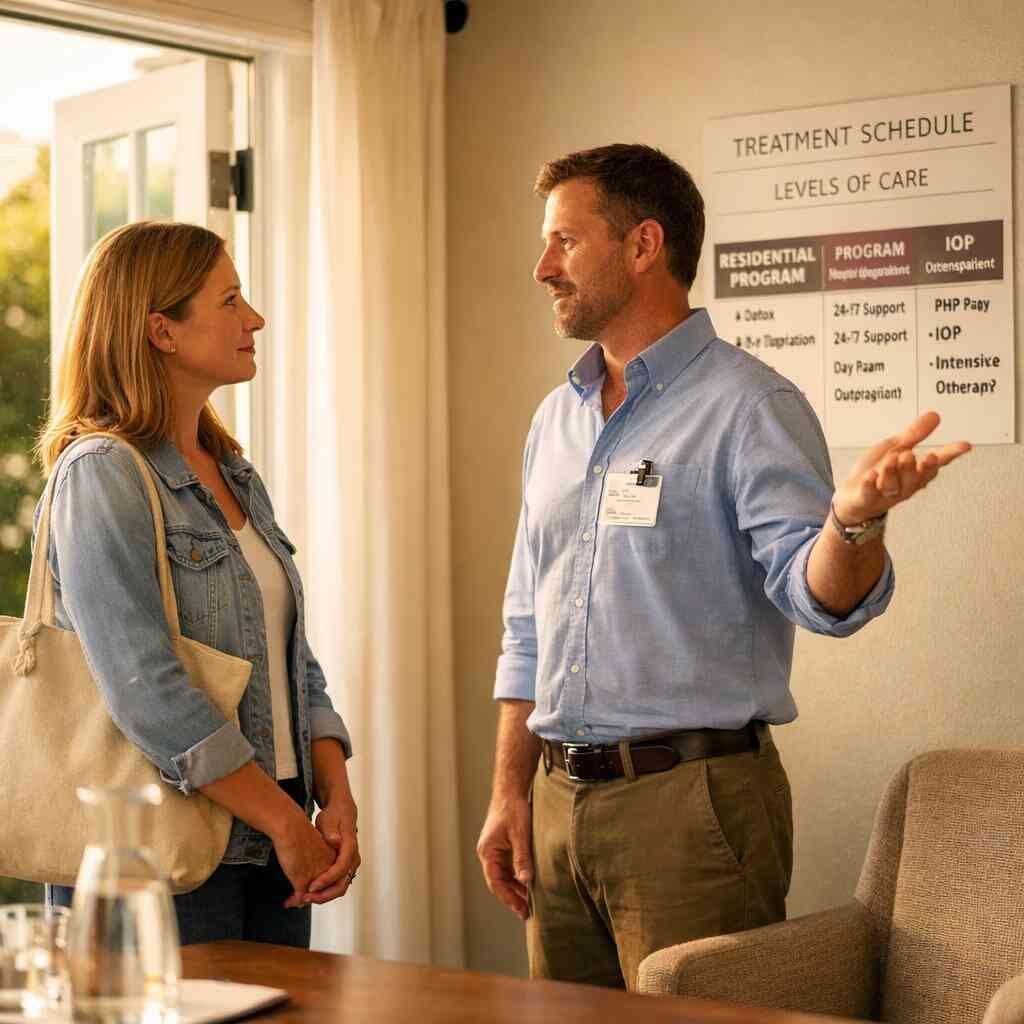
A good plan does not stop at one level of care. A residential treatment facility gives the most structure. A partial hospitalization program adds more daytime support. Intensive outpatient keeps treatment active while allowing more time at home. Families often need that roadmap because recovery rarely moves in one straight line. 
This is where the difference between PHP and IOP becomes practical, not theoretical. Residential care can stabilize a crisis. PHP can build routine. IOP can test independence while keeping support close. If you are comparing levels, our What Is the Difference Between IOP and Residential Treatment page can help you understand the sequence.
What family weekend and group therapy activities can teach about boundaries in recovery and communication skills for recovery
Family weekends are not social events. They are practice spaces. They teach how to speak clearly, listen without interrupting, and stop rescuing too fast. That is why communication skills for recovery and boundaries in recovery matter so much.
A family in Boca Raton once described the first honest conversation they had in years during a structured visit. No one left feeling fixed. They left feeling clearer. That is a better marker. Group therapy activities, family therapy, and guided visitation can make the home feel less chaotic after discharge. For more detail, see our Best Family Visitation Practices at RECO Immersive Florida 2026. ### How case management, aftercare planning, and life skills training help the home environment stay stable
The work after treatment matters as much as the work during it. Case management helps organize appointments, referrals, transportation, and follow-up care. Aftercare planning helps the family see what comes next. Life skills training can cover sleep routines, budgeting, meals, and work readiness.
That sounds basic. It is not. The home environment often falls apart on small, repeated failures: missed rides, empty fridges, and unclear phone rules. Good planning lowers those stress points. If you want a useful framework, our Best Aftercare Planning Steps Offered Through RECO Immersive resource shows how the pieces fit.
The decisions that keep recovery moving after discharge instead of drifting apart
Discharge should not feel like a cliff. It should feel like a handoff. Families need a plan for the days after treatment, not just the day before it ends. That plan often includes housing, therapy, medication support, and sober community.
One client’s family in Palm Beach County told us the hardest part was the silence after discharge. The structure disappeared too fast. Once they had a written plan, the house felt less fragile. That is the point of continuing care: less guessing, more clarity.
How sober living resources after treatment support long-term recovery in Palm Beach County and beyond
Sober living resources can help bridge the gap between treatment and full independence. They give people time to practice routines with lower risk. That is especially useful after fentanyl treatment, benzodiazepine withdrawal, or prescription pill addiction care. It can also help young adults, professionals, and people returning to high-stress homes.
Families often ask if sober housing means failure. It does not. It means a person is still building stability. In Palm Beach County, the right setting can support sleep, accountability, and peer contact. If you are comparing options, our Top 8 Sober Living Options Near RECO Immersive Delray Beach FL guide can help.
Why relapse prevention for families often starts with coping skills, not criticism
Criticism may feel honest. It rarely helps. Relapse prevention for families starts with calmer responses, clearer boundaries, and better coping. Families need tools for stress, fear, and disappointment too.
That means learning what to do before a crisis hits. Use pause words. Ask direct questions. Keep the focus on facts. Avoid emotional ambushes. SMART Recovery, 12-step alternatives, and cognitive behavioral therapy all teach usable coping tools. If you want practical examples, our Top 6 Relapse Prevention Tools Used at RECO Immersive 2026 page is a smart next read.
How medication-assisted treatment education helps families ask better questions about Vivitrol injections and Suboxone maintenance
Families often feel torn about medication. That is understandable. Medication-assisted treatment can sound complicated if you have only heard rumors. But FDA-approved options like Vivitrol injections and Suboxone maintenance can be important parts of care for opioid use disorder.
The right question is not “Why medication?” It is “How does this medication fit the full plan?” Families should ask about monitoring, side effects, appointments, and goals. They should also ask how medication supports therapy. A clear explanation helps with opioid rehab Delray, fentanyl treatment, and heroin recovery planning. Our Understanding Medication Assisted Treatment at RECO Immersive page keeps it simple.
What alumni program connection and continuing care can mean for a family rebuilding trust
Trust does not return on command. It returns through repetition. An alumni program gives that repetition a place to live. Continued contact, peer support, and check-ins help families see change over time.
In many cases, the RECO Intensive alumni network becomes part of the long-term support system. That matters for young adult rehab, professional’s program needs, LGBTQ+ affirmative treatment, veterans addiction help, and gender-specific treatment concerns too. A family rebuilding trust needs proof that the support continues after the discharge paperwork is signed. For a closer look, see our Best Spring 2026 Mindfulness Practices for RECO Immersive Alumni page.
When to verify insurance Aetna Cigna Blue Cross Blue Shield or out-of-network benefits and take the next step with RECO Immersive
Insurance questions often delay care more than clinical questions do. That is frustrating, and very common. Families want to know about insurance verification, Aetna, Cigna, Blue Cross Blue Shield, out-of-network benefits, and self-pay options before they call. That is sensible.
Here is the part most families miss: benefit checks do not commit you to treatment. They simply clarify options. If you are exploring Florida rehabs that take insurance, private rehab options, or Boca Raton outpatient support, start with a verification call. You can use our Insurance Verification page or explore RECO Immersive for South Florida recovery support. You do not have to solve everything today. Start with one call, one question, and one clear next step.
Frequently Asked Questions
Question: What family support in addiction recovery does RECO Immersive offer for people searching for Delray Beach rehab family resources and Florida addiction treatment for families?
Answer: RECO Immersive focuses on helping families understand the treatment process, communicate more effectively, and stay involved in a healthy way. That can include family therapy in rehab, family education for addiction, intake process for family involvement, and aftercare planning with family support. The goal is to support both the person in care and the people who love them, while keeping privacy, dignity, and clinical structure in place. For families comparing Delray Beach rehab, inpatient rehab Palm Beach County, or an outpatient program Delray Beach, RECO Immersive offers guidance that helps make the path forward feel clearer and less overwhelming.
Question: In the blog Ultimate Guide to Family Support at RECO Immersive 2026, how does RECO Immersive help families understand dual diagnosis treatment and co-occurring disorders?
Answer: RECO Immersive recognizes that substance use and mental health concerns often happen together, which is why dual diagnosis treatment and co-occurring disorders are such an important part of family education. Families are often trying to understand how depression and addiction, anxiety treatment needs, PTSD treatment, or bipolar disorder therapy can affect recovery. RECO Immersive helps families see why integrated care matters and why treatment may need to address both mental health IOP needs and addiction support at the same time. This kind of education can reduce confusion, lower blame, and help families become more supportive partners in long-term recovery.
Question: What can families expect from RECO Immersive during the intake process, especially when supporting a loved one in treatment for opioid rehab Delray, fentanyl treatment, or prescription pill addiction?
Answer: During the intake process, families may be asked to share background details, medication history, recent safety concerns, and other information that helps the care team build an appropriate plan. RECO Immersive keeps the process organized and respectful, while still protecting the patient’s privacy. This matters for families navigating opioid rehab Delray, fentanyl treatment, heroin recovery, prescription pill addiction, or benzodiazepine withdrawal support. Families do not need to have every answer before they call. A thoughtful intake conversation can help the team recommend the right level of care, whether that is a residential treatment facility, partial hospitalization program, or intensive outpatient support.
Question: How does family therapy in rehab at RECO Immersive support communication skills for recovery, boundaries in recovery, and trauma-informed family therapy?
Answer: Family therapy in rehab at RECO Immersive is designed to do more than talk through problems. It helps families learn communication skills for recovery, build better boundaries in recovery, and understand the patterns that may have developed around addiction, stress, or trauma. Depending on the care plan, this may include CBT for family support, DBT skills for families, and EMDR trauma therapy support when trauma is part of the picture. That approach can be especially important for families dealing with alcoholism treatment center needs, depression and addiction, anxiety treatment, or trauma therapy South Florida concerns. When families learn practical tools, they are often better prepared to support the person at home without falling into old cycles of blame or rescue.
Question: What happens after discharge, and how do aftercare planning, case management, and sober living resources support long-term recovery at RECO Immersive?
Answer: RECO Immersive treats discharge as a handoff, not an ending. Aftercare planning helps families understand next steps, including therapy follow-up, medication support, sober living resources, and practical home routines. Case management can help coordinate appointments, referrals, transportation, and other details that keep recovery from drifting. This is especially helpful for families supporting young adult rehab, professional’s program needs, LGBTQ+ affirmative treatment, veterans addiction help, or gender-specific treatment. By combining aftercare support, life skills training, and relapse prevention for families, RECO Immersive helps create a more stable bridge between treatment and everyday life.
Question: What should families know about insurance verification, Aetna, Cigna, Blue Cross Blue Shield, and self-pay options before contacting RECO Immersive for South Florida recovery support?
Answer: Families often hesitate because they are unsure about coverage, but insurance verification is simply a way to clarify options. RECO Immersive can help families ask the right questions about Aetna, Cigna, Blue Cross Blue Shield, out-of-network benefits, and self-pay options before making a commitment. That makes it easier to compare Florida rehabs that take insurance, private rehab choices, and nearby support such as Boca Raton outpatient, Fort Lauderdale detox, West Palm Beach mental health, or Miami addiction help. If you are worried about affordability, the best next step is usually just to verify benefits and discuss what level of care may fit your loved one’s needs.