How RECO Immersive Uses EMDR for PTSD Treatment in 2026
When PTSD keeps showing up in the body long after the danger is gone If you are reading this because sleep feels broken, your nerves stay on edge, or your chest tightens for no clear reason, that fear makes sense. PTSD rarely looks neat from the outside. It can show up as panic, numbness, anger, […]

When PTSD keeps showing up in the body long after the danger is gone
If you are reading this because sleep feels broken, your nerves stay on edge, or your chest tightens for no clear reason, that fear makes sense. PTSD rarely looks neat from the outside. It can show up as panic, numbness, anger, shutdown, or a body that never feels safe. In a Delray Beach rehab setting, that often gets mistaken for anxiety treatment alone, or for depression and addiction without the trauma underneath.
Why trauma can feel like panic, numbness, insomnia, or rage instead of a clear memory
Trauma does not always arrive as a movie-like flashback. Sometimes it shows up as a startle response, a racing heart, or a cold, empty feeling in the middle of the day. Some people cannot sleep because their bodies stay alert for danger. Others feel rage because anger is easier to hold than fear.
Here is the part most people miss: the nervous system can keep responding after the threat is over. That is why post-traumatic stress disorder and trauma recovery often need more than a talk-based approach. A person may understand the story and still feel trapped in the body’s alarm system. That mismatch is exhausting.
One client in the Palm Beach County area described it this way: “I knew I was safe, but my body did not get the memo.” That is a common pattern. The mind may explain it, but the body still braces. EMDR trauma therapy is often considered when that split between knowing and feeling becomes the real barrier.
Which PTSD symptoms often overlap with anxiety treatment and depression and addiction
PTSD can look a lot like other concerns at first. Poor sleep, worry, irritability, and concentration problems may resemble anxiety treatment needs. Low energy, hopelessness, and social withdrawal may point toward depression and addiction. Substance use can then become a fast way to numb fear, quiet memories, or sleep through the night.
That overlap matters because symptom labels can hide the root cause. A person may drink to calm down, then feel shame about the drinking, then feel worse because shame feeds the trauma loop. In that cycle, the substance use is not the whole problem. It is often a survival strategy that no longer works.
Common overlap signs include:
- Hypervigilance that looks like chronic anxiety
- Nightmares that lead to drinking or pill use
- Irritability that gets labeled as a mood problem
- Emotional numbness that looks like depression
- Avoidance that delays care for months or years
How co-occurring disorders can make trauma harder to spot in a Delray Beach rehab setting
In a Delray Beach rehab, co-occurring disorders can blur the picture even more. Someone may arrive for opioid rehab Delray, cocaine detox Florida, fentanyl treatment, heroin recovery, or prescription pill addiction care, but the deeper wound is trauma. Others may seek help for alcoholism treatment center needs or benzodiazepine withdrawal, while PTSD sits quietly underneath. That is why dual diagnosis treatment matters.
The National Institute on Drug Abuse has long emphasized the co-occurring disorders model. When PTSD and substance use travel together, both need attention. If one side gets ignored, relapse risk rises. That is true in private rehab, inpatient rehab Palm Beach County settings, and outpatient program Delray Beach care.
A young adult we once saw was sure the issue was only cannabis and alcohol use. Then the intake process revealed repeated trauma, insomnia, and panic after loud noises. Once those pieces were named, treatment started to make sense. That clarity can be the relief people have been missing.
Why EMDR fits trauma recovery when talk therapy alone has stalled
Talk therapy helps many people. Still, some trauma lives deeper than language. You can explain an event ten times and still feel the same body response. EMDR trauma therapy is often useful at that point because it works with memory, body sensation, and nervous system activation together.
What eye movement desensitization and reprocessing actually does in the brain and body
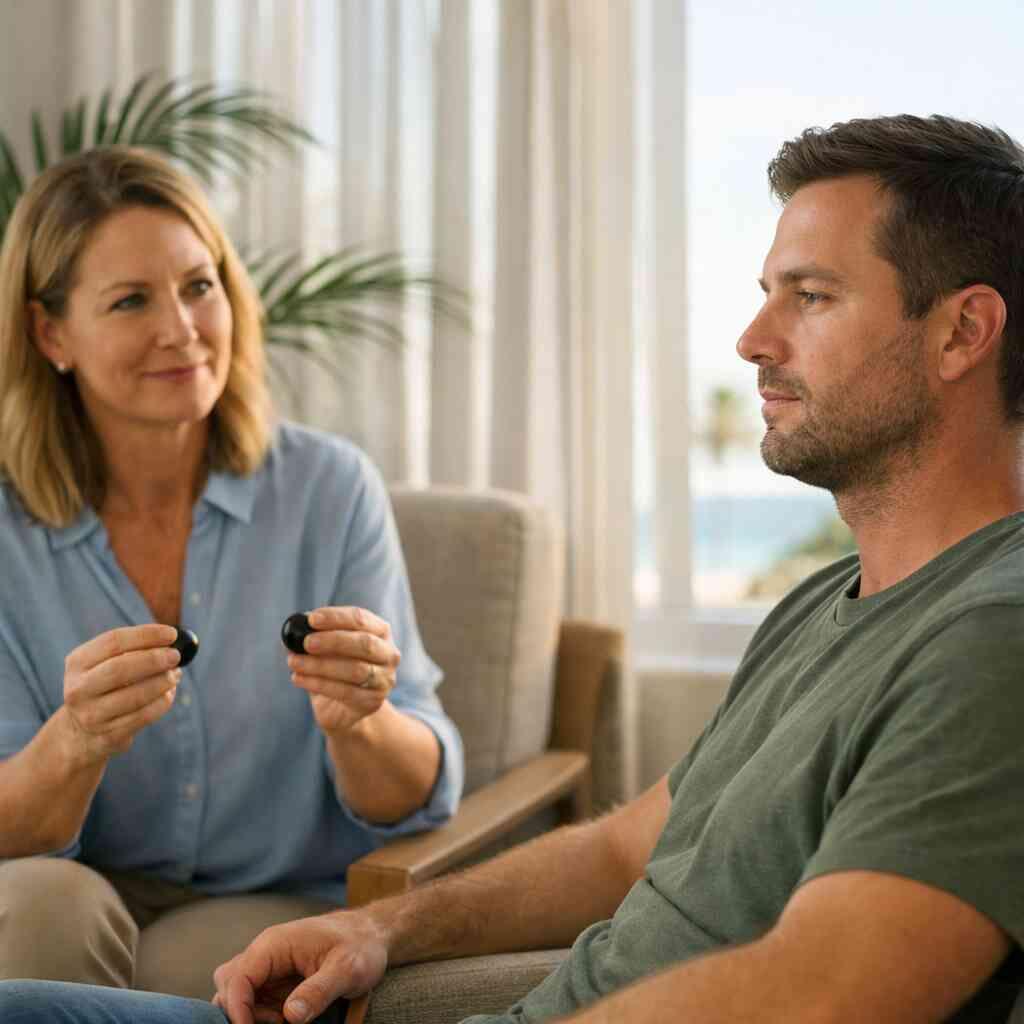
EMDR stands for eye movement desensitization and reprocessing. In simple terms, it helps the brain process traumatic memories so they feel less raw and less present. During sessions, a clinician guides attention while the person follows bilateral stimulation, such as eye movements or tapping. That rhythm appears to help the brain file the memory differently.
The goal is not to erase what happened. The goal is to lower the charge attached to it. People often describe the memory as still real, but less overpowering. That shift can reduce panic, shame, and body tension.
Research supports EMDR as an evidence-based treatment for PTSD. It is often paired with trauma-informed care for PTSD and trauma recovery so the person feels safe enough to do the work. When the body is calmer, the brain can process more effectively. That is why pacing matters so much.
When EMDR trauma therapy is a strong match for PTSD treatment and when it needs to be paired with CBT or DBT
EMDR can be a strong fit when trauma memories trigger intense emotional or physical reactions. It may help when nightmares, flashbacks, or avoidance keep interfering with daily life. It often fits people who feel stuck even after honest, sustained therapy. It also fits people in South Florida recovery who need a focused method, not endless rehashing.
Still, EMDR is not always enough by itself. Some people need cognitive behavioral therapy to challenge fear-based thoughts. Others need dialectical behavior therapy for distress tolerance, emotion regulation, and self-control. That pairing can be especially important with dual diagnosis, bipolar disorder therapy needs, or intense anxiety treatment.
The best trauma care often combines methods.
NeedBest-fit supportPersistent intrusive memoriesEMDRNegative thinking patternsCBTIntense emotions and self-harm riskDBTTrauma plus substance useDual diagnosis treatmentFamily strain and isolationFamily therapyFor many people, CBT and DBT support for co-occurring disorders gives the structure EMDR needs to work safely.
How licensed clinicians at a residential treatment facility or mental health IOP can pace EMDR safely for people with co-occurring disorders
EMDR should be paced carefully. That is especially true in a residential treatment facility or mental health IOP, where trauma, withdrawal, and mood symptoms can collide. Licensed clinicians can watch for signs that the person is becoming overwhelmed. They can slow the work, return to grounding, or shift to stabilization.
That kind of pacing matters in Florida addiction treatment, especially when someone is in early recovery. If the nervous system is already raw from South Florida detox or medication changes, pushing too fast can backfire. A good treatment plan respects the order of care. Safety comes first.
People sometimes imagine therapy should feel intense to be effective. Usually, the opposite is true. Good EMDR stays within a tolerable range. That helps the nervous system learn that pain can be approached without flooding.
Why trauma therapy South Florida often works better when it includes grounding skills, mindfulness meditation, and family support
In trauma therapy South Florida, EMDR usually works better when it sits inside a larger support system. Grounding skills help the person notice the present moment. Mindfulness meditation can reduce the speed of anxious thoughts. Family support can help the person practice safety outside the office. 
This is where holistic recovery with mindfulness meditation and yoga therapy can complement clinical work. The body learns through repetition. So do the family members who love someone in recovery. When everyone has language for triggers, sessions often go further.
One family from Broward County said they had spent years “walking on eggshells” around the trauma and the drinking. Once they learned how to pause, reflect, and respond instead of react, home felt less volatile. That is not magic. It is skill-building. And skill-building takes practice.
The way RECO Immersive shapes EMDR into a real recovery plan
EMDR works best when it is part of a plan, not a standalone promise. At RECO Immersive, trauma care can be shaped around the full picture: history, substance use, safety, daily structure, and next-step planning. That matters in Delray Beach, where the recovery community is active and the pace of life can still feel fast.
How an intake process can map trauma history, substance use, and safety needs before EMDR starts
A careful intake process should ask about more than symptoms. It should map trauma history, current substance use, sleep, medications, triggers, self-harm risk, and support at home. It should also ask what feels unsafe right now. That information helps the team choose the right level of care.
At RECO Immersive, that kind of intake can guide decisions before EMDR begins. If someone is still in withdrawal, treatment may need detox support first. If someone is stable but overwhelmed, a structured outpatient program Delray Beach may be better. If someone needs closer monitoring, partial hospitalization program care may fit better than weekly therapy alone.
For people comparing options, mental health IOP and intensive outpatient care in Delray Beach can offer more structure than standard outpatient treatment. The right setting depends on stability, support, and symptom load. That is the real question, not just convenience.
Why an outpatient program Delray Beach or partial hospitalization program may be the right setting for trauma work
Not every person needs full residential care for trauma work. Some need the rhythm of a partial hospitalization program during the day and home at night. Others do better in intensive outpatient because it lets them keep work, school, or family responsibilities moving. In Delray Beach rehab planning, level of care should match symptom severity.
If trauma and substance use are active at the same time, the setting matters even more. EMDR can open difficult material, and you want enough support around that opening. A PHP or IOP can offer groups, check-ins, and clinical oversight while the person practices coping skills in real life. That bridge is often what makes progress stick.
Here is what almost no online guide mentions: the right setting can reduce shame. People feel less “broken” when treatment fits their actual life. That feeling matters more than most admit. It can keep someone engaged long enough for the work to matter.
How dual diagnosis treatment can connect EMDR with medication management, case management, and relapse prevention
When PTSD and substance use overlap, dual diagnosis treatment for PTSD and substance use can keep the plan coherent. Medication management may help reduce symptoms enough for therapy to work. Case management can solve practical problems like transportation, work notes, or follow-up care. Relapse prevention keeps the focus on warning signs, not just willpower.
Medication-assisted treatment can also matter. FDA-approved options such as Vivitrol injections and Suboxone maintenance may be considered when opioids are part of the picture. Those tools do not replace therapy. They can lower chaos so the person can stay engaged.
RECO Immersive’s aftercare planning and relapse prevention for long-term recovery can help connect the dots after the intensive phase of treatment. That continuity matters. People do better when the plan does not vanish at discharge.
Where holistic recovery can fit in through yoga therapy, art therapy, group therapy activities, and coping skills
Healing is not only cognitive. Trauma lives in posture, breath, habits, and relationships. That is why holistic recovery can support the clinical work instead of competing with it. Yoga therapy, art therapy, group therapy activities, and coping skills can all help the body relearn calm.
A good day in treatment might include a skills group, a check-in with staff, a therapy session, and a quiet period to reset. Group therapy often teaches people they are not the only ones carrying this load. Art can help when words feel too sharp. Yoga can soften the tension that stays locked in the shoulders and jaw.
If you are looking for family therapy support for trauma recovery and co-occurring disorders, that can also be part of the plan. Family weekend, education, and clear boundaries can change the home environment. That support often makes the difference between short relief and longer recovery.
How RECO Immersive at 140 NE 4th Avenue Delray Beach FL 33483 can support aftercare planning and long-term recovery without rushing the pace
RECO Immersive is located at 140 NE 4th Avenue Delray Beach FL 33483, close to the energy of Atlantic Avenue and the calmer edges of the beachside recovery environment. That location can matter more than people think. A coastal setting can feel less clinical, but it still needs structure. Recovery asks for both.
What matters most is pace. Trauma work should not feel rushed, especially when someone is rebuilding trust after addiction, loss, or repeated stress. A strong plan includes sober living resources, life skills training, vocational support, nutritional counseling, and alumni program contact when needed. It should also include practical help like licensed clinicians for evidence-based treatment and trauma recovery and clear insurance verification through admissions support.
RECO Intensive location and South Florida recovery support can fit into that larger picture, especially for people seeking private rehab with structure. If you are comparing Florida rehabs that take insurance, ask how they handle trauma, co-occurring disorders, and ongoing care after discharge. Then ask how they help you hold the gains once the program ends. You do not have to sort it all out alone, and you do not have to solve it in one call. Start by asking one direct question about your trauma history and the level of care that fits it best.
Frequently Asked Questions
Question: How does EMDR trauma therapy fit into PTSD treatment at RECO Immersive?
Answer: EMDR trauma therapy can be a strong part of PTSD treatment when traumatic memories keep showing up in the body as panic, insomnia, rage, numbness, or hypervigilance. At RECO Immersive, the focus is on trauma-informed care that helps the nervous system process what happened without forcing a person to relive it in a way that feels overwhelming. EMDR, or eye movement desensitization and reprocessing, is often used to help reduce the emotional charge attached to traumatic memories so they feel less present and less controlling.
For many people, EMDR works best when it is integrated with evidence-based treatment such as cognitive behavioral therapy, dialectical behavior therapy, group therapy activities, and family therapy. That matters especially in dual diagnosis treatment, where PTSD may overlap with depression and addiction, anxiety treatment, bipolar disorder therapy, or substance use concerns. RECO Immersive’s approach is designed to support the whole picture, not just one symptom, which is why many people searching for Delray Beach rehab or trauma therapy South Florida want a program that can address both trauma and co-occurring disorders at the same time.
Question: What makes RECO Immersive different from a standard outpatient program Delray Beach when it comes to trauma recovery?
Answer: The difference is usually the level of structure, coordination, and pacing. A standard outpatient program may help some people, but trauma recovery often needs more support when PTSD is tied to addiction, withdrawal, or severe emotional distress. RECO Immersive can help match care to need through options such as intensive outpatient, mental health IOP, and partial hospitalization program support, which can offer more structure than weekly therapy alone while still allowing people to live at home or remain connected to work and family when appropriate.
That structure matters when someone is navigating PTSD treatment alongside opioid rehab Delray, cocaine detox Florida, fentanyl treatment, heroin recovery, prescription pill addiction, benzodiazepine withdrawal, or alcoholism treatment center needs. A careful intake process can map trauma history, current symptoms, safety concerns, and support needs before EMDR begins. This helps licensed clinicians determine whether someone is best served in a residential treatment facility, a partial hospitalization program, or a lower level of care. For people looking for Florida addiction treatment or South Florida recovery support, that kind of thoughtful matching can make care feel safer and more effective.
Question: How RECO Immersive Uses EMDR for PTSD Treatment in 2026, and who is it best for?
Answer: How RECO Immersive Uses EMDR for PTSD Treatment in 2026 is centered on a careful, individualized process that respects both trauma and co-occurring disorders. EMDR may be a good fit for people whose PTSD symptoms include flashbacks, nightmares, avoidance, emotional flooding, or body-based stress responses that have not improved enough with talk therapy alone. It can also be helpful for people in private rehab or beachside recovery settings who need a focused, evidence-based treatment approach that does not require them to explain every detail of the trauma repeatedly.
EMDR is typically most effective when it is paced safely and supported by grounding skills, mindfulness meditation, coping skills, and relapse prevention planning. For someone also managing depression and addiction, anxiety treatment, or dual diagnosis, RECO Immersive may coordinate EMDR with medication management, case management, life skills training, and aftercare planning so the person is not left to figure out the next steps alone. That kind of whole-person support can be especially important in South Florida detox and recovery settings where early stabilization matters.
Question: Can RECO Immersive help if PTSD is connected to substance use or medication-assisted treatment needs?
Answer: Yes, this is often one of the most important reasons people seek dual diagnosis treatment. PTSD and substance use can reinforce each other in painful ways: trauma can drive drinking or drug use, and substance use can make anxiety, sleep problems, and emotional instability worse. RECO Immersive’s approach can help address both sides of that cycle through trauma-informed care, relapse prevention, and coordinated support for co-occurring disorders.
If someone needs medication-assisted treatment, options such as Vivitrol injections or Suboxone maintenance may be considered when clinically appropriate. These supports do not replace therapy, but they can reduce chaos enough for EMDR trauma therapy and other evidence-based treatment to work more effectively. That is especially important for people seeking opioid rehab Delray, heroin recovery, fentanyl treatment, or prescription pill addiction support. RECO Immersive can also help connect treatment with aftercare support, sober living resources, and alumni program engagement so recovery continues after the most intensive phase ends.
Question: What therapies and supports can be combined with EMDR at a trauma therapy South Florida program?
Answer: EMDR works best when it is part of a broader recovery plan. At RECO Immersive, that may include cognitive behavioral therapy for negative thought patterns, dialectical behavior therapy for emotion regulation, group therapy activities for connection, and family therapy to help rebuild trust and communication. Holistic recovery supports such as yoga therapy, art therapy, and mindfulness meditation can also help the body relearn calm, especially when trauma has been stored physically for a long time.
For many people, practical support matters too. Case management, coping skills coaching, life skills training, vocational support, nutritional counseling, and aftercare planning can help bridge the gap between treatment and everyday life. That is one reason people comparing Florida rehabs that take insurance often ask about how a program handles long-term recovery, not just symptom reduction. RECO Immersive’s coastal healing environment in Delray Beach, along with access to licensed clinicians and a structured intake process, can help make treatment feel personal, steady, and realistic.