Neurointegration
Neurointegration is a non-invasive treatment that combines brain mapping with real-time feedback to help your brain function more efficiently. It typically starts with a qEEG (brain map) that shows how different areas of your brain are working. Based on that data, personalized sessions use tools like neurofeedback, light, sound, or electrical stimulation to gently guide your brain toward healthier patterns.
When the brain is out of sync, it can lead to problems like anxiety, depression, brain fog, sleep issues, or trouble focusing. Neurointegration helps restore balance by training the brain to self-correct and regulate more effectively. It’s especially helpful for people who haven’t responded well to medication or talk therapy alone and are looking for a science-backed way to feel better.
Your brain controls how you think, feel, and respond to stress. By improving brainwave function, Neurointegration can reduce emotional reactivity, improve clarity and focus, and help you feel more calm and grounded. It works hand-in-hand with therapy and other treatments to support long-term emotional stability and healing.

Neurointegration, explained
What is neurointegration?
Neurointegration is a coordinated brain-based treatment that combines neurofeedback, audiovisual entrainment, and cranial electrostimulation in structured sessions. The aim is to retrain dysregulated brain patterns visible on a qEEG brain map that drive symptoms like trauma reactivity, anxiety, ADHD, and emotional dysregulation.
Who is neurointegration for?
Patients with measurable EEG dysregulation — most commonly: PTSD and complex trauma, ADHD (especially treatment-resistant), anxiety disorders that haven’t responded to standard care, sleep disorders, persistent post-concussion syndrome, and emotional regulation problems. The qEEG performed at intake tells us whether neurointegration is likely to help.
What does a session involve?
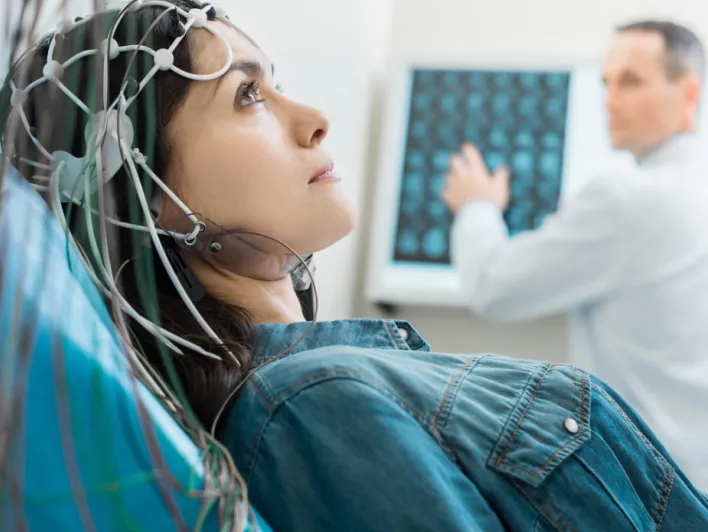
Sessions are 30-45 minutes. You’re seated comfortably with EEG sensors on your scalp (similar to a standard EEG, non-invasive), watching video or auditory feedback that reinforces healthy brain states. The audiovisual entrainment runs simultaneously through visor and headphones. Cranial electrostimulation may run for the last 20 minutes.
How long until I see results?
Many patients feel calmer or more focused within the first 3-5 sessions. Measurable EEG changes typically show by session 10. Lasting symptom improvement requires a course of 20-40 sessions, scheduled 2-3 times weekly. The qEEG is repeated halfway through to confirm the brain is changing in the intended direction.
Is it covered by insurance?
Coverage varies. Neurofeedback alone is sometimes covered for ADHD or PTSD, particularly under autism or rehabilitation benefits. The full neurointegration protocol is more often a self-pay or partially-covered service. Our admissions team verifies coverage in detail at intake.