Residential bipolar disorder treatment for Boynton Beach — observed adherence, real optimization.
A specialist outpatient program for clients in Boynton Beach. PHP, IOP, in-house psychiatry, sober-living network, family programming. Same admissions team, 24/7.
Start the conversation Or call directly — (561) 464-4077Local options exist. This is the clinical specialist.
For Boynton Beach residents whose bipolar disorder has outrun outpatient care, RECO Immersive's residential program sits twelve minutes south on Federal Highway — close enough that family remains part of the treatment plan without uprooting daily life. Programming is built for the two- to six-week stabilization window that outpatient struggles to hold: observed mood stabilizer titration to therapeutic serum levels, IPSRT-anchored sleep-wake regulation, and family-focused therapy delivered by a psychiatrist-led team. Length of stay is set by clinical response tracked against the YMRS and HAM-D, not a predetermined package.
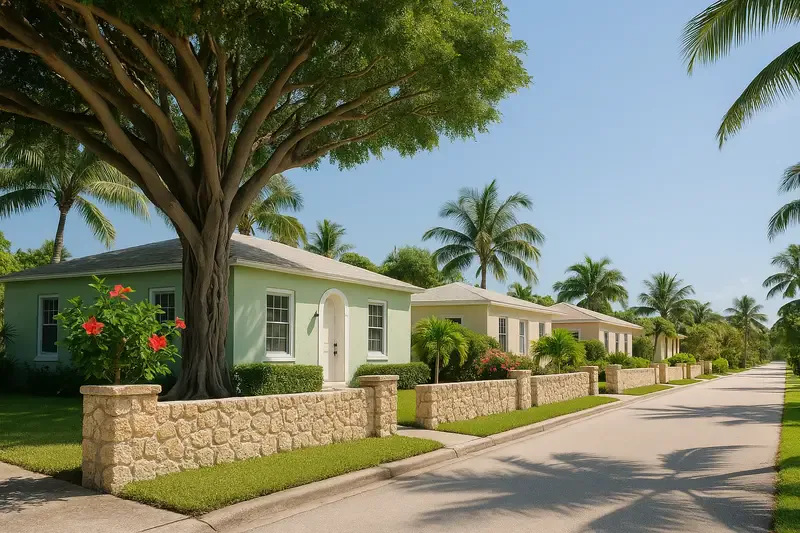
Boynton Beach sits seven miles north of Delray Beach along Federal Highway, and for residents of Renaissance Commons, Ocean Ridge, or Quantum Park, the twelve-minute drive south to RECO Immersive is often shorter than the commute to a typical Boynton supermarket. That distance matters clinically. Adults whose bipolar disorder has cycled past what outpatient care can hold — after a recent hospitalization, during a stubborn depressive phase, or after years of undertreatment — need residential density without being uprooted from the geography their family, work, and support system already occupy. RECO Immersive’s residential bipolar disorder treatment program is designed for that gap between acute inpatient and outpatient PHP or IOP.
Residential bipolar treatment versus acute inpatient
Acute mania with psychotic features or imminent safety risk requires a locked inpatient unit. RECO Immersive is not that setting, and clients presenting in florid manic decompensation are referred to hospital-based crisis care first. Residential bipolar treatment becomes appropriate downstream of that stabilization — the roughly two- to six-week window after a client is out of imminent risk but nowhere near stable enough for outpatient partial hospitalization or intensive outpatient care. That is the window where most treatment attrition happens.
The residential level is also appropriate for severe bipolar depression that has not responded to outpatient antidepressant augmentation, for medication optimization requiring observed adherence, and for clients whose bipolarity has been chronically misdiagnosed or undertreated as unipolar depression. In practice, many admissions arrive as step-down from a Baker Act hold, from PHP programs where a client destabilized, or from psychiatrists whose outpatient caseload cannot deliver the structured reset a weekly appointment cannot hold.
Mood stabilizer optimization with observed adherence
Pharmacologic stabilization of bipolar disorder is unforgiving of gaps. Lithium requires baseline renal panel, TSH, calcium, and a pregnancy test, followed by careful titration to a maintenance serum level of 0.6–1.0 mEq/L with monitoring for weight change, thyroid suppression, and creatinine trend. Lamotrigine requires a slow titration — 25 mg for two weeks, then 50 mg, then 100 mg, then 200 mg — because faster escalation meaningfully raises the risk of Stevens–Johnson syndrome. Valproate requires LFTs, platelet counts, and serum levels targeted to 50–125 mcg/mL. Second-generation antipsychotics used adjunctively — quetiapine, olanzapine, aripiprazole, lurasidone — each carry their own metabolic and movement-disorder monitoring requirements.
Outpatient adherence often falters exactly during the titration weeks when side effects are worst and therapeutic effect has not yet emerged. In residential, adherence is directly observed, blood draws happen on schedule, and side effects are addressed within hours rather than at the next appointment three weeks out. That difference is frequently the difference between a regimen that stabilizes a mood cycle and a regimen that gets abandoned at week three.
Sleep-wake regulation and social rhythm therapy
Sleep disruption is both a symptom of bipolar mood episodes and a reliable trigger for them — the shortest documented hypomanic prodrome is often a single night of reduced sleep. Interpersonal and Social Rhythm Therapy (IPSRT), the psychotherapy with the strongest evidence base for bipolar maintenance, treats sleep-wake timing, meal timing, and social routine as clinical variables to be measured and stabilized rather than lifestyle recommendations.
Residential structure operationalizes IPSRT by design. The sleep window and wake time are consistent across every day of the admission. Meals occur at fixed times. Physical activity, group therapy, and community meetings are scheduled at consistent hours. Clients discharge with a rhythm already established — with a Social Rhythm Metric already tracked for several weeks — rather than trying to build one from scratch in the disorganized weeks after hospitalization. Individual sessions integrate CBT and ACT alongside IPSRT to target the cognitive and behavioral drivers of relapse.
Family-focused therapy and psychoeducation
Family-focused therapy (FFT) has among the strongest evidence bases for reducing bipolar relapse rates when integrated with pharmacotherapy — comparable in effect size to guideline mood stabilizers themselves. Psychoeducation about episode prodromes, medication trade-offs, and expressed-emotion patterns is a core component of Immersive’s bipolar programming, not an optional add-on. High-expressed-emotion households — critical, hostile, or emotionally overinvolved — measurably raise relapse rates, and that dynamic is both teachable and modifiable.
Family sessions are integrated into the residential stay where geography allows. For families in Boynton Beach or elsewhere in Palm Beach County, in-person sessions are logistically simple; for out-of-area families, sessions run via telehealth. Content covers relapse warning signs, communication skills, problem-solving during prodromal periods, and clear guidance on when to contact the treatment team. Treating bipolar disorder as an individual illness rather than a system-level one is not supported by the outcome data.
What to expect during admission from Boynton Beach
Admission begins with a phone screen — clinical, not sales — that establishes diagnosis, current medications, recent hospitalizations, substance use history, and insurance benefits. Prospective clients driving in from Boynton Beach typically arrive at the Delray campus within an hour of confirmation. The intake day includes a full psychiatric evaluation, medication reconciliation, baseline labs, and structured assessments — the Mood Disorder Questionnaire (MDQ), Young Mania Rating Scale (YMRS), Hamilton Depression Rating Scale (HAM-D), PHQ-9, and GAD-7 — that establish a measurable baseline for tracking treatment response.
Co-occurring conditions are common in bipolar admissions and are assessed at intake rather than deferred. That includes ADHD (ASRS), OCD (Y-BOCS), PTSD, and substance use screened against ASAM Criteria dimensions. Substance-related withdrawal is screened with CIWA for alcohol and COWS for opioids; when withdrawal is anticipated, medical management is arranged before residential programming begins.
Insurance and admissions from Boynton Beach
RECO Immersive is in-network with most major commercial carriers — Florida Blue, Aetna, Cigna, UnitedHealthcare, Humana, and BCBS plans — and admissions staff run a full verification of benefits before any financial conversation. For most Boynton Beach residents with employer-sponsored coverage, residential mental health care carries the same behavioral-health cost-share as an inpatient hospitalization. Length of stay is determined by clinical response, not a predetermined package, and continued authorization is documented against medical-necessity criteria that most carriers apply consistently.
Serving residents of: Renaissance Commons, Ocean Ridge, Quantum Park, Hunters Run, Briny Breezes.
If it's any of these, we can help.
From Boynton Beach callers, most asked.
Does insurance cover residential bipolar treatment for Boynton Beach residents?
How long is residential bipolar treatment at RECO Immersive?
What happens on the first day of admission?
What does medication optimization actually mean for bipolar disorder?
How do I get to RECO Immersive from Boynton Beach?
How are families involved in residential bipolar treatment?
Other boynton beach-area communities we serve.


Confidential. No commitment.
Tell us a little and a real human from admissions will call you back. We verify insurance benefits within minutes and tell you honestly whether RECO Immersive is the right fit — including if we should refer you elsewhere.