Residential anxiety and OCD treatment for Deerfield Beach — ERP density outpatient can't match.
A specialist outpatient program for clients in Deerfield Beach. PHP, IOP, in-house psychiatry, sober-living network, family programming. Same admissions team, 24/7.
Start the conversation Or call directly — (561) 464-4077Local options exist. This is the clinical specialist.
For clients in Deerfield Beach, The Cove, or Hillsboro Beach, RECO Immersive is 13 miles up A1A — a 22-minute drive that keeps family visits practical while providing physical separation from the environment maintaining the anxiety. The residential program runs disorder-specific tracks for OCD, panic, GAD, and social anxiety rather than a single generic group, and dose-optimizes SSRIs at the anxiety-effective range — sertraline to 200 mg, escitalopram to 20 mg, paroxetine 40-60 mg for OCD — under daily observation. Length of stay is set by medical necessity, with in-house step-down to PHP and IOP so therapeutic alliance continues uninterrupted.
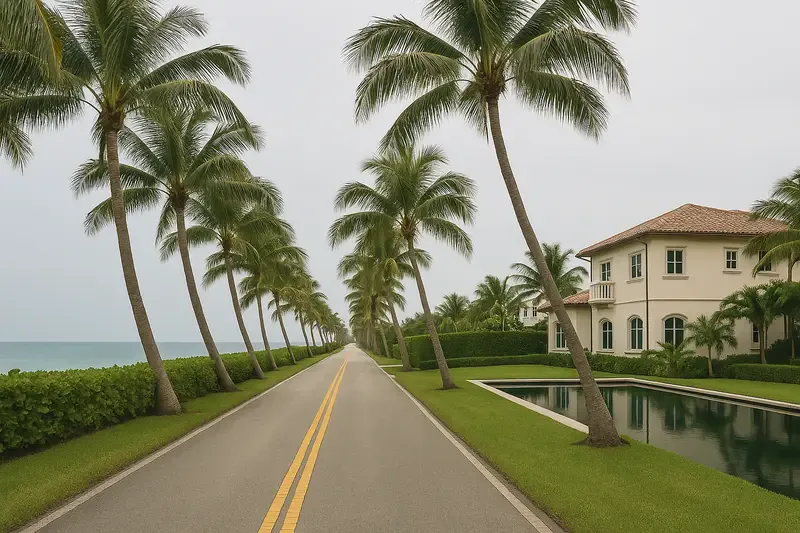
Deerfield Beach sits 13 miles south of RECO Immersive along the A1A coastline — a 22-minute drive that takes clients from The Cove, Pioneer Park, Hillsboro Beach, Cresthaven, and Goldcoast Centre up to a residential program without pulling them so far from family that weekend visits become impractical. For adults whose panic disorder, OCD, generalized anxiety, or social anxiety has stopped responding to outpatient CBT and SSRI trials, that short distance is often the deciding factor. The clinical case for residential care rests on exposure density — something an outpatient schedule structurally cannot replicate.
Why residential anxiety treatment works when outpatient hasn’t
Outpatient exposure-based CBT is the highest-evidence modality for every DSM-5 anxiety disorder. It also depends on the client tolerating anxious arousal between sessions and completing exposure homework without a therapist in the room. For clients with severe panic disorder, social anxiety with agoraphobic avoidance, or contamination-driven OCD, the between-session gap is where treatment collapses — the exposure either isn’t attempted, or is attempted at insufficient intensity to produce habituation.
Residential structure closes that gap. Exposures can be run twice daily under direct clinical supervision, with individual and group processing between blocks. For OCD, exposure and response prevention (ERP) at residential density typically produces clinically meaningful YBOCS reduction in four to six weeks — a response timeline outpatient ERP rarely matches even at twelve to sixteen weeks. Panic protocols compress similarly: interoceptive exposure sequences that would require two months of weekly outpatient work can be completed inside the first three weeks of a residential stay.
The other structural benefit is that avoidance behaviors — the mechanism maintaining anxiety disorders — become visible in a residential milieu. A client can report accurately in outpatient about panic frequency and still hide the covert safety behaviors that neutralize each exposure. Twenty-four-hour observation makes those behaviors observable and correctable in real time.
OCD, panic, GAD, and social anxiety in the same building
The four primary anxiety disorders share medication response — high-dose SSRIs are first-line for all of them — but they require distinctly different exposure protocols. RECO Immersive’s residential anxiety treatment runs disorder-specific tracks rather than a single generic anxiety group.
- OCD receives ERP with structured symptom hierarchies, response prevention monitoring, and YBOCS-tracked outcomes measured weekly.
- Panic disorder receives interoceptive exposure protocols targeting the physiological sensations — chest tightness, hyperventilation, derealization — that drive the panic cycle.
- Social anxiety disorder receives graded in-vivo exposure hierarchies conducted in real social settings, including video-recorded performance exposures for post-event processing.
- Generalized anxiety disorder receives worry postponement, intolerance-of-uncertainty training, and metacognitive therapy targeting the beliefs about worry that maintain the disorder.
Clients with comorbid presentations — OCD with panic, or GAD with social anxiety — receive integrated protocols sequenced by symptom severity as measured on GAD-7, PDSS, LSAS, and YBOCS at intake and re-scored every two weeks. ACT-based work on cognitive defusion and values-directed action is layered in for clients whose experiential avoidance persists after exposure gains.
SSRI optimization at anxiety-effective doses
Effective SSRI dosing for anxiety disorders typically sits at the upper end of the depression treatment range. Sertraline for panic disorder or GAD frequently requires 150 to 200 mg daily. Escitalopram is usually pushed to 20 mg. OCD often requires the highest doses in the class — paroxetine 40 to 60 mg, fluoxetine 60 to 80 mg, or sertraline 200 mg — sustained for eight to twelve weeks before response can be judged.
A common presentation at admission is a client on a subtherapeutic dose because outpatient titration was slow, was interrupted by side effects that were never re-challenged, or was arrested at the first sign of partial improvement. Residential structure allows daily side-effect monitoring during escalation, which materially changes what a client can tolerate and how quickly a therapeutic dose can be reached.
Where SSRI monotherapy is insufficient, augmentation is added with observed response tracking. Buspirone augmentation for GAD, low-dose aripiprazole (2 to 5 mg) or quetiapine augmentation for treatment-resistant OCD, and short-course benzodiazepine bridging during initial SSRI titration for severe panic are all standard. Benzodiazepine bridging is time-limited and tapered before discharge to avoid the physiological dependence that undermines long-term anxiety recovery.
Comorbid depression and the sequenced treatment plan
Severe anxiety disorders frequently present with comorbid major depression, and in many cases the depression is downstream of years of functional impairment from untreated or undertreated anxiety. Clients arrive with PHQ-9 scores in the moderate-to-severe range alongside GAD-7 or YBOCS scores in the same territory, and the immediate clinical question is which condition to treat first.
RECO Immersive’s protocol names the primary diagnosis at intake — typically the anxiety disorder driving the impairment — and treats it first with disorder-specific exposure work and SSRI optimization. Depression is reassessed at two-week intervals with PHQ-9. In a substantial proportion of cases, effective anxiety treatment reduces depressive symptom burden without a separate treatment track, because the depression was maintained by the avoidance and functional loss that anxiety produced.
Where depression remains clinically significant after anxiety severity has decreased, additional interventions are added — behavioral activation protocols, MI-informed work on ambivalence about behavioral change, and for severe or treatment-resistant depression, referral pathways into rTMS (3000 pulses per session at 120% motor threshold) or intranasal esketamine at partnered outpatient sites.
What to expect on the first day
Admission from Deerfield Beach typically begins with a phone assessment the same day the family calls. On arrival, clients complete psychiatric evaluation, PHQ-9, GAD-7, and disorder-specific scales — YBOCS for OCD, PDSS for panic, LSAS for social anxiety — plus medication reconciliation and medical clearance.
Exposure work does not begin on day one. The first 48 to 72 hours are used for stabilization, medication review, therapeutic alliance building, and hierarchy construction — collaboratively identifying and ranking the situations, thoughts, or sensations the client has been avoiding. Clients on subtherapeutic SSRI doses begin titration during this window, and clients on benzodiazepines that require tapering have that plan mapped before exposure work starts.
Insurance and admissions from Deerfield Beach
RECO Immersive works with major commercial plans including Florida Blue, Aetna, Cigna, UnitedHealthcare, Humana, and BCBS, and completes benefits verification during the intake call so families know actual out-of-pocket exposure — deductible, coinsurance, prior authorization requirements — before committing to admission. Prior authorization for residential mental health is handled by the admissions team on the client’s behalf.
Length of stay is set by medical necessity criteria rather than a fixed program length — typical stays for severe anxiety and OCD run 30 to 60 days, with step-down to partial hospitalization or intensive outpatient at the same physical location. That continuity matters clinically: clients don’t restart therapeutic alliance at each level of care, and the exposure protocol continues without disruption.
Serving residents of: The Cove, Pioneer Park, Hillsboro Beach, Cresthaven, Goldcoast Centre.
If it's any of these, we can help.
From Deerfield Beach callers, most asked.
Does insurance cover residential anxiety treatment for Deerfield Beach residents?
How long is the residential anxiety program?
What happens on the first day of residential anxiety treatment?
How is residential ERP different from weekly outpatient ERP for OCD?
How do I get to RECO Immersive from Deerfield Beach?
How are families involved in treatment, and what stays confidential?
Other deerfield beach-area communities we serve.


Confidential. No commitment.
Tell us a little and a real human from admissions will call you back. We verify insurance benefits within minutes and tell you honestly whether RECO Immersive is the right fit — including if we should refer you elsewhere.