Guide to Aftercare Planning for Early Recovery in 2026
If you are staring at discharge paperwork and feeling your chest tighten, that reaction makes sense. Early recovery can feel steady inside treatment and shaky outside it. That gap is exactly where aftercare planning matters most. At RECO Immersive, we see that a strong plan lowers chaos and builds confidence one day at a time. […]

If you are staring at discharge paperwork and feeling your chest tighten, that reaction makes sense.
Early recovery can feel steady inside treatment and shaky outside it.
That gap is exactly where aftercare planning matters most.
At RECO Immersive, we see that a strong plan lowers chaos and builds confidence one day at a time.
When early recovery starts to wobble, what actually keeps it from sliding backward
The hard part is not only leaving treatment.
The hard part is carrying treatment skills into traffic, bills, sleep loss, family pressure, and old triggers.
That shift can feel brutal at first.
Still, it is manageable when the next steps are clear and realistic.
Why the discharge day matters more than most people expect
Discharge day is not a finish line.
It is a handoff.
If the handoff is vague, people often feel lost by the next evening.
That is why aftercare planning should start before discharge, not after the home door closes.
One client in the Delray Beach area described it best.
He said treatment made sense in a structured setting, but home felt louder.
The kitchen, the phone, and the old contacts all showed up at once.
A tighter discharge plan gave him a schedule, a therapist referral, and a recovery contact list.
“I learned how to navigate everyday situations while maintaining sobriety, all with the continued support of incredible facilitators and meaningful education about my disease. When it came time to go home, I felt nervous, but I left with a strong foundation — an understanding of my addiction, the tools to manage it, and a renewed connection to fellowship and community.”– Meghan M., a 5 star review from our business on Google Business Reviews
The hidden gap between treatment structure and real life at home
In treatment, meals happen on time.
Therapy is scheduled.
Sleep is watched.
At home, those supports disappear fast.
That gap explains many early slips.
People do not fail because they lack willpower.
They often struggle because the environment changed faster than their habits.
A good post-treatment recovery plan and discharge planning closes that gap with structure, reminders, and support.
Here is the part most families miss.
The plan must fit the person, not the program.
A night-shift worker needs different support than a college student.
A parent with childcare demands needs a different rhythm than someone living alone.
What relapse warning signs look like before a crisis shows up
Relapse warning signs rarely arrive as one big event.
They usually start small.
Sleep gets worse.
Meals get skipped.
The person stops answering texts from safe people.
Stress feels louder than usual.
Other warning signs include isolation, defensiveness, romanticizing use, and skipping meetings or therapy.
You may also see irritability, restlessness, or sudden confidence that sounds a little too sharp.
Those shifts matter.
They are often the earliest signal that relapse prevention planning and trigger management needs a reset.
Why South Florida routines need a different kind of recovery plan
South Florida has its own rhythm.
The heat can flatten energy.
Beach traffic can test patience.
Social scenes around Atlantic Avenue can bring more exposure to alcohol and old habits.
Even the calm coastal setting can create a false sense that stress should be easier than it is.
That is why local planning must be practical.
If you live near Delray Beach, Boca Raton, or West Palm Beach, your plan should account for traffic, work commutes, and weekend pressure.
It should also include sober things to do in Delray and a few low-drama places to reset.
A recovery plan works best when it respects real life in Palm Beach County.
The aftercare map that turns discharge planning into daily stability
A useful aftercare map does not feel fancy.
It feels usable on a tired Tuesday.
It names who to call, where to go, and what to do when emotions spike.
That is the difference between wishful thinking and actual stability.
How to build a post-treatment recovery plan that fits the person, not the program
Start with the person’s risks, not the calendar.
Ask what usually triggers use, what support feels safe, and what time of day is hardest.
Then match the level of care to those answers.
That is how aftercare planning for early recovery in 2026 becomes personal instead of generic.
A strong plan often includes appointments, transportation, sleep goals, and a contact list.
It may also include recovery goal setting, medication follow-up, and clear rules for high-risk situations.
If the plan is too ambitious, it breaks.
If it is too loose, it fades.
Why case management support and life skills training belong in the same conversation
Recovery is not only emotional.
It is practical.
People may need help with rides, forms, work letters, budgeting, or finding a safe place to live.
That is where case management support matters.
Life skills training also helps with meals, schedules, hygiene, time management, and basic planning.
Those tasks may sound simple.
In early recovery, they often feel huge.
That is why case management support and life skills training belong together, not in separate boxes.
A woman we supported this year had no problem naming cravings.
Her harder issue was mornings.
She needed breakfast, childcare, and a ride plan before 8 a.m.
Once those pieces were written down, her recovery felt less fragile.
The role of coping skills for recovery when stress, sleep, and triggers hit at once
Coping skills are not abstract.
They are actions you can repeat when your nervous system is loud.
Good coping skills for recovery include breathing, walking, calling support, journaling, and leaving unsafe spaces early.
They also include trigger management, because stress and cravings often arrive together.
A few tools help most:
- Pause before responding to stress.
- Eat something simple.
- Drink water.
- Text a safe person.
- Change the room, if possible.
- Delay any risky decision for twenty minutes.
These tools sound basic.
They work because they interrupt the spiral.
The goal is not to feel perfect.
The goal is to stay connected to support long enough for the wave to pass.
How sober routines and recovery accountability keep the plan from drifting
Routine reduces mental noise.
That matters in early recovery.
A steady wake time, meals, meetings, and bedtime can keep emotions from running the whole day.
Recovery accountability gives the routine teeth.
Accountability can come from a therapist, sponsor, peer group, recovery coach, or family member with healthy boundaries.
It can also come from simple check-ins and honest reports.
The point is consistency, not surveillance.
In South Florida, where social plans can pop up fast, sober routines protect the week from drifting into guesswork.
What should come after rehab when the real work begins at home
The next level of support depends on risk, stability, and mental health needs.
Some people need more structure before stepping down.
Others do better with lighter support and close follow-up.
A careful plan looks at both.
When partial hospitalization step-down care makes more sense than going straight to less support
Partial hospitalization step-down care often fits people who still need several hours of treatment each day.
It can help when cravings remain strong, sleep is unstable, or home stress feels too high.
A partial hospitalization program offers more structure than weekly therapy.
It also gives room to practice skills before full independence.
If you are asking what is PHP vs IOP, think of PHP as more intensive and more time-heavy.
It usually suits someone who needs daily support without 24-hour care.
That can be especially helpful after a residential treatment facility stay.
For a deeper comparison, partial hospitalization step-down care in Florida can be the safer bridge.
How intensive outpatient aftercare can protect momentum without taking over life
Intensive outpatient aftercare works well when a person can manage most of the day but still needs frequent support.
It often includes therapy groups, individual sessions, and relapse prevention work.
This level can protect momentum while leaving time for work, school, and family duties.
For many people, intensive outpatient aftercare in South Florida feels like the right balance.
That balance matters in Delray Beach, where some clients are returning to busy jobs in Palm Beach County or nearby Broward County.
Too little care can leave gaps.
Too much care can make normal life hard to rebuild.
The right level keeps both healing and responsibility in view.
Why ongoing therapy after rehab often needs CBT, DBT, EMDR trauma therapy, or family therapy in recovery
After rehab, feelings often rise before life settles.
That is normal.
Old trauma, conflict, and shame can all come back into focus once substances are gone.
That is why ongoing therapy after rehab with CBT, DBT, and EMDR can be so useful.
CBT, or cognitive behavioral therapy, helps people notice thought patterns that drive use.
DBT, dialectical behavior therapy, strengthens emotion control and distress tolerance.
EMDR trauma therapy can help process trauma without relying on avoidance.
Family therapy support in recovery can also reduce conflict and improve communication at home.
Where mental health IOP fits for depression and addiction recovery, anxiety treatment after rehab, and PTSD recovery support
A lot of people need support for more than substance use.
That is where mental health IOP becomes important.
It can support depression and addiction recovery, anxiety treatment after rehab, and PTSD recovery support at the same time.
That dual focus matters because symptoms often feed each other.
NIDA and SAMHSA both emphasize the co-occurring disorder model.
In plain terms, that means treating mental health and substance use together.
It is not either-or.
For many people, dual diagnosis aftercare for co-occurring disorders is the most honest path forward.
Which supports actually hold in early recovery and which ones just sound good
Support is not about having a crowded calendar.
It is about having the right people and tools at the right time.
Some supports carry real weight.
Others sound nice but fade under pressure.
Why sober living resources and a recovery support network can change the odds of staying steady
A safe home environment can change everything.
That is why sober living resources matter when the home setting is unstable or full of triggers.
Sober living can add structure, curfews, peer contact, and accountability.
For some people, sober living resources near Delray Beach become the bridge between treatment and full independence. 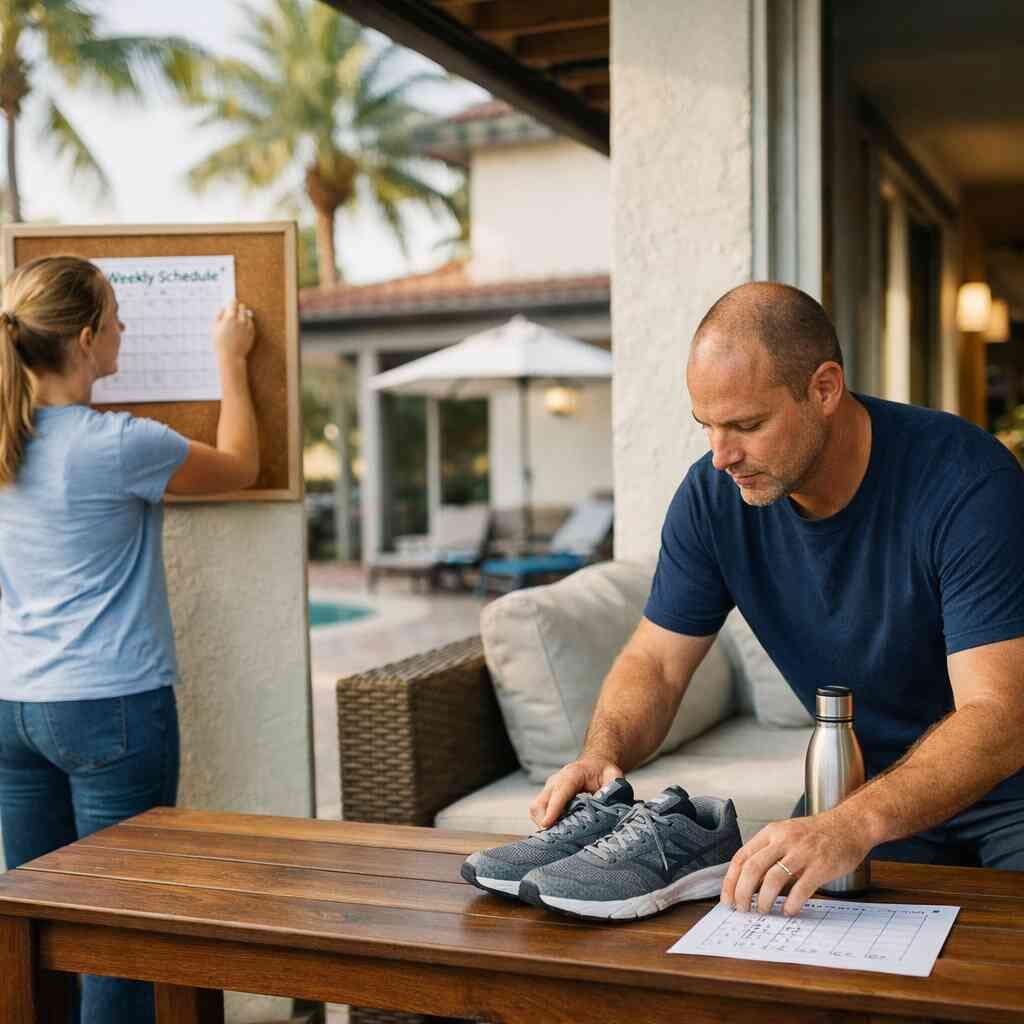
A recovery support network should include more than one voice.
Think therapist, peer, family, sponsor, and maybe a recovery coach.
If one support falls through, the others still hold.
That redundancy is wise, not excessive.
How peer support groups, 12-step alternatives, and SMART Recovery meetings can work side by side
People often ask which group is best.
The answer is usually the one you will actually attend.
Peer support groups, 12-step alternatives, and SMART Recovery meetings can all support recovery in different ways.
The key is fit, not ideology.
Some people like the structure of classic meetings.
Others want more self-management language.
SMART Recovery uses practical tools for urges, thoughts, and habits.
For a broader comparison, peer support groups and SMART Recovery meetings can sit alongside traditional support without conflict.
Where medication-assisted treatment fits, including Suboxone maintenance and Vivitrol injections
For opioid or alcohol recovery, medication can be part of care.
That is medication-assisted treatment.
It may include Suboxone maintenance for opioid use disorder or Vivitrol injections for alcohol or opioid relapse prevention, when clinically appropriate.
These medications do not replace therapy.
They support it.
The point is to lower risk while skills catch up.
That can matter in opioid rehab Delray, fentanyl treatment, heroin recovery, or prescription pill addiction.
It can also matter in alcoholism treatment center planning.
If you are comparing options, medication-assisted treatment with Suboxone or Vivitrol deserves a careful, licensed medical review.
How holistic recovery support, mindfulness meditation, yoga therapy, and art therapy can strengthen relapse prevention planning
Body-based care helps when words are not enough.
Mindfulness meditation, yoga therapy, and art therapy can lower stress and improve awareness.
They also support sleep, mood, and emotional regulation.
For many people, that makes relapse prevention easier to practice.
Holistic support works best when it complements evidence-based treatment.
It should not replace therapy, medication, or medical care.
Used well, it gives the nervous system a different path out of panic.
That is why mindfulness, yoga, and art therapy for relapse prevention can be a real asset in early recovery.
How to choose the right aftercare path in Delray Beach without guessing
Choosing aftercare should not feel like gambling.
You deserve clear questions, honest answers, and a plan that matches your needs.
That is especially true in Delray Beach, where there are many options and not all of them fit every situation.
What to ask when comparing Delray Beach rehab, outpatient program Delray Beach, and residential treatment facility options
Start by asking what level of care you actually need.
A Delray Beach rehab may offer detox, residential care, PHP, or outpatient support.
An outpatient program Delray Beach can work well for someone with a stable home and solid motivation.
A residential treatment facility may fit better when home is unsafe or very triggering.
Ask about schedule, therapy frequency, medical support, and family involvement.
Ask how they handle young adult rehab, professional’s program, LGBTQ+ affirmative treatment, veterans addiction help, and gender-specific treatment.
Those details tell you whether the program sees the person in front of them.
If you want a local comparison, how to choose a rehab in Palm Beach County can help you ask sharper questions.
How insurance verification for rehab works for Aetna, Cigna, Blue Cross Blue Shield, and out-of-network benefits
Insurance can feel confusing fast.
That is normal.
A proper insurance verification for rehab checks benefits, authorizations, and possible limits before care starts.
It should also explain out-of-network benefits and self-pay options clearly.
If you carry Aetna, Cigna, or Blue Cross Blue Shield, ask what services are covered and what might need approval.
Do not assume the first answer is the full answer.
A good admissions team will verify details before you make decisions.
For clarity, insurance verification for rehab in Florida is worth checking early.
When to look for dual diagnosis treatment, co-occurring disorders support, and licensed clinicians with evidence-based treatment
If depression, anxiety, trauma, bipolar symptoms, or panic are part of the picture, look for dual diagnosis treatment.
That means care for co-occurring disorders alongside substance use.
It should include licensed clinicians using evidence-based treatment.
That is not a luxury.
It is standard care for many people.
Ask whether the program uses CBT, DBT, EMDR, family therapy, and medication support when appropriate.
Ask if the facility is Joint Commission accredited, DCF licensed, or connected to a trusted network like an NAATP member.
Those signals do not guarantee fit, but they matter.
They show the program takes safety and quality seriously.
What a strong next plan looks like for long-term recovery support, alumni program support, and sober lifestyle planning
Strong aftercare keeps going after discharge.
It includes long-term recovery support, relapse check-ins, and alumni program support.
It may also include vocational support, nutritional counseling, and family weekend support.
Those pieces help daily life feel more stable and less isolated.
A good plan also supports sober lifestyle planning.
That can mean identifying Florida recovery resources, choosing low-risk social plans, and staying active in the Delray Beach recovery community.
It may include RECO Intensive alumni contact, group therapy activities, and a calendar of sober things to do Delray residents actually use.
If you are ready to compare options, look closely at outpatient program options in South Florida and ask what support continues after the first week.
Frequently Asked Questions
How long does detox last at a Delray Beach rehab?
Detox length depends on the substance, health history, and symptoms.
Alcohol and benzodiazepine withdrawal can require close medical monitoring.
Opioid detox may feel different from cocaine detox Florida programs.
A safe center should explain the likely range after intake and medical review.
If you need help fast, ask about our medical detox process and whether it matches your current symptoms.
Does RECO Immersive take my insurance?
Coverage depends on your plan, network status, and level of care.
Aetna, Cigna, and Blue Cross Blue Shield plans may offer different benefits.
Out-of-network benefits can also help in some cases.
The fastest path is insurance verification before admission.
Our team can review that with you through insurance verification for rehab in Florida.
What is the difference between PHP and IOP?
PHP, or partial hospitalization, is more intensive.
It usually involves more hours of treatment per day.
IOP, or intensive outpatient, uses fewer hours and leaves more space for work or family life.
The right fit depends on symptoms, home stability, and relapse risk.
If you are unsure, ask which level fits your current support needs.
Can I bring my phone to treatment?
Policies vary by level of care and clinical need.
Some programs limit phone use early on to reduce distractions and help you focus.
Others allow more access as stability improves.
The best answer comes from the intake process, not guesswork.
Ask before admission so you can plan work and family communication realistically.
Is family involved in the program?
Many programs include family therapy, education, or weekend support.
Family involvement can help reduce conflict and improve boundaries.
It can also support healing after trust has been damaged.
If family contact is complicated, the team should help set healthy limits.
You can learn more about family therapy support in recovery and what role it may play.
What if I need help for depression but not addiction?
That still matters.
Depression, anxiety, PTSD, and bipolar symptoms deserve care on their own.
If substances are not the main issue, a mental health IOP or therapy plan may be more appropriate.
If both are present, dual diagnosis care is usually the better fit.
A thoughtful assessment can sort that out without pressure.
What should I do today if I am unsure about aftercare?
Write down three things: your biggest trigger, your hardest hour of the day, and one person you trust.
Then call a treatment center and ask what level of care fits those answers.
That simple clarity can cut through a lot of panic.
You do not have to solve everything today, but you can make one call today.