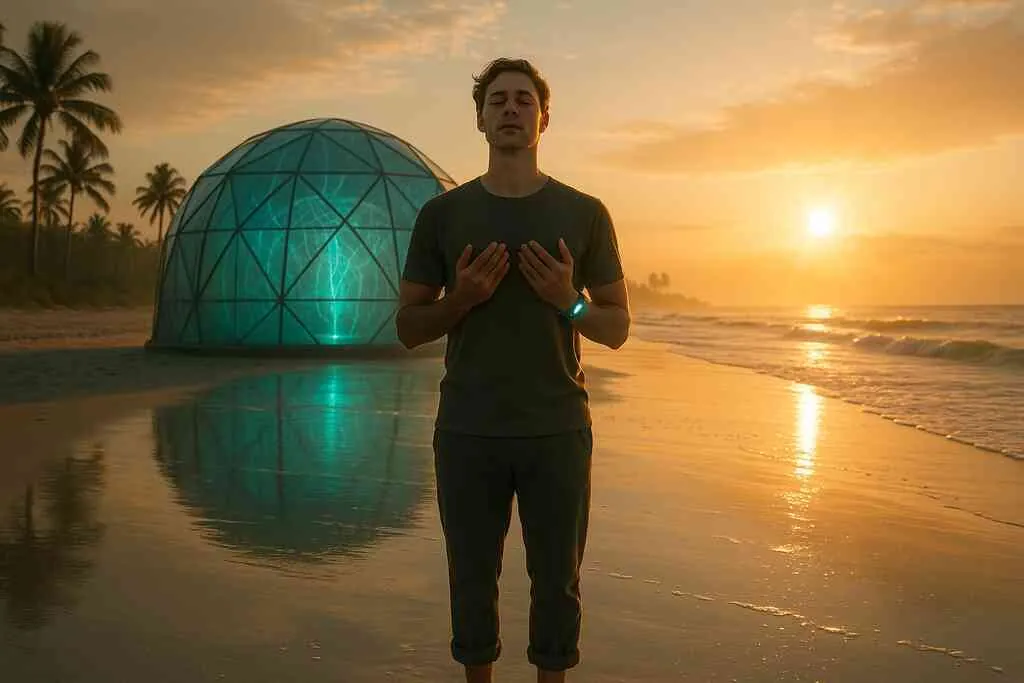
What Does RECO Immersive Reveal About Trauma Therapy 2026
Immersive VR, biofeedback & beach vibes: Discover RECO’s cutting-edge trauma therapy revolutionizing recovery in 2026.
Opening The Portal to Immersive Trauma Healing
From fragmented memories to unified narratives
Even the most splintered recollections can integrate once they enter RECO’s narrative reauthoring arc. Touring inside the story of RECO Immersive () reveals why trauma narrative reauthoring sits at the program’s core. Clients step into curated virtual worlds where they safely revisit stuck memories, guided by clinicians trained in somatic experience processing and advanced EMDR protocols. Each high tech therapeutic environment tracks stress biomarkers in real time, allowing therapists to calibrate intensity while clients maintain agency. When trauma informed addiction recovery concepts merge with immersive group therapy dynamics, shame dissolves and clarity takes root.
Unified memory threads strengthen further during client centered immersive sessions that externalize internal chaos onto panoramic screens. With real-time biofeedback assisted mindfulness, breathing patterns sync with projected waveforms, providing tangible proof that emotion regulation mastery is attainable. Over several experiential recovery journeys, fragments mesh into cohesive life stories, enabling sustainable sobriety pathways and integrative mind body balance. Graduates routinely describe RECO trauma breakthroughs as the moment their internal timelines finally made sense. That restored continuity lays the groundwork for long-term resilience.
Why Delray Beach becomes a neuroplasticity hub
Delray Beach mental wellness culture fuels neurobiological change by blending coastal serenity with sophisticated neuroscience. Sun-lit mornings stimulate vitamin D production and circadian regulation, natural companions to neuroplasticity driven therapy sessions. Community healing in Delray Beach thrives through art walks, ocean meditation, and vibrant recovery meetings, making real-world skill rehearsal both accessible and motivating. RECO’s proximity to these resources extends therapy beyond facility walls, embedding adaptive resilience training into daily life. Local partnerships also grant access to cutting edge research, reinforcing RECO’s commitment to future trends in immersive addiction care.
Environmental enrichment amplifies neural rewiring. Ocean air increases negative ions linked to mood stabilization, while rhythmic surf sounds aid a holistic nervous system reset. When clients alternate between trauma safe rehab setting indoors and mindful beach walks outside, synaptic pruning accelerates and stress hormones decline. That mix of clinical precision and natural beauty distinguishes Delray from metropolitan treatment zones, fostering optimism that catalyzes therapeutic engagement. Ultimately, Delray’s ecosystem stands not as a backdrop but as an active co-therapist in RECO’s model.
Setting the stage for adaptive resilience
Foundational safety is cultivated before intensive processing begins. Intake includes dual diagnosis innovation assessments to map the addiction and trauma nexus, ensuring pharmacotherapy, if warranted, supports rather than numbs growth. Early sessions emphasize body awareness, teaching clients to identify micro-signals preceding triggers, a prerequisite for adaptive resilience training. Therapists employ immersive trauma therapy tools in graduated layers, first rehearsing coping strategies within controlled simulations, then practicing them during community excursions. Each success moment rewires reward circuits, transforming fear memories into empowerment scripts.
Comprehensive aftercare planning starts on day one, not discharge day. Clients co-design future environments that reinforce new neural pathways, a practical manifestation of sustainable sobriety pathways. Digital follow-up platforms maintain neurofeedback access, enabling ongoing emotion regulation mastery when stress resurfaces. Alumni often return as peer mentors, strengthening communal accountability and normalizing vulnerability. Through this living continuum, RECO Immersive proves that trauma recovery is not a single event but a lifestyle powered by perpetual learning.
Mapping The Trauma Brain With High Tech Therapeutic Environments
Virtual reality exposure as neurobiological dialogue
Stepping into RECO’s curved VR dome feels like gliding into the center of one’s own neural network. Therapists curate virtual reality exposure healing sessions that gradually present trauma cues while real-time sensors watch heart rate variability. When stress spikes, visual intensity eases, proving that personalized PTSD treatment can respect biological limits without halting progress. Each adaptive scene rewires fear circuits by pairing once-terrifying imagery with present-moment safety, an approach rooted in evidence based trauma care. Over repeated trials, synapses formerly wired for danger begin to code for agency and resilience.
Traditional exposure might rely solely on imagination, yet imagination can stall when dissociation intrudes. VR solutions keep the sensory story vivid so avoidance has nowhere to hide, and clinicians maintain split-second control over stimulus timing. Every successful session deposits new memories of mastery, which later anchor sustainable sobriety pathways. Clients describe these journeys as RECO trauma breakthroughs because the technology makes courage feel tangible, almost gamified, fostering sustained motivation. The result is a powerful neurobiological dialogue where fear finally listens and adapts.
Biofeedback assisted mindfulness and somatic experience integration
The moment clients shift from VR to biofeedback suites, they watch their inner world displayed as gentle waveforms. Breathing slows, the graph steadies, and emotion regulation mastery becomes observable rather than abstract. This immediate feedback embeds mindfulness inside the nervous system, turning theory into embodied skill. Clinicians blend somatic experience processing with adaptive resilience training, teaching clients to track muscle tension, tingling, or heat as early warning signs. Over time, these body cues replace old impulsive habits tied to the addiction and trauma nexus.
A core innovation lies in synchronizing biofeedback screens with panoramic movement art that mirrors heart rhythms. The room itself responds, dimming lights when breath deepens, raising ambient ocean sounds when focus wavers. Such responsive design fuels a holistic nervous system reset without pharmaceuticals, though pharmacotherapy remains available when clinically indicated. One session might end with guided movement, another with still meditation, always honoring individual learning styles. Clients leave the suite knowing self-regulation lives within reach, not only within clinic walls.
Curiosity blossoms further when staff highlight dual diagnosis insights at RECO Immersive. Clients see quantitative proof that improved autonomic balance predicts fewer cravings, weaving trauma informed addiction recovery into every biofeedback graph. Linking physiology and behavior demystifies relapse risk and empowers proactive coping plans. The body becomes an ally, not an enemy, and future triggers lose much of their sting.
Advanced EMDR protocols are driving network reset
EMDR has long shown promise, yet RECO elevates it by pairing bilateral stimulation with neuro-optical tracking. Tiny cameras capture micro-saccades that reveal when traumatic images surface, allowing therapists to adjust speed or rhythm instantly. This precision prevents overwhelm and maximizes neural reconsolidation, turning stuck intrusive memories into integrated narrative threads. Clients remain actively engaged through targeted questions, maintaining agency even as deep networks update.
Sessions occur within a trauma safe rehab setting where noise canceling panels, weighted blankets, and aromatherapy build multilayered comfort. During processing, clinicians weave in somatic release cues, prompting gentle shoulder rolls or grounding presses to discharge residual charge. Such integrative mind body balance ensures cognitive insight arrives hand-in-hand with bodily relief. Post-session debrief includes experiential recovery journeys planning, so new insights translate into actionable goals. Evening reflections often capture fresh perspectives that effortlessly support sober living.
Because the protocols remain data driven, progress becomes measurable through decreased startle reflex and improved REM sleep patterns. Advanced EMDR protocols therefore act like a network reset button, restoring cognitive flexibility vital for emotion regulation mastery. Each successful reprocessing session lays another brick in the foundation of future oriented hope, the hallmark of the next generation recovery center.
Sensory integration labs for holistic nervous system balance
Some trauma survivors struggle more with touch, scent, or sound than with explicit memories. RECO’s sensory integration rehab labs address these subtler wounds through controlled multisensory playlists. Clients might explore textured pathways while soft lights shift colors in harmony with calming music, training the brain to tolerate and enjoy complex stimulation again. Occupational therapists collaborate closely with mental health clinicians, assuring evidence based psychotherapy foundations merge with practical sensory modulation.
Unlike noisy gyms, the lab’s acoustics absorb echoes, preventing surprise spikes in cortisol. Therapists strategically introduce pleasant challenges, maybe a gentle diffused citrus aroma or a low drumming vibration underfoot. Each novel input stretches the window of tolerance while remaining inside a trauma safe threshold. Over repeated exposures, clients notice daily sounds feel less jarring, crowds less threatening, and hugs more welcome. These subtle victories herald deeper neural integration that supports community healing in Delray Beach’s mental wellness culture.
Before graduation, clients design take-home sensory toolkits featuring weighted wraps, portable white-noise apps, and grounding scent vials. Such practical continuity reflects RECO’s commitment to comprehensive aftercare planning embedded from day one. As clients transition into real-world environments, they now possess a personalized roadmap for holistic nervous system balance. That roadmap, paired with continued access to high tech therapeutic environments during alumni visits, underpins enduring adaptive resilience.
 Personalized PTSD and Addiction Recovery Converge at RECO Immersive
 Personalized PTSD and Addiction Recovery Converge at RECO Immersive
Trauma informed addiction pathways decoded
Addiction rarely forms in isolation; unresolved trauma quietly scripts cravings, avoidance, and risky pursuits. RECO Immersive decodes that hidden choreography through genomic screening, neurocognitive tests, and integrated mental health therapy on site. Clinicians map behavioral loops, then overlay physiological data to expose the addiction and trauma nexus without blame. Clients learn how hypervigilant circuits steal dopamine, making substances falsely feel like rescue operations. That insight reframes relapse as neurological overflow rather than moral failure, instantly softening shame’s grip.
Once pathways reveal themselves, immersive trauma therapy targets each node with precision. Virtual reality exposure healing reactivates threat memories while concurrent somatic experience processing grounds sensation safely. Neuroplasticity driven therapy pairs those experiences with adaptive resilience training to cement healthier behavioral scripts. Every successful engagement deposits dopamine naturally, teaching the brain that agency feels better than intoxication. Over weeks, cravings shrink as new synapses prefer mindful regulation over chemical distraction.
Client centered immersive sessions and narrative reauthoring
Storytelling has always healed; RECO simply extends the canvas into panoramic, multimedia worlds. During client centered immersive sessions, guests author scenes that externalize chaos and then reconstruct empowering sequences. Therapists layer biofeedback assisted mindfulness cues over each chapter, ensuring the nervous system stays within tolerance. Because the environment visibly adjusts to stress markers, participants trust the process and deepen vulnerability quickly. Their autobiographical timelines integrate, producing RECO trauma breakthroughs that ripple through identity and purpose.
Trauma narrative reauthoring continues after sessions through digital journals that sync with hub sensors. Clients replay key moments during evening reflection, adding fresh context as cognitive flexibility expands. Mentors highlight parallels between courage onscreen and sober choices offsite, reinforcing sustainable sobriety pathways daily. Scheduled group viewings create immersive group therapy dynamics where peers celebrate revised chapters together. Collective applause imprints communal safety, countering isolation scripts that once fueled substance misuse.
Dual diagnosis innovation in a trauma safe rehab setting
Many residents arrive juggling anxiety, depression, and compulsive behaviors alongside substance misuse. To honor that complexity, RECO designed a dual diagnosis innovation that synchronizes psychiatric medicine with experiential modalities. Psychiatrists collaborate daily with somatic specialists inside a custom trauma safe rehab setting. This integrative team also partners with community physicians offering dual diagnosis support near Boca Raton. Unified electronic records keep pharmacotherapy precise, preventing interactions that could overshadow neuroplastic gains.
Within this high tech therapeutic environment, advanced EMDR protocols complement medication by accelerating limbic stabilization. Biofeedback assisted mindfulness verifies autonomic balance before discharge, reducing rebound anxiety risk. Clients then practice return-to-work simulations, testing concentration under mild stress while clinicians monitor cognitive load. Success within these labs translates to confidence outside, strengthening adaptive resilience training outcomes. Graduates often describe medication as supportive background music, not the main instrument, thanks to integrated care.
Integrative mind body balance for sustainable sobriety
Recovery thrives when mind and body harmonize, so integrative mind body balance anchors every schedule block. Morning cold-plunge rituals lower inflammation, priming neuroplasticity before cognitive sessions. Afternoon yoga synchronizes breath with vagal tone, extending the holistic nervous system reset gained earlier. Evening circles process sensations, embedding somatic insights into long-term memory for sustainable sobriety pathways. These rhythms reflect RECO’s commitment to life after treatment in Florida pathways, proving wellness must function beyond clinic walls.
Graduates receive wearable sensors that sync to a personalized PTSD treatment dashboard, extending accountability into neighborhoods and workplaces. Weekly telehealth check-ins revisit biofeedback graphs, allowing clinicians to adjust exercise or mindfulness prescriptions promptly. Alumni groups host beach meditations, reinforcing Delray Beach’s mental wellness culture while celebrating collective milestones. Peer mentors model emotion regulation mastery under real surf sounds, closing the loop between practice and life. Over months, cravings become distant echoes, replaced by curiosity toward the future of mental health treatment innovations.
Experiential Recovery Journeys From Insight to Action
Group immersion dynamics and emergent empathy
Shared virtual landscapes allow residents to witness one another’s courage moment by moment. This design nurtures immersive group therapy dynamics that dissolve isolation faster than traditional circles. When heart-rate monitors light the dome in calming hues, collective breathing synchronizes and emergent empathy blooms. Participants glimpse personal pain reflected in a peer’s avatar, sparking mutual validation that deepens recovery. Viewers can later examine highlights inside the daily immersive schedule for clients, transforming inspiration into planned practice.
Facilitators coach the group to articulate sensations before opinions, encouraging somatic attunement over debate. That subtle shift builds neurologic trust, making disclosures feel less risky. As mirrors of resilience multiply, shame loses volume and humor reenters conversation. The resulting camaraderie strengthens each client’s sustainable sobriety pathways outside therapy walls. Graduates often describe these circles as rehearsal for safe belonging in the wider world.
Adaptive resilience training and emotion regulation mastery
After group sessions, clinicians pivot to adaptive resilience training tailored for individual nervous systems. Clients rehearse stress-inoculation drills that pair controlled adrenaline surges with breath-anchoring techniques. Biofeedback screens confirm vagal rebound within seconds, offering proof of growing emotion regulation mastery. Over time, fear cues trigger automatic grounding rather than flight or cravings. This skillset becomes the backbone of personalized PTSD treatment at RECO.
Trainers layer somatic experience processing into every movement, ensuring the body rewires alongside the mind. Weighted resistance bands replicate workplace tension; ocean soundscapes simulate crowded lobbies; each scenario ends with an empowered exhale. Repetition engrains confidence that no setting can hijack calm without consent. Such neuroplasticity driven therapy keeps recovery proactive instead of reactive. Clients leave each drill carrying a portable sense of agency.
Comprehensive aftercare planning for real world triggers
Planning begins while victories are fresh, not at discharge. Counselors map trigger topography across home, work, and social settings, then embed practical safeguards. Digital dashboards send supportive prompts before high-risk events, maintaining a holistic nervous system reset beyond the campus. Telehealth check-ins review heart-rate trends to spot early stress spikes and adjust coping scripts. This continuum of support transforms relapse prevention into a living dialogue.
Family members join strategy meetings to align language and expectations. They learn to recognize subtle hypervigilance cues and redirect conversations respectfully. Partnerships with local gyms, art studios, and volunteer hubs create safe zones for purposeful engagement. Clients also receive invitations to community healing in Delray Beach, Florida gatherings that celebrate progress publicly. Such layered planning reinforces that recovery thrives through both autonomy and connection.
Neuroplasticity driven maintenance of progress
Long-term success depends on keeping neural growth active. Alumni have access to monthly booster sessions inside the high tech therapeutic environment to refresh circuits. Advanced EMDR protocols revisit any lingering hotspots, preventing regression. Meanwhile, wearable devices track sleep depth and heart-rate variability, emailing concise reports to therapists. Data-guided tweaks keep progress aligned with evolving life stressors.
RECO Immersive further sustains momentum by hosting experiential recovery journeys on RECO Island retreats. Surf therapy, art immersion, and eco-service projects reignite curiosity, a known catalyst for synaptic reinforcement. Each retreat closes with group narrative reauthoring that integrates new adventures into self-concept. Clients return home reminded that growth is ongoing, adventurous, and collaborative. In this model, maintenance feels like exploration, not obligation.
Beyond Breakthroughs: Crafting the Future of Mental Health Treatment
 Beyond Breakthroughs: Crafting the Future of Mental Health Treatment
Evidence based trauma care meets visionary practice
RECO Immersive refuses to choose between rigorous science and creative daring. Clinicians ground every protocol in evidence based trauma care, yet they continuously iterate with cutting-edge therapy modalities that keep curiosity alive. Advanced EMDR protocols now synchronize with holographic projection, allowing the brain to process sensations through multiple sensory channels at once. Because the high tech therapeutic environment captures biometric data in real time, therapists can validate each neuroplasticity driven therapy adjustment immediately. Clients therefore witness measurable progress while still feeling immersed in imaginative healing worlds.
Looking ahead, virtual reality exposure healing will integrate adaptive scent diffusers that match scene shifts, deepening somatic experience processing without overwhelm. Wearable EEG feedback will guide pacing, ensuring personalized PTSD treatment remains perfectly calibrated. These innovations echo themes explored in the future trends in immersive addiction care 2026 discussion, signaling that RECO’s laboratory of hope never rests. As research validates each enhancement, best practices are disseminated across partner facilities, elevating the entire field’s standard of care. Visionary practice thus evolves from internal prototype to global influence.
Community impact and the next generation recovery center
Healing cannot thrive in isolation, so RECO Immersive deliberately blurs boundaries between clinic and neighborhood. Residents practice emotion regulation mastery during coastal clean-ups, reinforcing adaptive resilience training through tangible service. These events nourish Delray Beach’s mental wellness culture, demonstrating that trauma informed addiction recovery also beautifies public spaces. Local artists co-create murals inside the sensory integration rehab atrium, turning collective storytelling into permanent inspiration. Community members witness RECO trauma breakthroughs firsthand, shifting stigma toward admiration.
The next generation recovery center further invests by hosting free seminars on immersive group therapy dynamics for regional clinicians. Attendees tour virtual labs, experience biofeedback assisted mindfulness, and receive toolkits to replicate holistic nervous system reset interventions. A detailed resource hub- the ultimate guide to therapy services in Delray Beach -extends education online, increasing reach without geographic limits. As expertise spreads, families encounter consistent language of hope across multiple agencies, amplifying sustainable sobriety pathways long after discharge. Community impact, therefore, becomes a multiplying force rather than a single-site achievement.
Continuous evolution of the RECO immersive clinical team
Progress demands professionals who learn as quickly as technology advances. Every quarter, staff gather for lab-to-life intensives that test emerging modalities before client rollout. Neuroscientists present addiction and trauma nexus findings, while holistic practitioners demonstrate integrative mind body balance drills. The culture encourages humble mastery; seasoned therapists mentor interns, yet remain willing to update their own methods overnight. Readers can meet the trauma-focused clinical team to appreciate the diverse expertise driving consistent innovation.
Collaboration extends beyond campus. Team members co-author peer-reviewed studies and serve on advisory boards shaping industry ethics around immersive trauma therapy. Feedback loops from alumni supply real-world outcome data, guiding protocol revisions with patient-centered precision. Such responsiveness ensures dual diagnosis innovation remains relevant amid shifting substance trends. Ultimately, the RECO immersive clinical team models lifelong learning, proving that caregivers who evolve inspire clients to do the same.
Invitation to begin your experiential recovery journey
If traditional talk therapy feels insufficient, step into an environment where healing becomes a multisensory adventure. RECO Immersive combines trauma narrative reauthoring, biofeedback assisted mindfulness, and sensory integration rehab to deliver breakthroughs that stick. Every corridor supports a trauma safe rehab setting, yet every session sparks excitement rather than dread. When you feel ready to explore sustainable sobriety pathways shaped by creativity and science, simply reach out to begin recovery near Delray Beach. Our admissions team will guide you with clarity, compassion, and confidentiality.
Your story deserves a setting as unique as its chapters. By choosing RECO, you join a community devoted to holistic nervous system reset, emotion regulation mastery, and future-driven hope. Together, we will transform fragmented memories into empowered narratives and translate insight into lifelong action. The next page is blank, the pen waits in your hand, and the immersive horizon already glows with possibility.
Frequently Asked Questions
Question: How is immersive trauma therapy at RECO Immersive different from traditional talk therapy?
Answer: Traditional talk therapy relies mainly on conversation, imagination, and the client’s ability to recall memories. RECO Immersive layers evidence based trauma care with cutting edge therapy modalities that engage every sense. Clients enter a high tech therapeutic environment featuring virtual reality exposure healing, biofeedback assisted mindfulness, sensory integration rehab labs, and advanced EMDR protocols. These tools translate stress biomarkers into real-time data so clinicians can pace sessions precisely, keeping the nervous system inside a trauma safe rehab setting. The result is faster neuroplasticity driven therapy, measurable RECO trauma breakthroughs, and a holistic nervous system reset that feels tangible rather than theoretical.
Question: What high tech therapeutic environments will I experience during my experiential recovery journey at RECO?
Answer: You will rotate through several next generation recovery center spaces designed for immersive trauma therapy and adaptive resilience training. The curved VR dome provides graded virtual reality exposure healing where clinicians can dial stimulus up or down in seconds. Biofeedback suites project your heart-rate variability onto panoramic screens, transforming mindfulness into a visible skill. Sensory integration rehab rooms combine calming lighting, subtle aromatherapy, and textured walkways to expand your window of tolerance. Finally, advanced EMDR studios employ neuro-optical tracking cameras that adjust bilateral stimulation in real time. Each environment cooperates with the others, accelerating integrative mind body balance and reinforcing sustainable sobriety pathways long before discharge.
Question: In "What Does RECO Immersive Reveal About Trauma Therapy 2026," Delray Beach is called a neuroplasticity hub-how does the location improve personalized PTSD treatment?
Answer: Delray Beach offers more than scenic beauty; its climate, community, and rhythms enhance every therapeutic modality we provide. Daily ocean air walks increase negative ion exposure, which research links to mood stabilization and deeper sleep. Sun-lit mornings regulate circadian rhythms, priming your brain for neuroplasticity driven therapy sessions later in the day. The vibrant Delray Beach mental wellness culture supplies art walks, beach meditations, and sober social events where you can rehearse new skills in real contexts. RECO’s proximity to these resources extends treatment beyond our walls, turning the environment itself into a co-therapist that amplifies holistic nervous system reset and accelerates emotion regulation mastery.
Question: How does RECO Immersive address the addiction and trauma nexus through dual diagnosis innovation?
Answer: Addiction and unresolved trauma often feed each other. Our dual diagnosis innovation begins with genomic screening and neurocognitive testing to map your unique addiction and trauma nexus. Psychiatrists, somatic specialists, and VR clinicians then craft a synchronized plan that may include targeted pharmacotherapy, immersive group therapy dynamics, and client centered immersive sessions. Virtual reality exposure healing reactivates threat memories while somatic experience processing keeps you grounded. Biofeedback assisted mindfulness verifies autonomic stability, and advanced EMDR protocols rewire intrusive memories. This integrated approach transforms craving cycles into adaptive resilience training opportunities, paving reliable, sustainable sobriety pathways.
Question: What kind of comprehensive aftercare planning supports long-term recovery once I leave RECO Immersive?
Answer: Our comprehensive aftercare planning starts on day one, not your last day. You will co-design a future environment that reinforces the new neural pathways built during treatment. Wearable sensors sync to a personalized PTSD treatment dashboard, allowing clinicians to monitor heart-rate variability and sleep quality remotely. Weekly telehealth sessions review data and fine-tune coping strategies. Alumni receive invitations to Delray Beach community healing events, monthly booster sessions in our high tech therapeutic environment, and experiential recovery journeys like surf therapy retreats. Family coaching, local resource mapping, and 24/7 peer support groups ensure you maintain emotion regulation mastery and integrative mind body balance wherever life takes you.