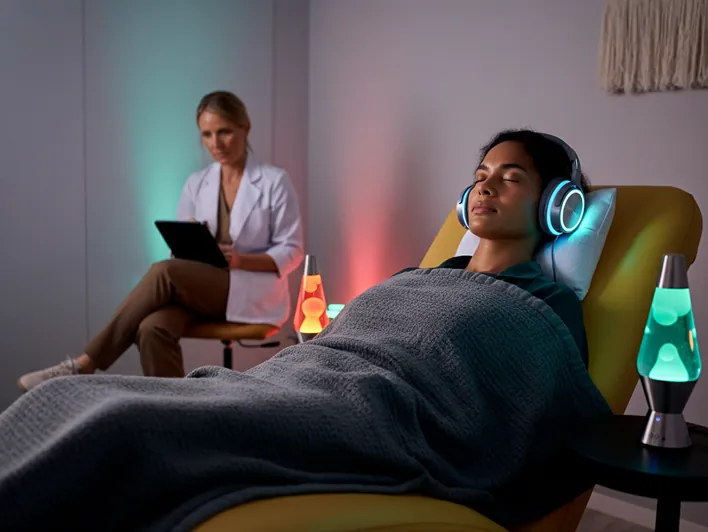
Sensory Assimilation is a therapeutic approach that engages the senses through carefully curated inputs—such as gentle sounds, calming lights, tactile stimulation, and soothing movement. These sensory experiences help retrain the brain’s response to stimuli, supporting better self-regulation and integration of emotional and physical experiences. It's often used in trauma-informed care and for individuals with sensory processing challenges.
When the nervous system is overwhelmed—whether from trauma, anxiety, or chronic stress—it can become hypersensitive or shut down entirely. Sensory assimilation helps create a safe environment for clients to reconnect with their bodies, regulate their emotions, and experience calming, grounding sensations. It’s especially useful when traditional talk therapy alone isn’t enough to calm the system.
Sensory assimilation supports mental health by gently guiding the nervous system back into a regulated state. It reduces sensory defensiveness, improves tolerance to everyday stimuli, and fosters a sense of safety and control in the body. This kind of nervous system support enhances emotional resilience, reduces reactivity, and prepares the mind for deeper therapeutic work.

Sensory assimilation in treatment
How working with the body's sensory systems supports trauma recovery.
Sensory assimilation is therapeutic work that engages and integrates the body's sensory systems — touch, movement, balance, proprioception, sight, sound — to support nervous-system regulation, trauma processing, and emotional integration. At RECO Immersive in Delray Beach, sensory assimilation appears across multiple modalities: weighted blankets and grounding work, equine therapy, somatic experiencing, art and music therapy, sound therapy, and structured movement programs.
Trauma is stored in the body, not just the mind. Bessel van der Kolk's research and others demonstrate that traumatic memories live in non-verbal sensory and somatic patterns that talk therapy alone often can't reach. Working through sensory systems — touch, movement, sound, breath — provides access points to process trauma at the level it's actually stored. This is why bottom-up (body-based) approaches often succeed where top-down (cognitive) approaches alone don't.
Sensory-based interventions help with: trauma and PTSD, dissociative symptoms, sensory processing difficulties, autism spectrum traits, anxiety with strong somatic components, chronic pain with emotional roots, eating disorders, and emotional dysregulation. RECO Immersive integrates sensory work across the trauma program, often as a complement to EMDR, somatic experiencing, and polyvagal-informed therapy.
Pediatric occupational therapy uses sensory integration techniques developed for children with sensory processing disorder. Sensory assimilation in adult mental-health treatment draws on similar science — how the nervous system processes and integrates sensory input — but applies it to trauma recovery, anxiety, and emotional regulation. The goal isn't sensory motor development; it's nervous-system regulation and trauma integration. Approaches are gentler and more talk-and-felt-sense-integrated than typical pediatric OT.
Sessions vary widely. Some involve grounding work — feet on the ground, weighted blanket, focused breath — to bring the nervous system into the present. Others use bilateral stimulation (eye movements, tapping, tone alternation) like EMDR. Some involve gentle movement, often paired with breath. Others use sound therapy, art-making, or guided imagery. The clinician matches the modality to your nervous-system state and treatment goals; you don't have to talk if talking isn't where the work needs to happen.