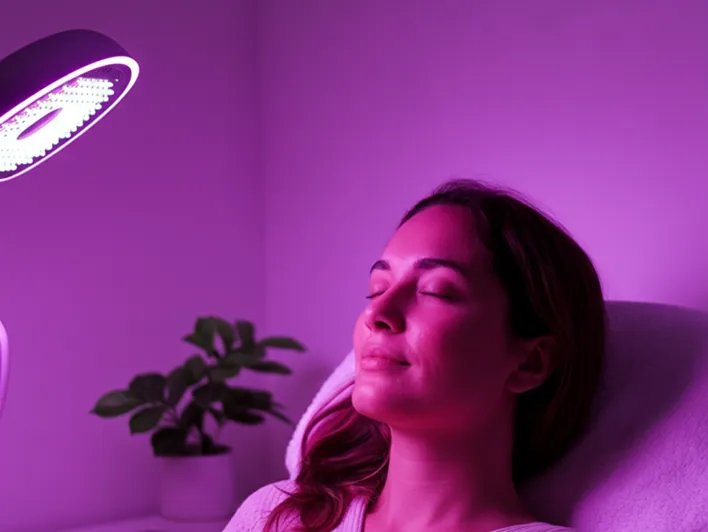
Light Therapy involves exposure to a specially calibrated light that mimics natural sunlight. Sessions are typically short and conducted using a lightbox or panel, helping to regulate your body’s internal rhythms. This therapy is especially effective for individuals experiencing mood-related challenges, such as depression, seasonal affective disorder (SAD), or disrupted sleep cycles.
Our mental health is deeply connected to our body’s internal clock, or circadian rhythm. When this rhythm is disrupted—whether from stress, lack of sunlight, or irregular sleep—it can affect mood, energy, and emotional well-being. Light Therapy helps restore balance by providing the brain with the light signals it needs to regulate sleep, hormones, and emotional responses.
Light Therapy supports mental health by boosting serotonin levels, improving sleep quality, and reducing symptoms of depression and anxiety. It can help stabilize mood, increase energy levels, and support overall emotional regulation—especially for those struggling with low motivation, fatigue, or seasonal mood shifts.

Light therapy & low-level laser therapy
How red-light and laser therapy support brain function and mood.
Light therapy uses targeted wavelengths of light to influence biological processes affecting mental health. At RECO Immersive, this includes bright-light therapy (10,000 lux daylight-spectrum LED) for seasonal affective disorder and circadian rhythm disruption, and low-level laser therapy (LLLT) — sometimes called photobiomodulation — using red and near-infrared light to support brain mitochondrial function, reduce inflammation, and improve cognitive performance.
Photobiomodulation delivers red (660nm) and near-infrared (810-850nm) light through the scalp to underlying brain tissue. The light is absorbed by cytochrome c oxidase in mitochondria, increasing ATP production and reducing neuroinflammation. Clinically, this translates to improvements in mood, executive function, attention, and recovery from concussion or brain injury. Sessions are 20-30 minutes, painless, and feel only mildly warm.
Bright-light therapy is FDA-recognized for seasonal affective disorder and is also used for non-seasonal depression, bipolar depression, circadian rhythm disorders (delayed sleep phase, shift work), and dementia-related sundowning. Low-level laser/photobiomodulation has growing evidence for depression, post-concussion syndrome, traumatic brain injury, age-related cognitive decline, and chronic pain. RECO Immersive deploys both as adjuncts to comprehensive psychiatric and addiction treatment.
Bright-light therapy can cause mild headaches, eye strain, or temporary increase in agitation — usually managed by reducing session length or moving the light farther from the eyes. People with bipolar disorder are monitored for mania risk. Photobiomodulation has an exceptionally clean safety profile — the most common reported effect is mild warmth at the application site. Both modalities are integrated into clinical care under medical supervision, so any side effects are caught and adjusted quickly.
Light therapy is complementary, not a replacement. Most clients use light therapy alongside antidepressants, mood stabilizers, or other psychiatric medications — combining produces better outcomes than either alone for many patients. Some clients with mild depression find light therapy alone sufficient and don't add medication. For clients who can't tolerate or don't want to add another medication, light therapy and photobiomodulation are valuable non-pharmacologic options that integrate well with the broader treatment plan.